The complete catalog
The Gallery
Every plate in the house, drawn from life by the great botanical artists and coloured by hand — the whole garden, whenever you wish to browse it plainly.
On walls around the world
Not a poster — the centerpiece of a room
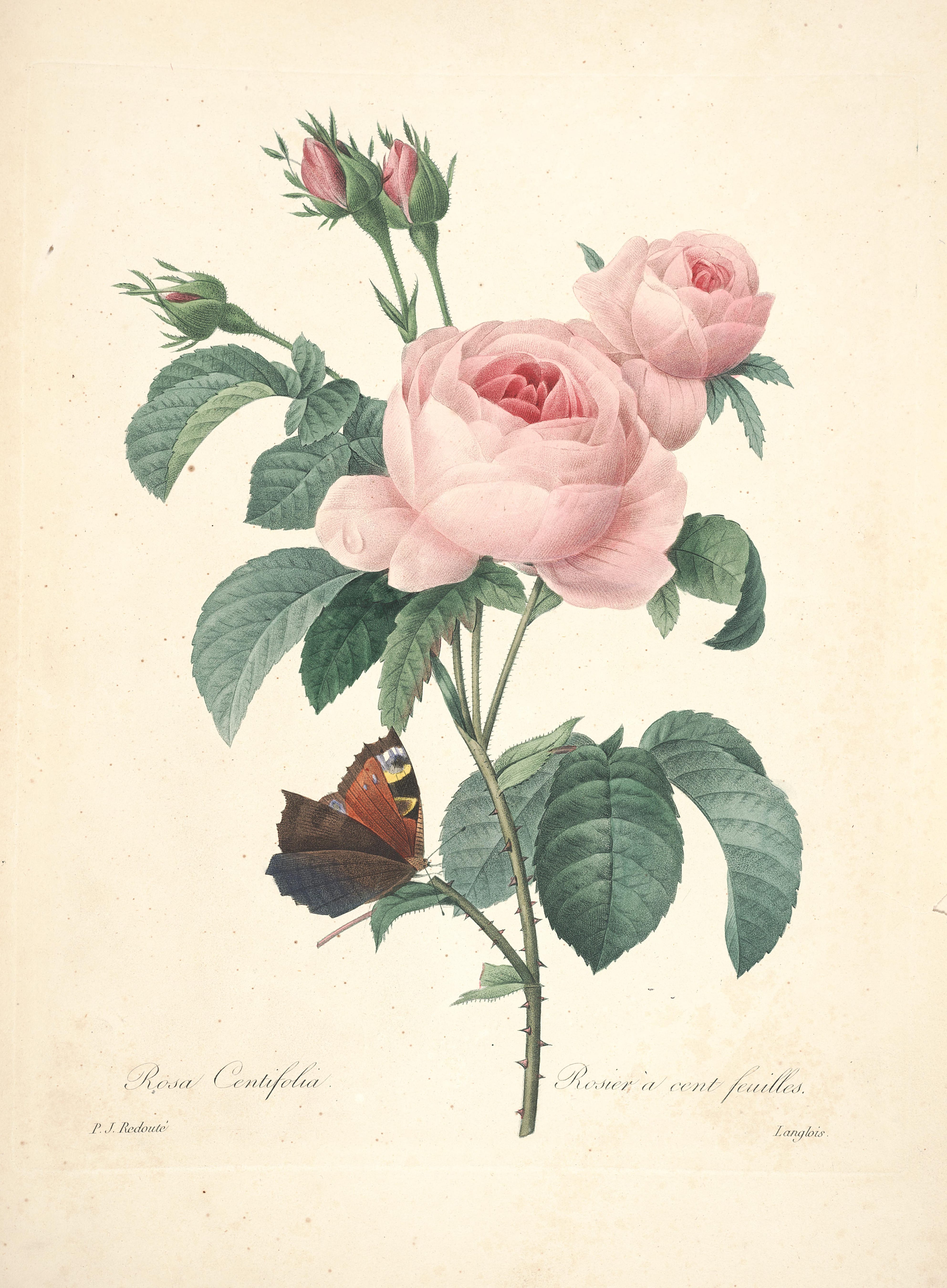
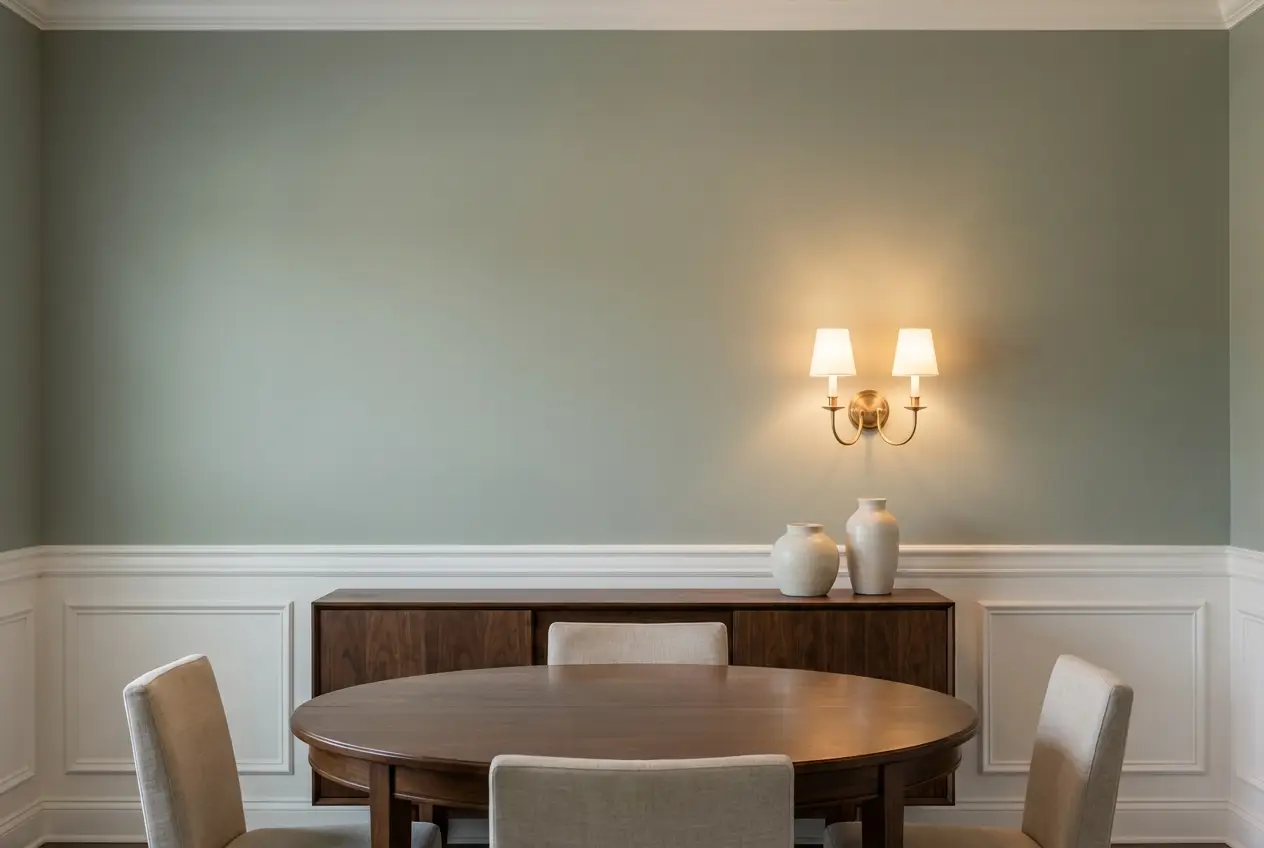
Printed large on archival paper, gallery canvas, or framed as an heirloom. Here, Pierre-Joseph Redouté’s the cabbage rose hung in four very different homes.
The curated sets
THE ROSE GARDEN
The Rose
1817–1824
The Cabbage Rose
The most beloved rose plate ever engraved.
Rosa centifolia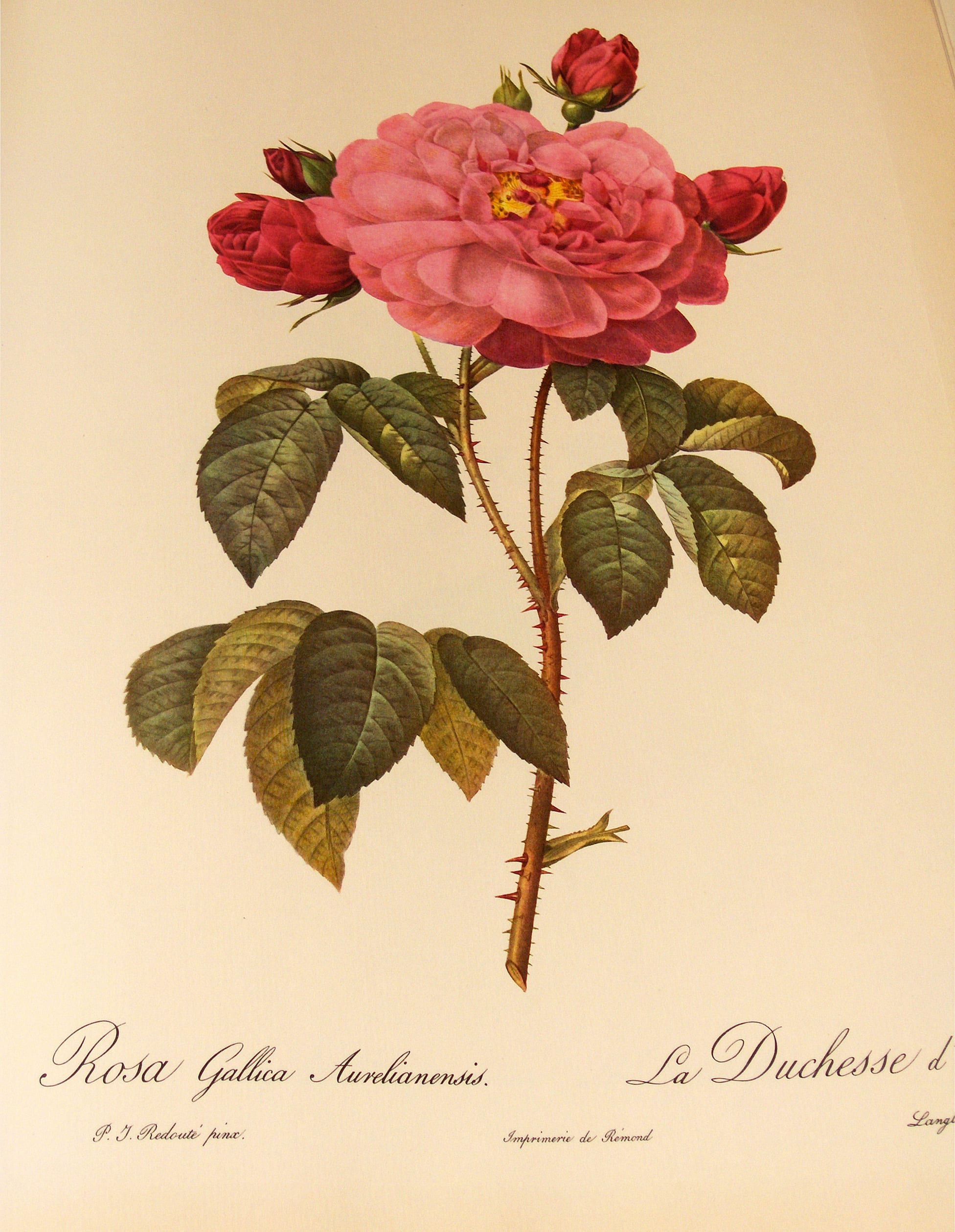
1817–1824
The French Rose
Joséphine’s roses, drawn from life at Malmaison.
Rosa gallica aurelianensis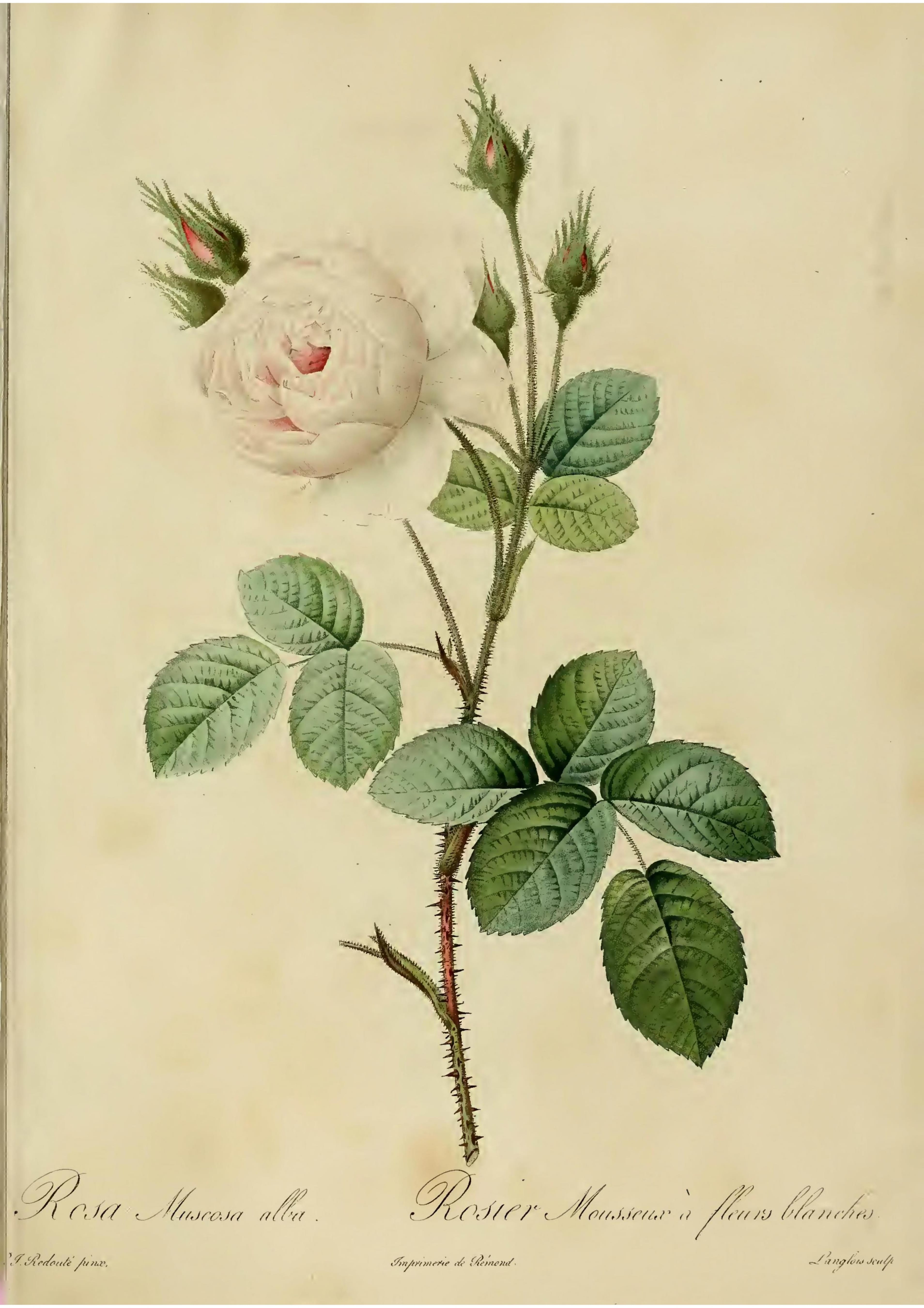
1817–1824
The Moss Rose
A white rose furred with green, in perfect stipple.
Rosa muscosa alba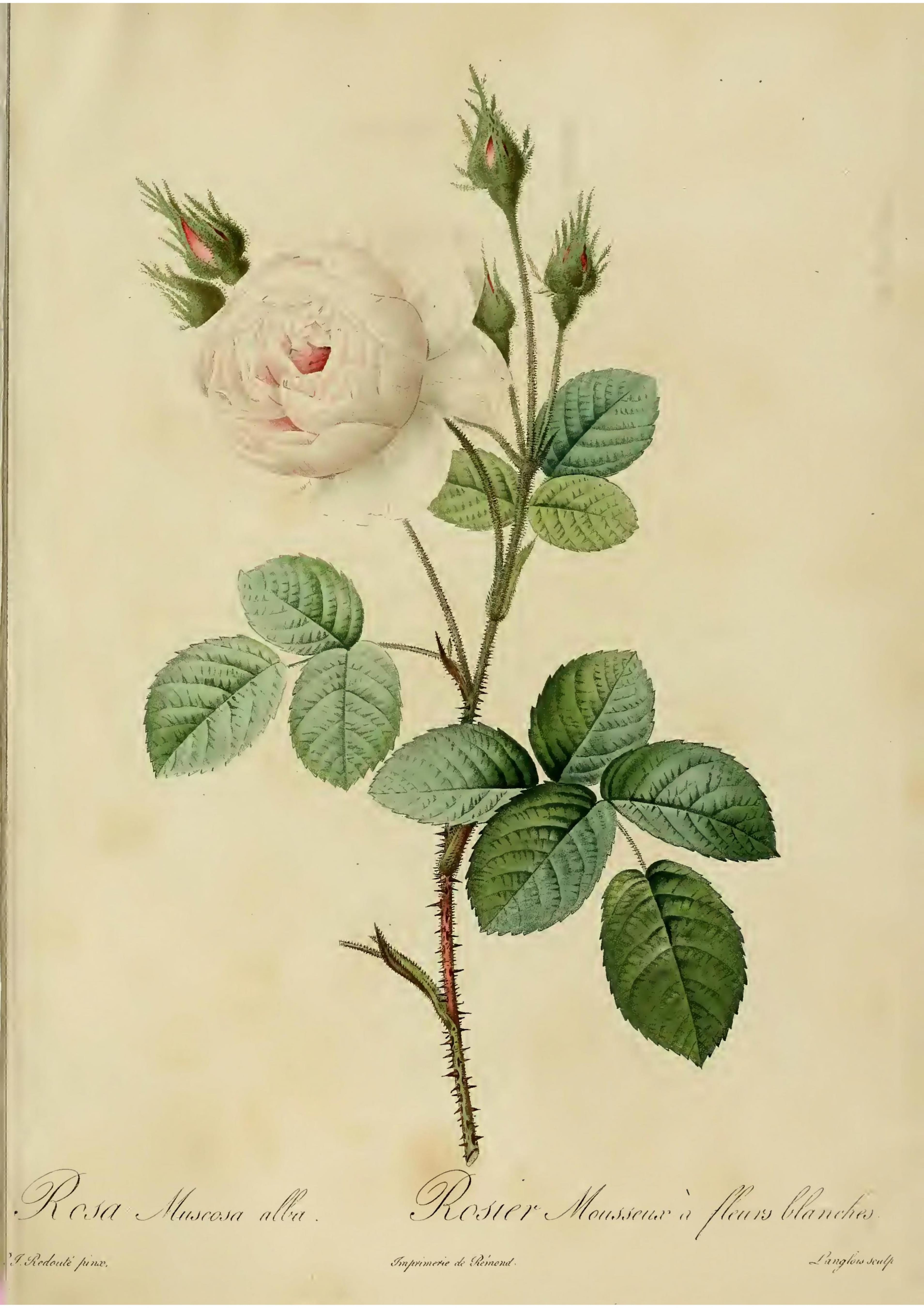
1817–1824
The White Moss Rose
The moss rose in white — the sepals furred like green velvet.
Rosa centifolia muscosa alba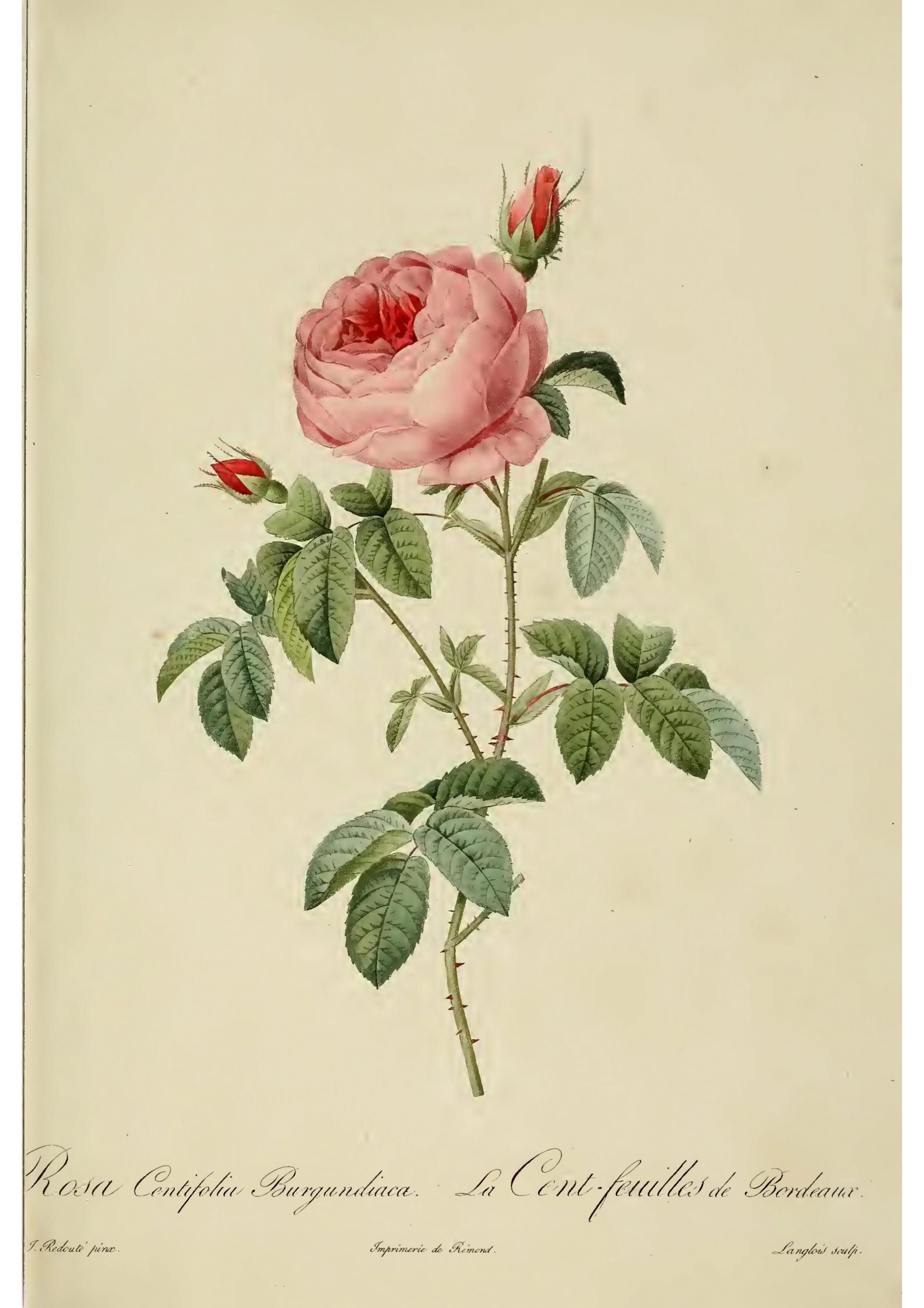
1817–1824
The Burgundy Rose
A pompon barely an inch across, with more petals than a rose four times the size.
Rosa centifolia burgundiaca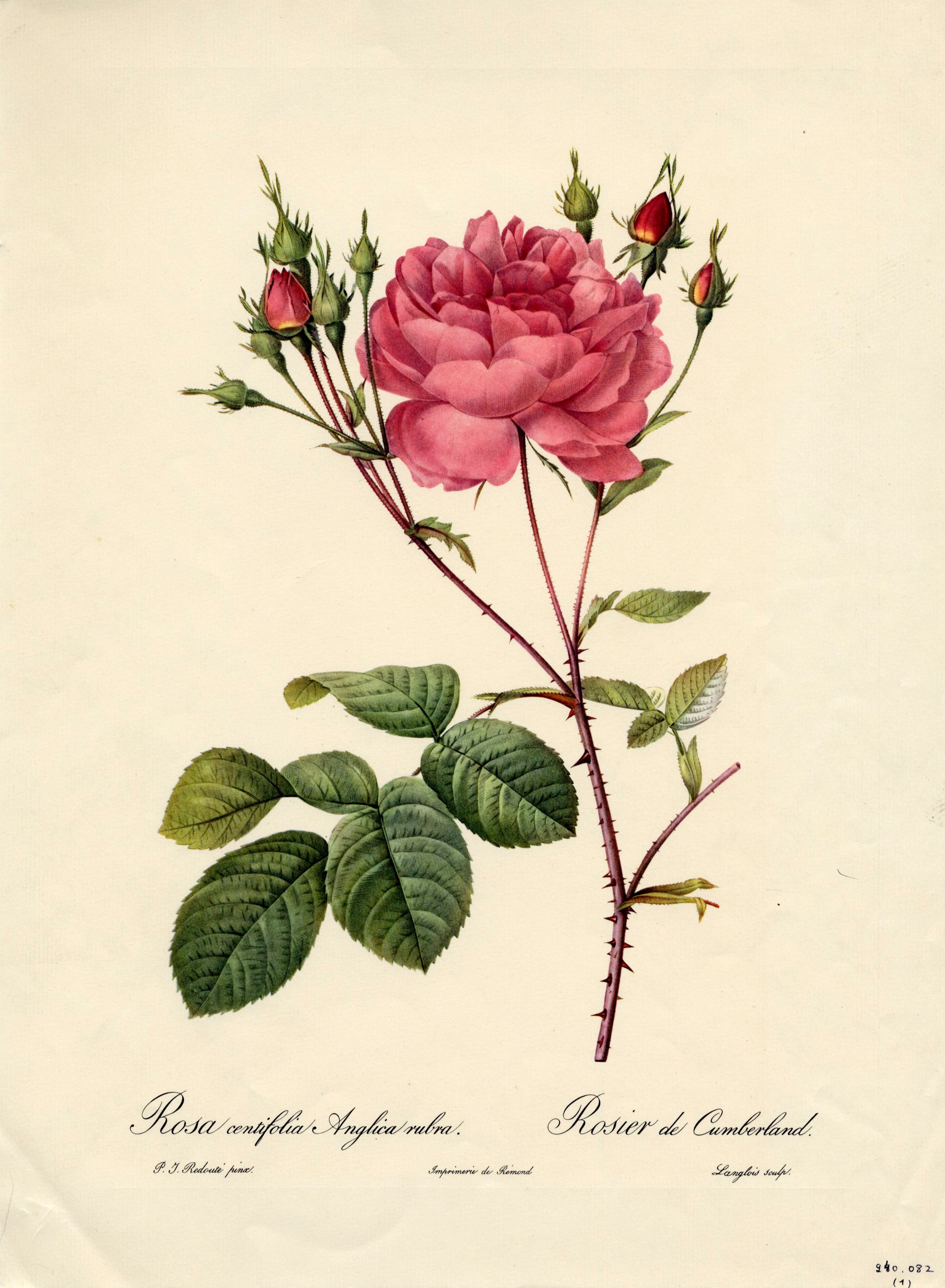
1817–1824
The Cumberland Rose
A crimson centifolia, drawn at the height of Redouté’s stipple.
Rosa centifolia anglica rubra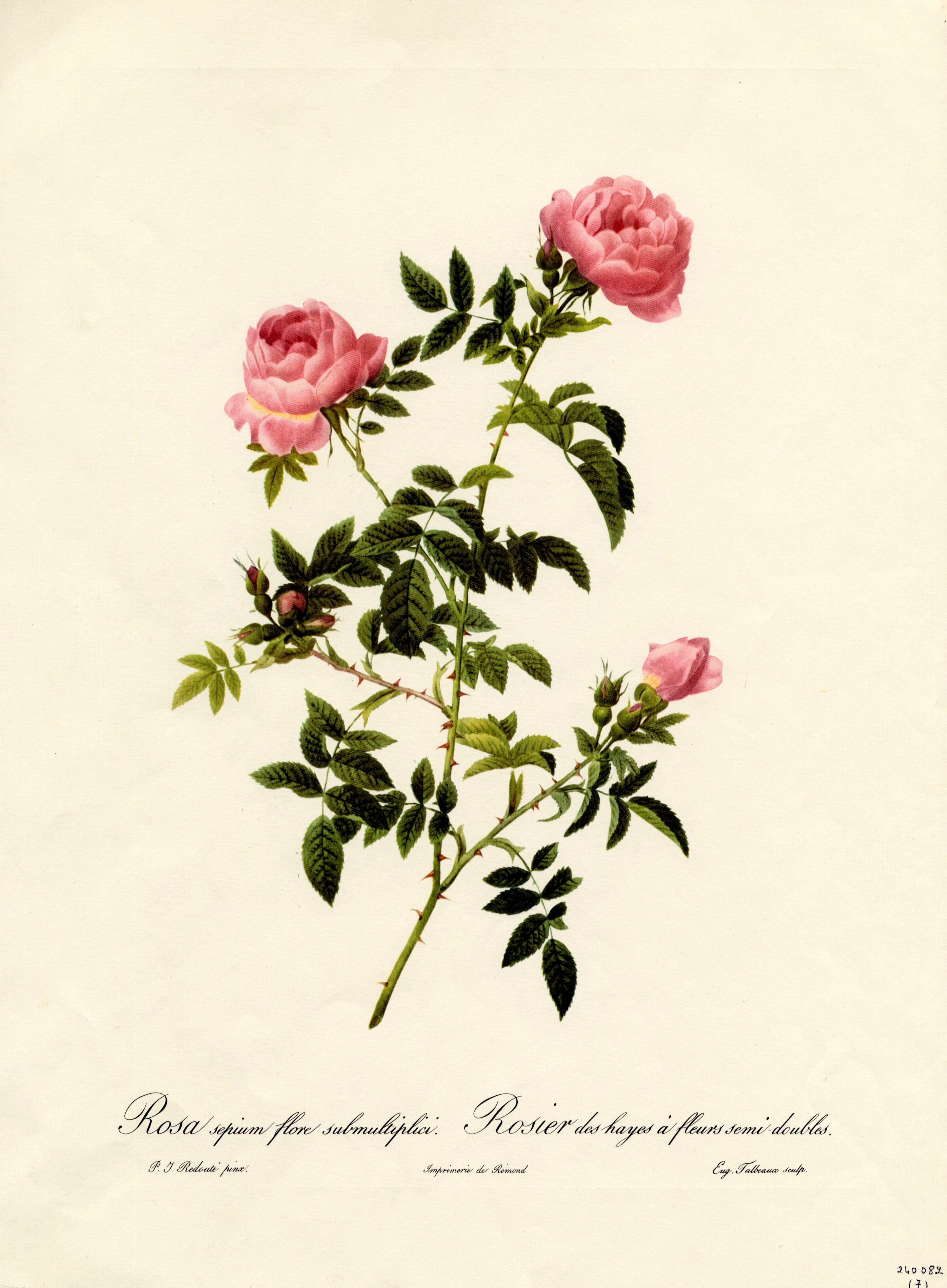
1817–1824
The Hedge Rose
A wild rose of the hedgerows, given the treatment reserved for empresses.
Rosa sepium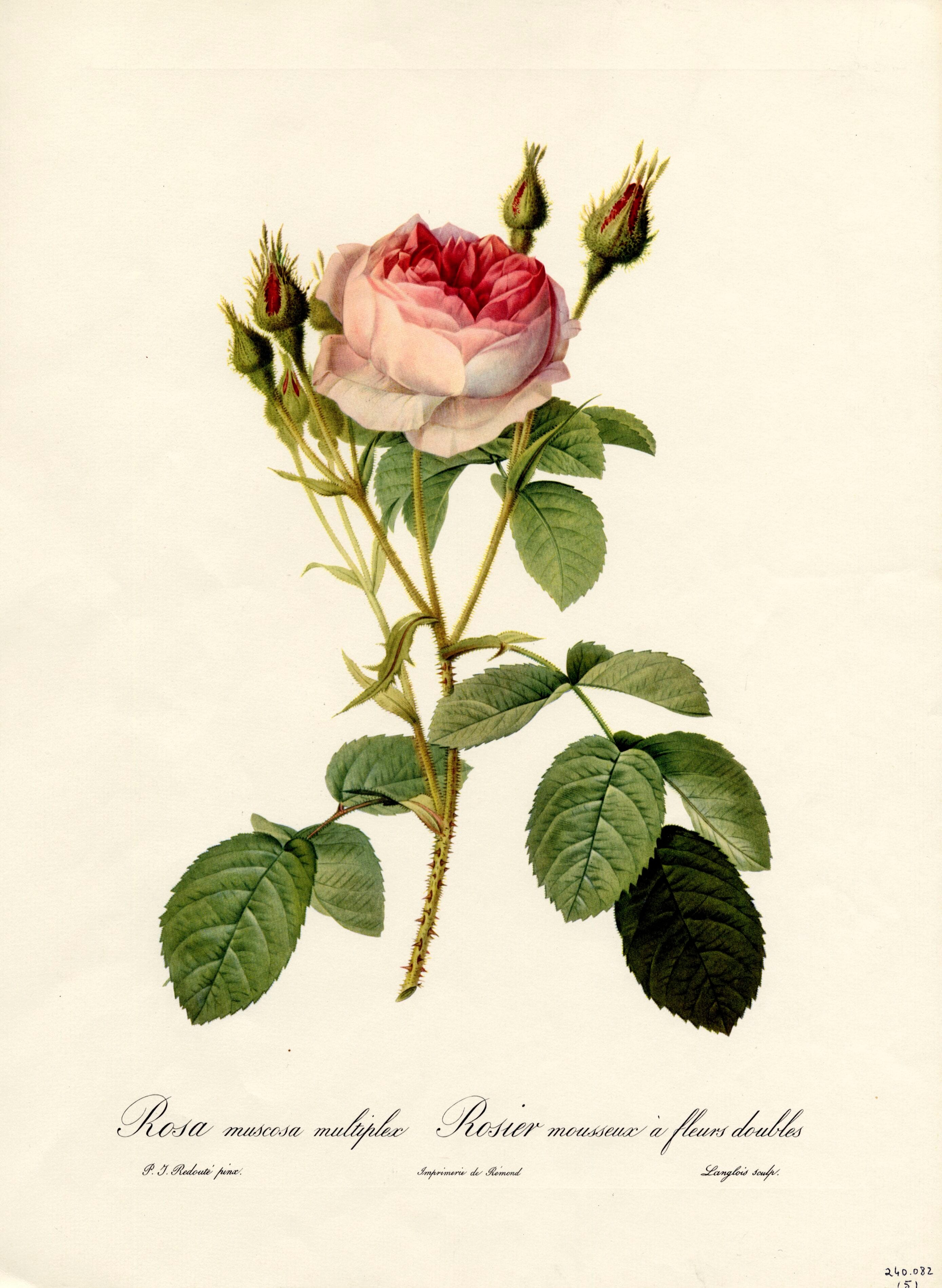
1817–1824
The Double Moss Rose
The moss rose in full — the bloom crowded, the bud furred green.
Rosa centifolia muscosa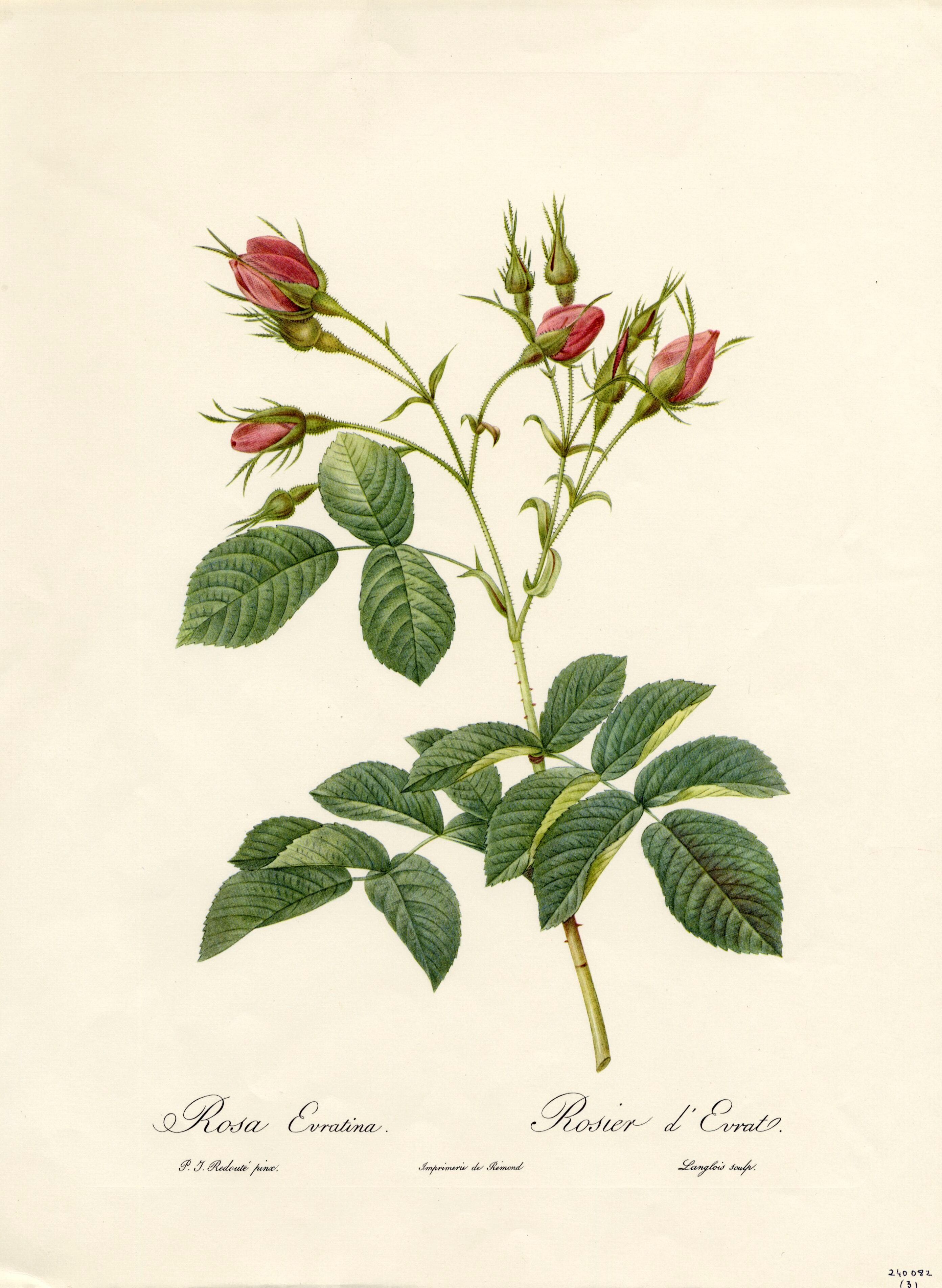
1817–1824
Evrat’s Rose
A named garden rose of the 1810s — a plate that preserves a variety otherwise lost.
Rosa evratina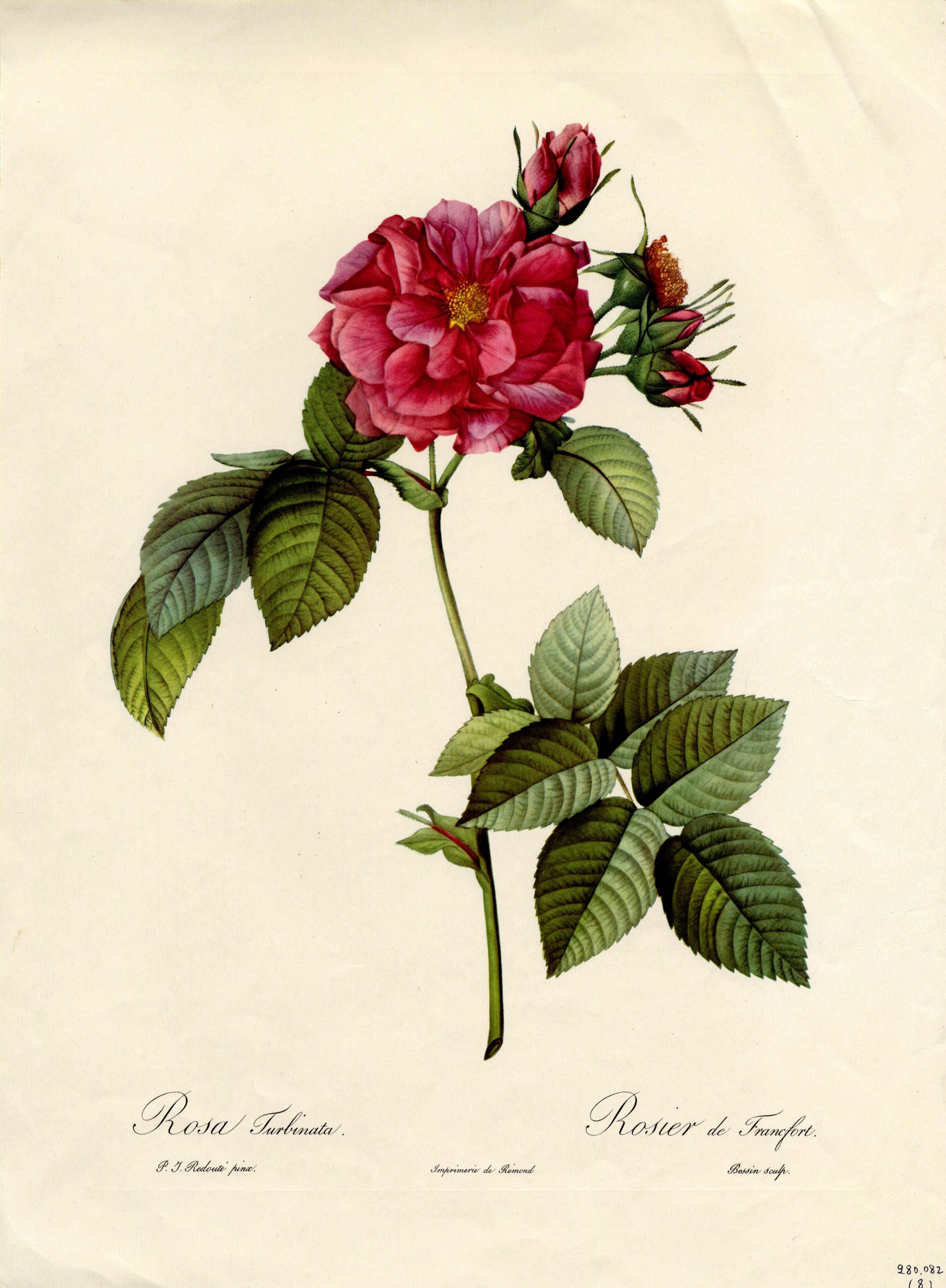
1817–1824
The Frankfurt Rose
The swollen, turban-shaped hip that gives the rose its name.
Rosa turbinata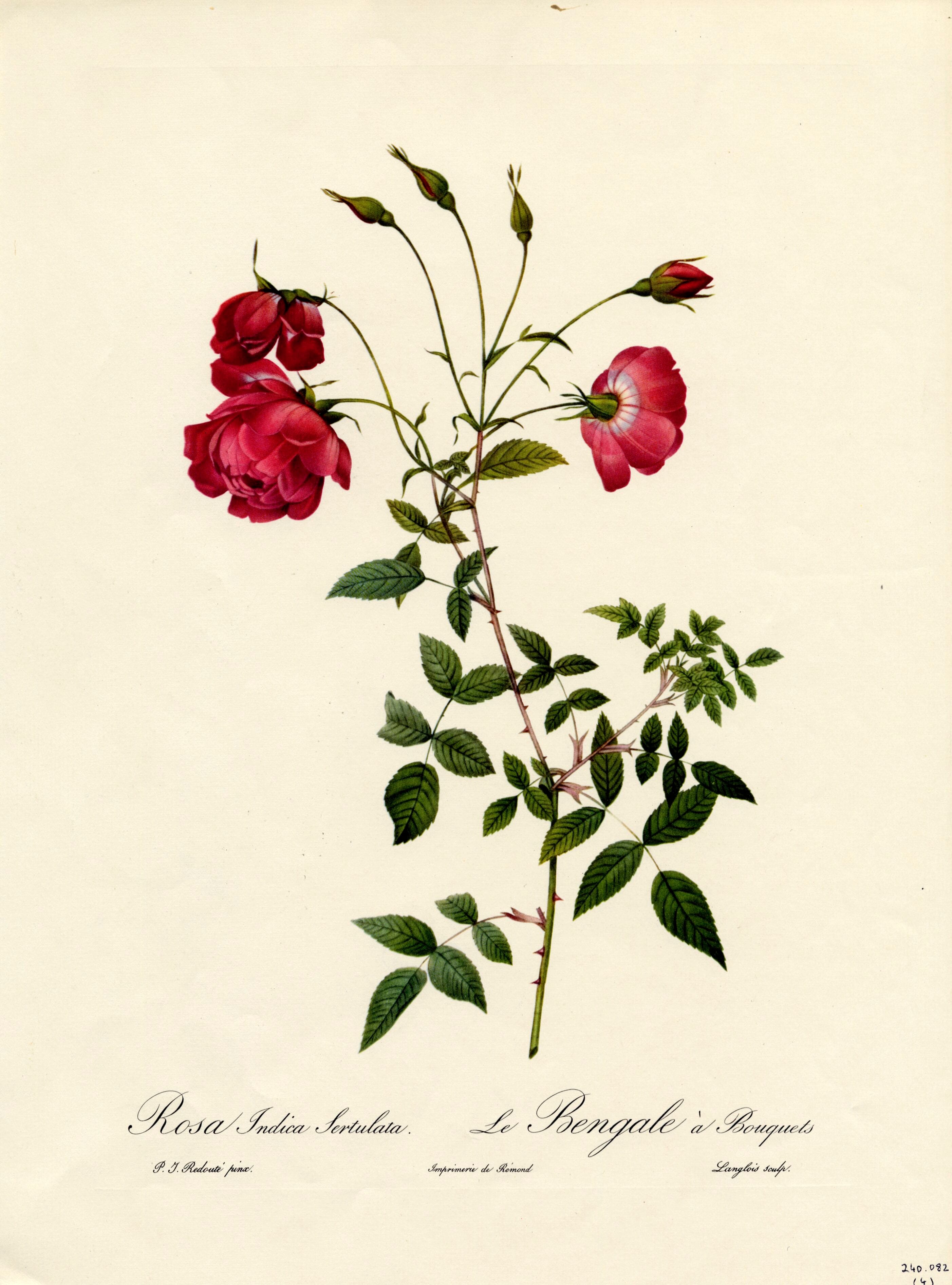
1817–1824
The Bouquet Bengal Rose
A China rose that flowers in clusters — and flowers again, and again.
Rosa indica sertulata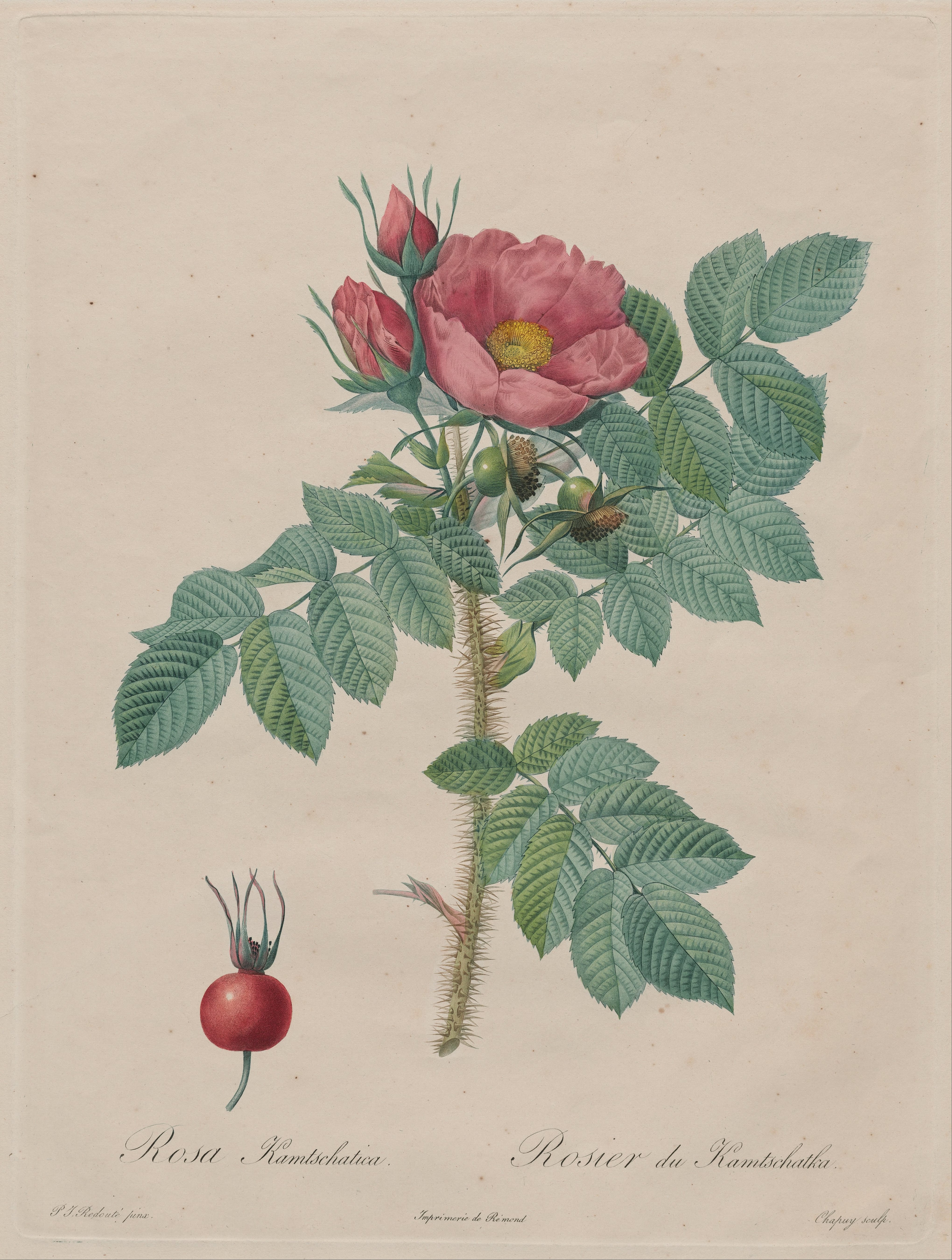
1817–1824
The Kamchatka Rose
A rose from the Russian far east, at the cold end of the genus.
Rosa kamtschaticaTHE HOTHOUSE
The Grand Flower
1802–1816
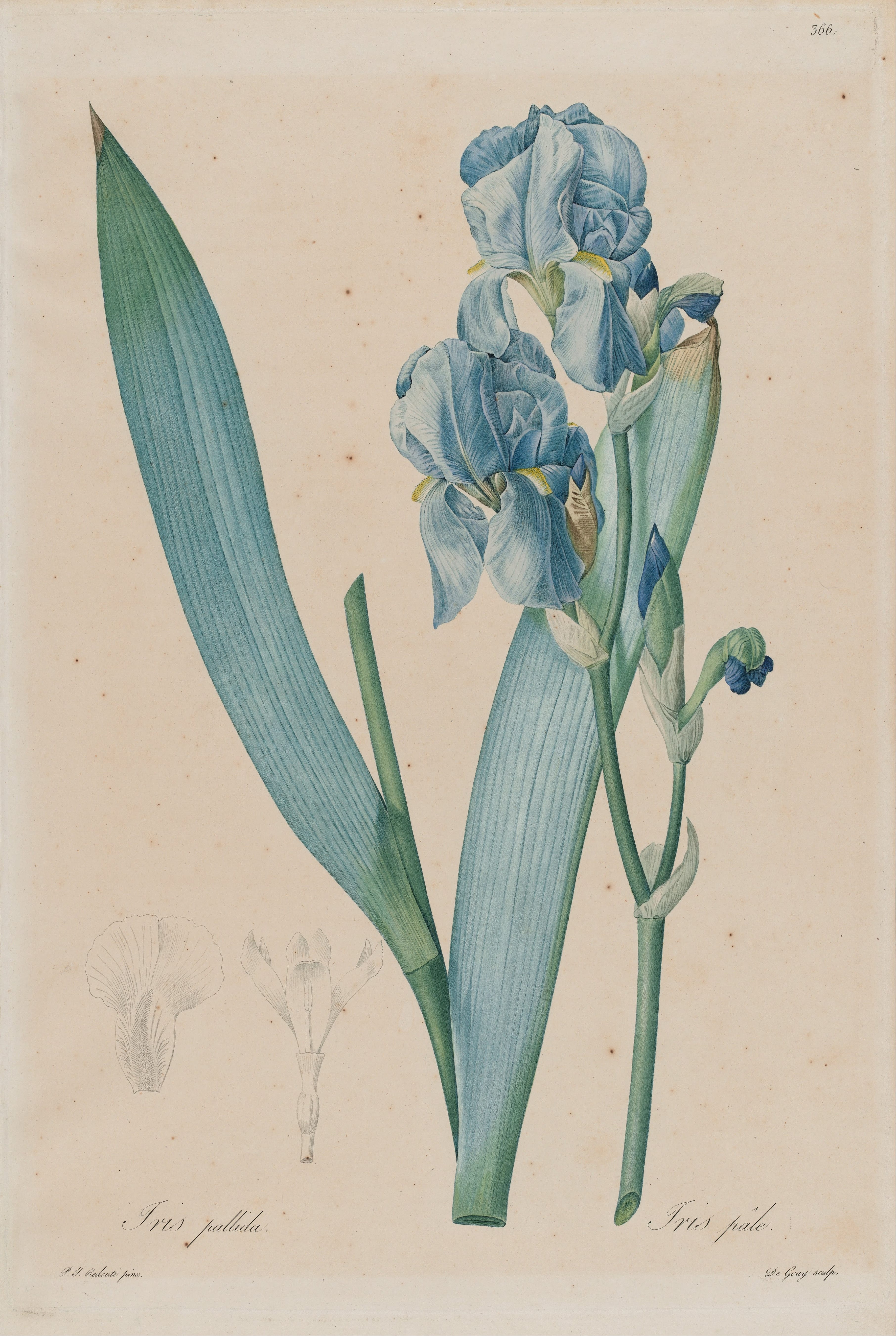
The Dalmatian Iris
The falls and standards of an iris, at the scale of architecture.
Iris pallida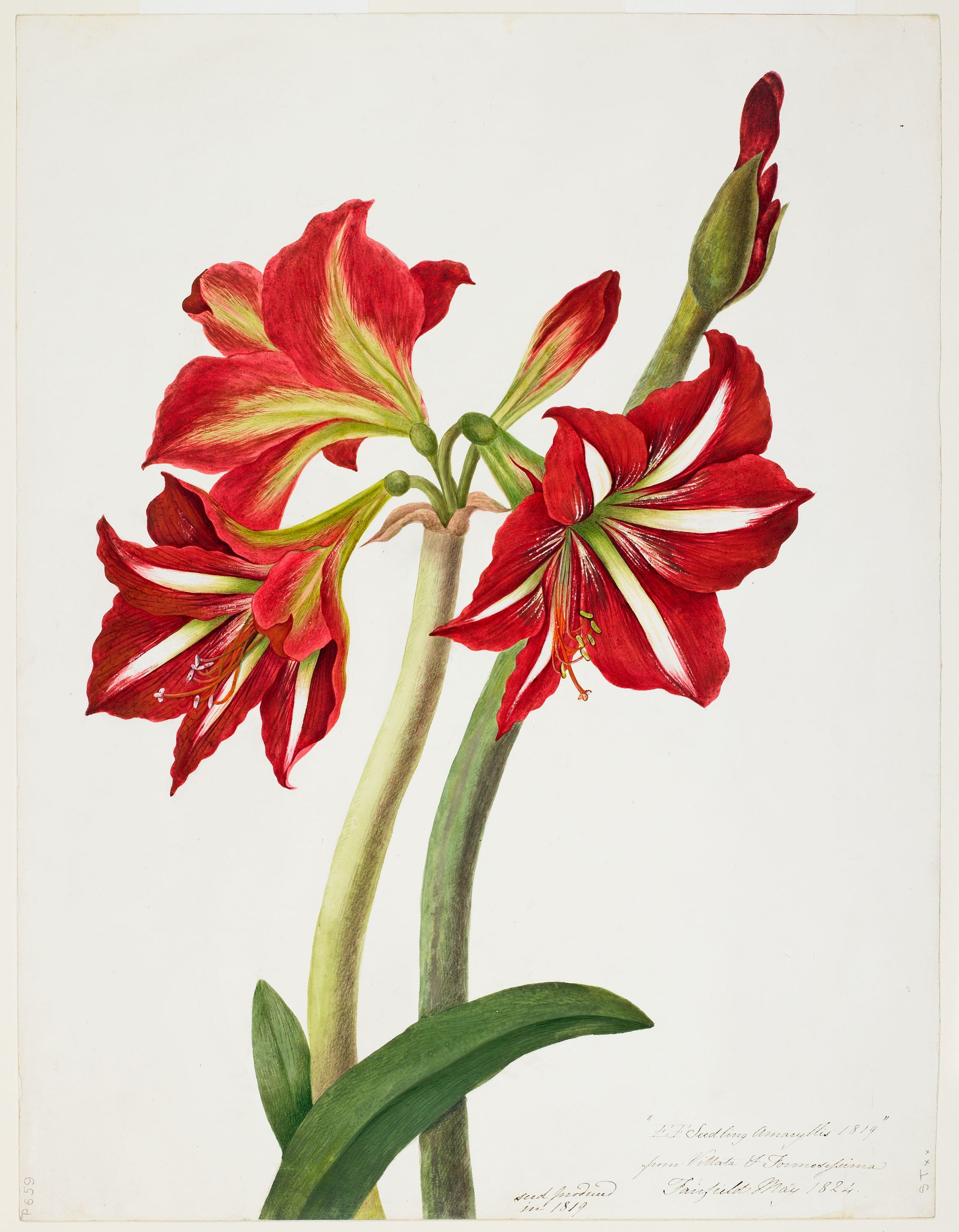
1831–1834
A Hexandrian Lily
A giant lily, at overwhelming scale.
1801–1806
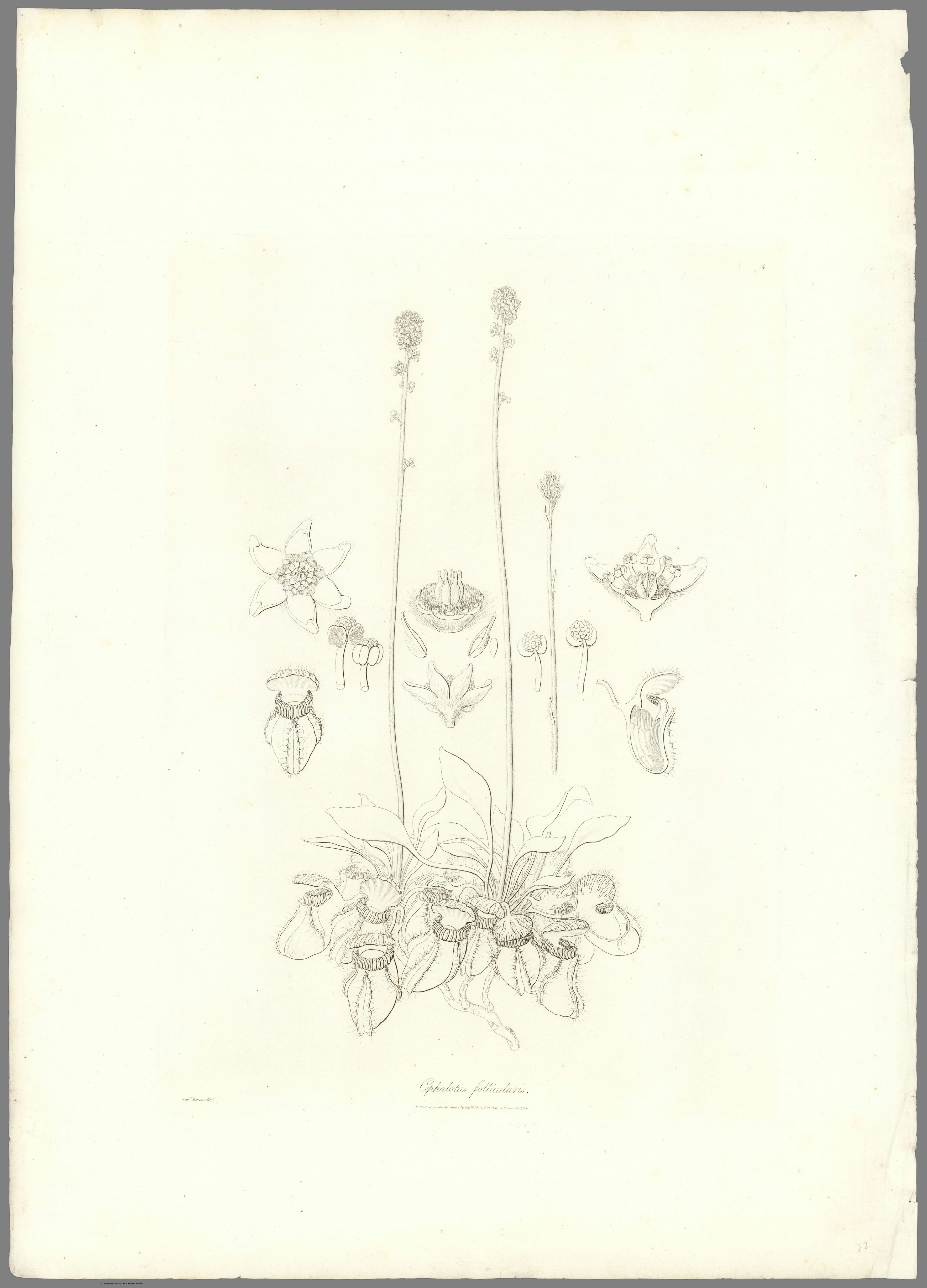
The Albany Pitcher Plant
A carnivorous plant found once, at the bottom of the world, and drawn perfectly the first time.
Cephalotus follicularis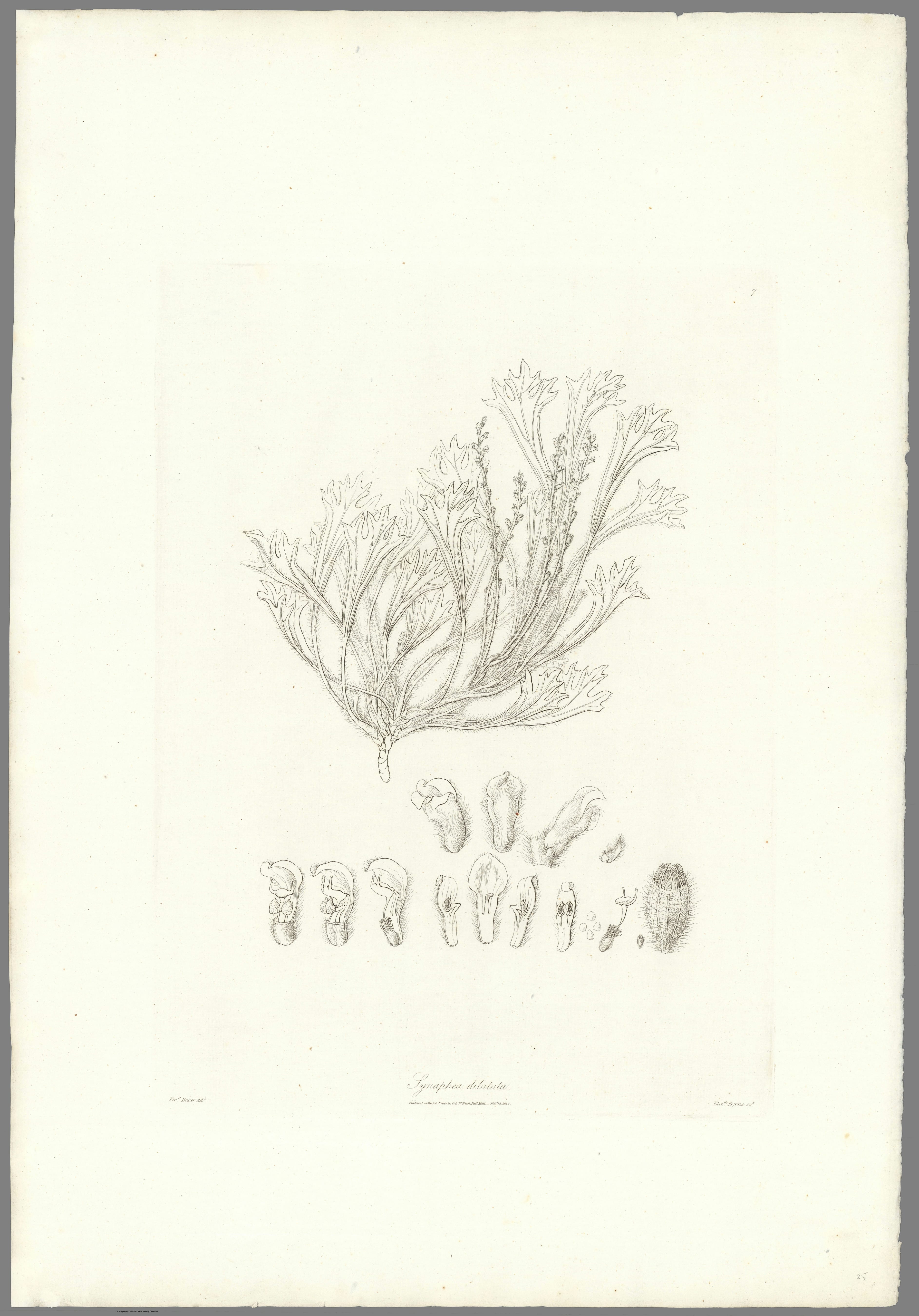
1801–1806
Synaphea
A Western Australian shrub, drawn with the patience of an anatomist.
Synaphea dilatata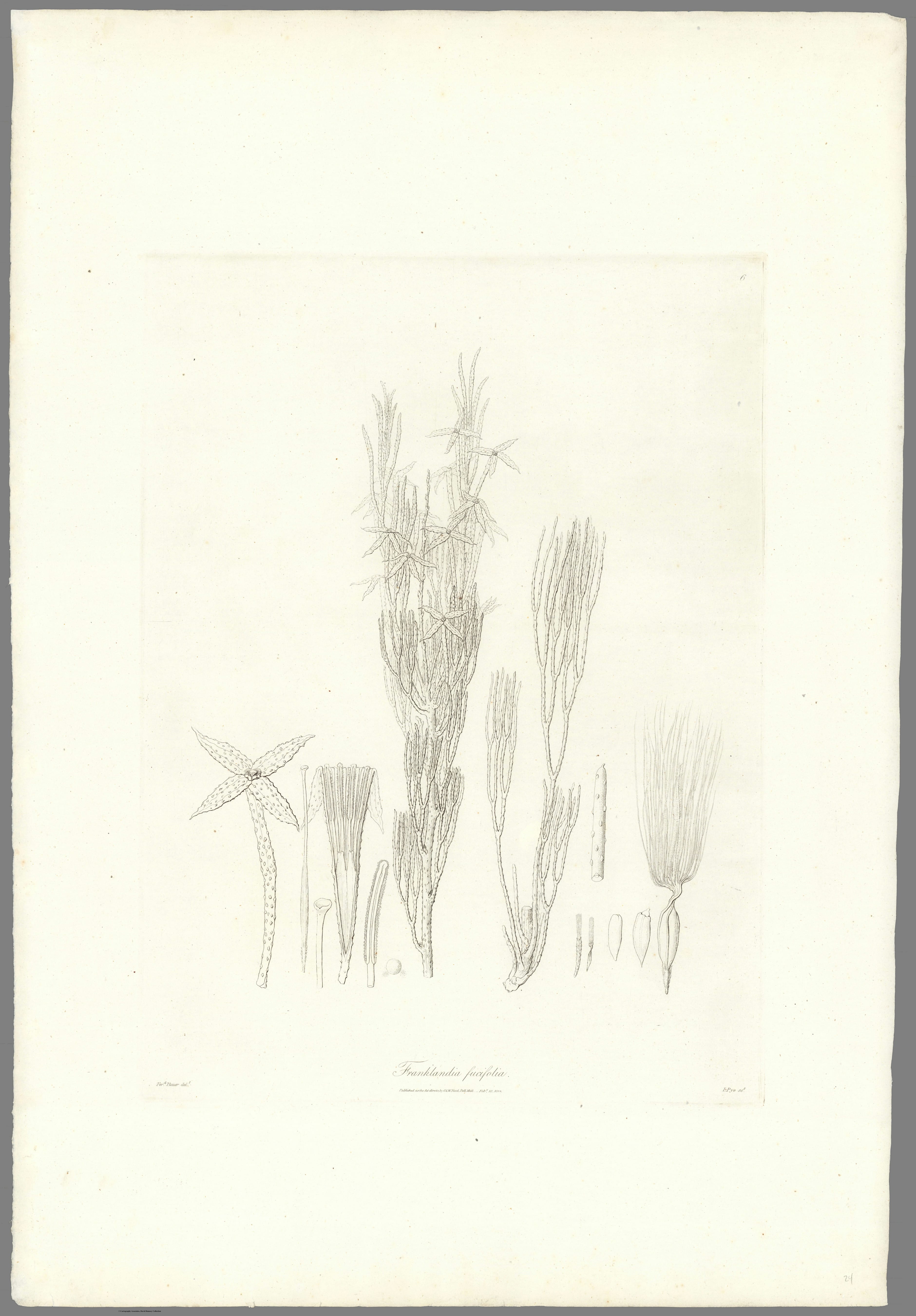
1801–1806
Franklandia
The lantern flower of the south-west, in a hand that never guessed.
Franklandia fucifolia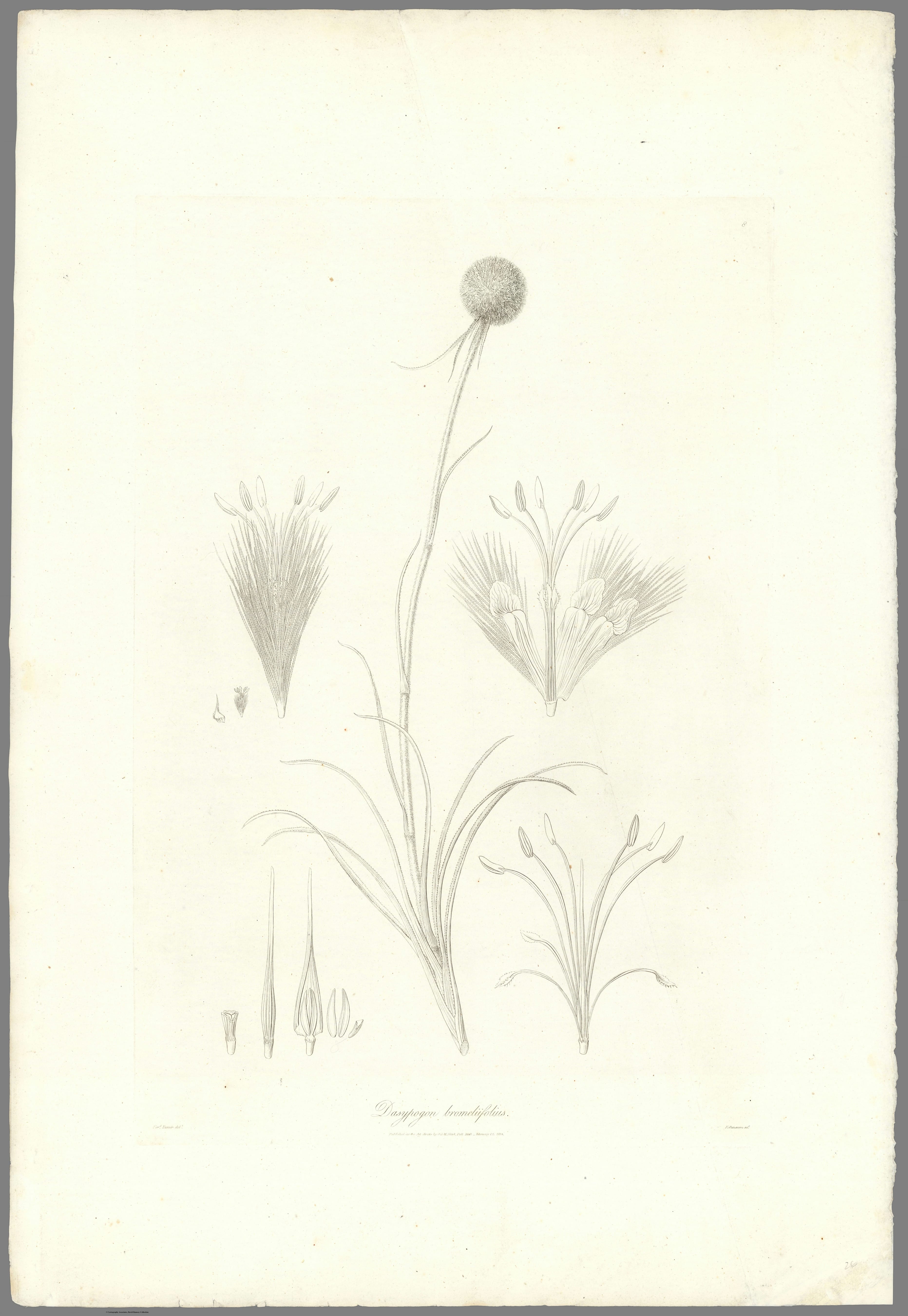
1801–1806
Dasypogon
A pineapple-bush of the sand plains, held to the light.
Dasypogon bromeliifolius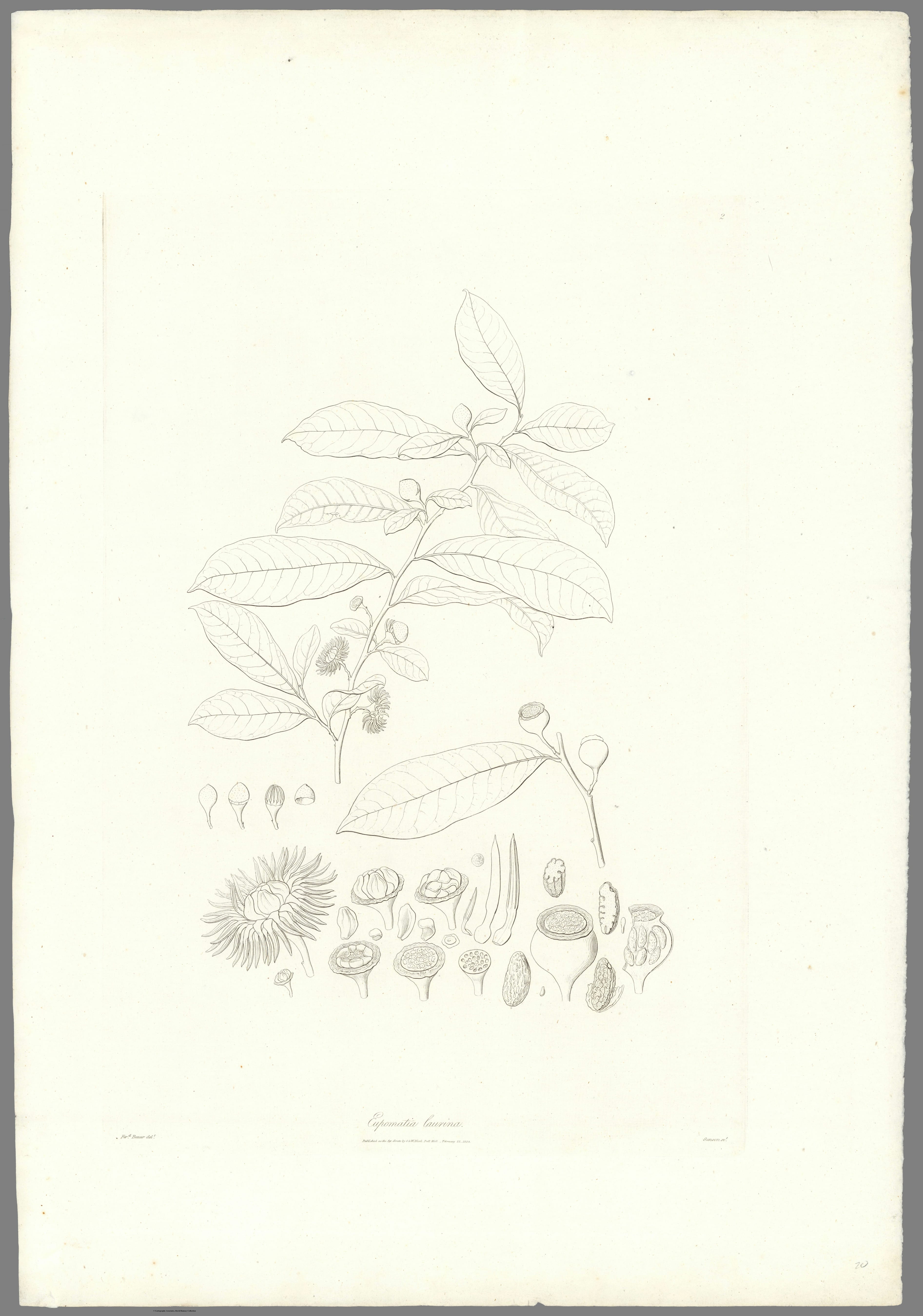
1801–1806
The Bolwarra
An ancient flowering line of eastern Australia, drawn from the living plant.
Eupomatia laurina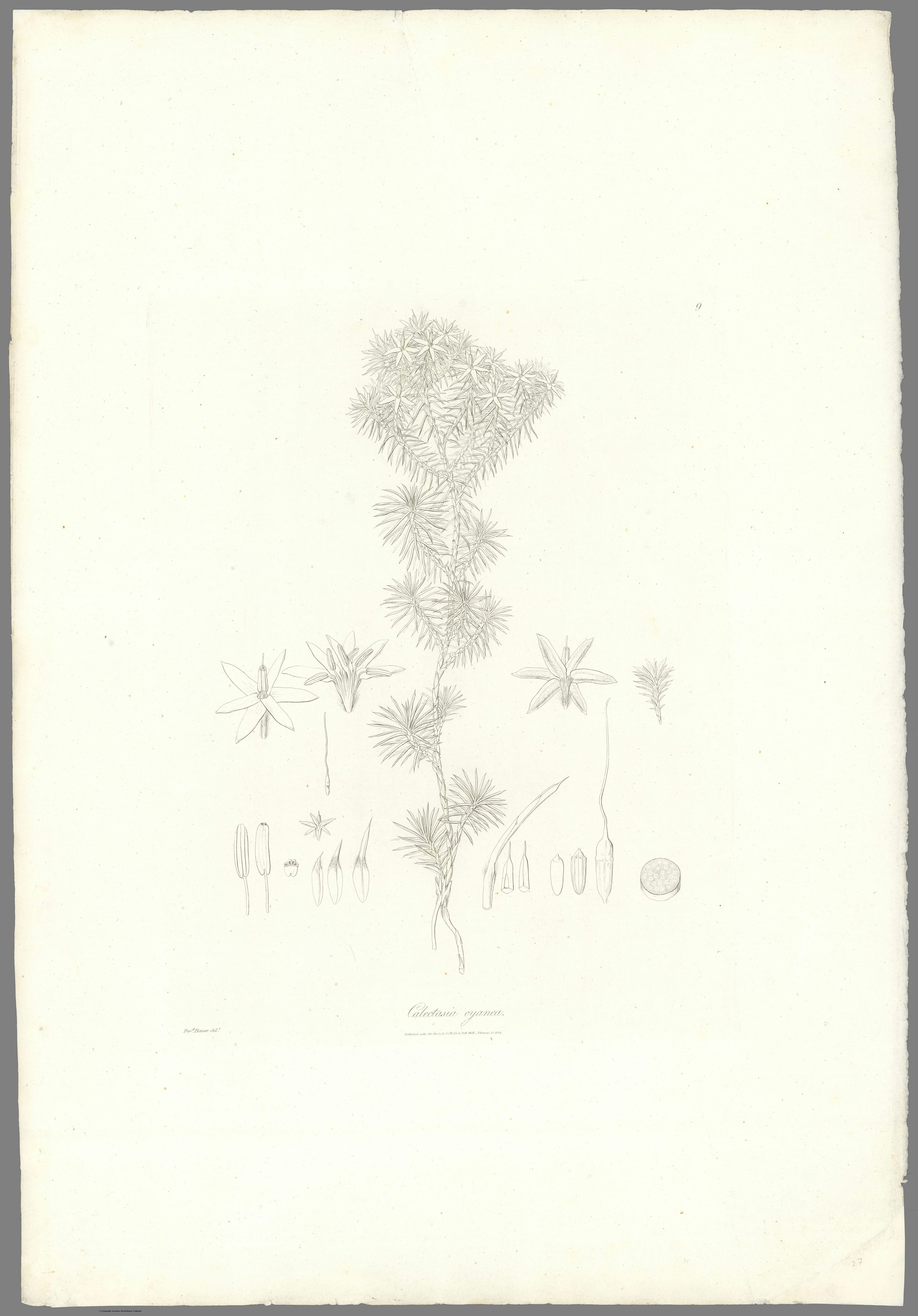
1801–1806
The Blue Tinsel Lily
A flower with a metallic sheen — and the hardest thing in the book to colour.
Calectasia cyanea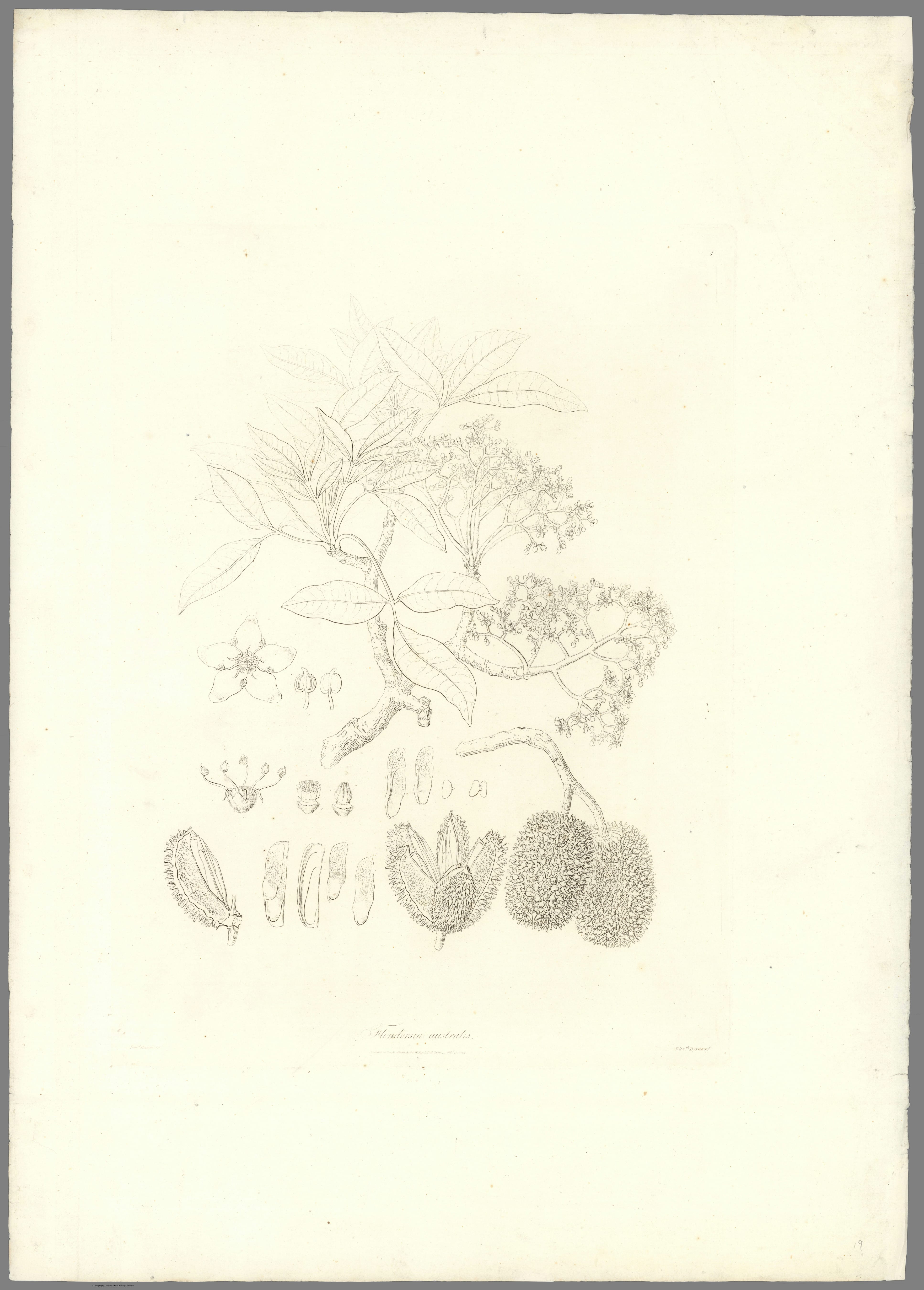
1801–1806
Flindersia
The tree named for the captain, drawn by the man in the next cabin.
Flindersia australis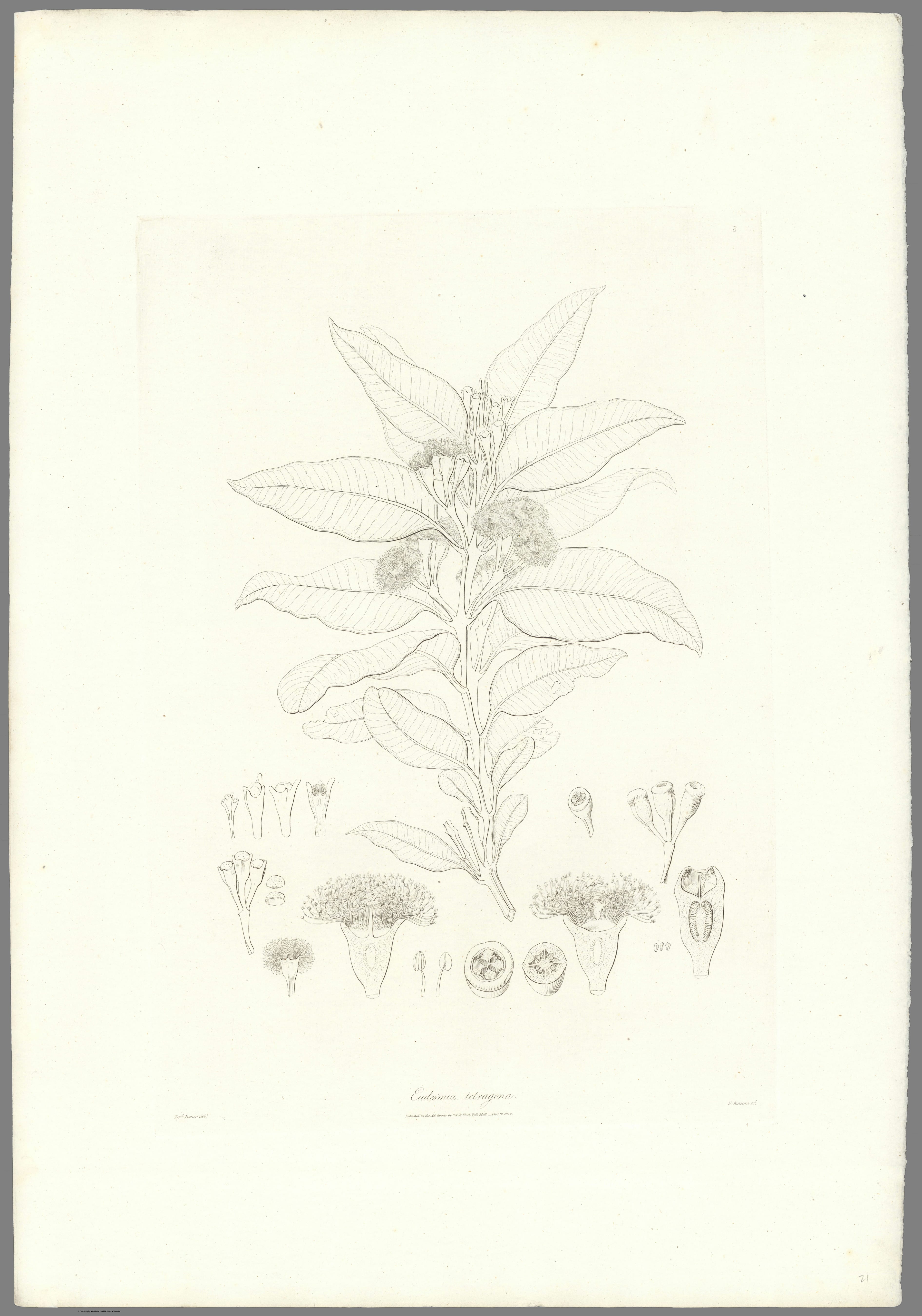
1801–1806
A Eucalypt
The tree that defines a continent, treated as seriously as an orchid.
Eudesmia tetragona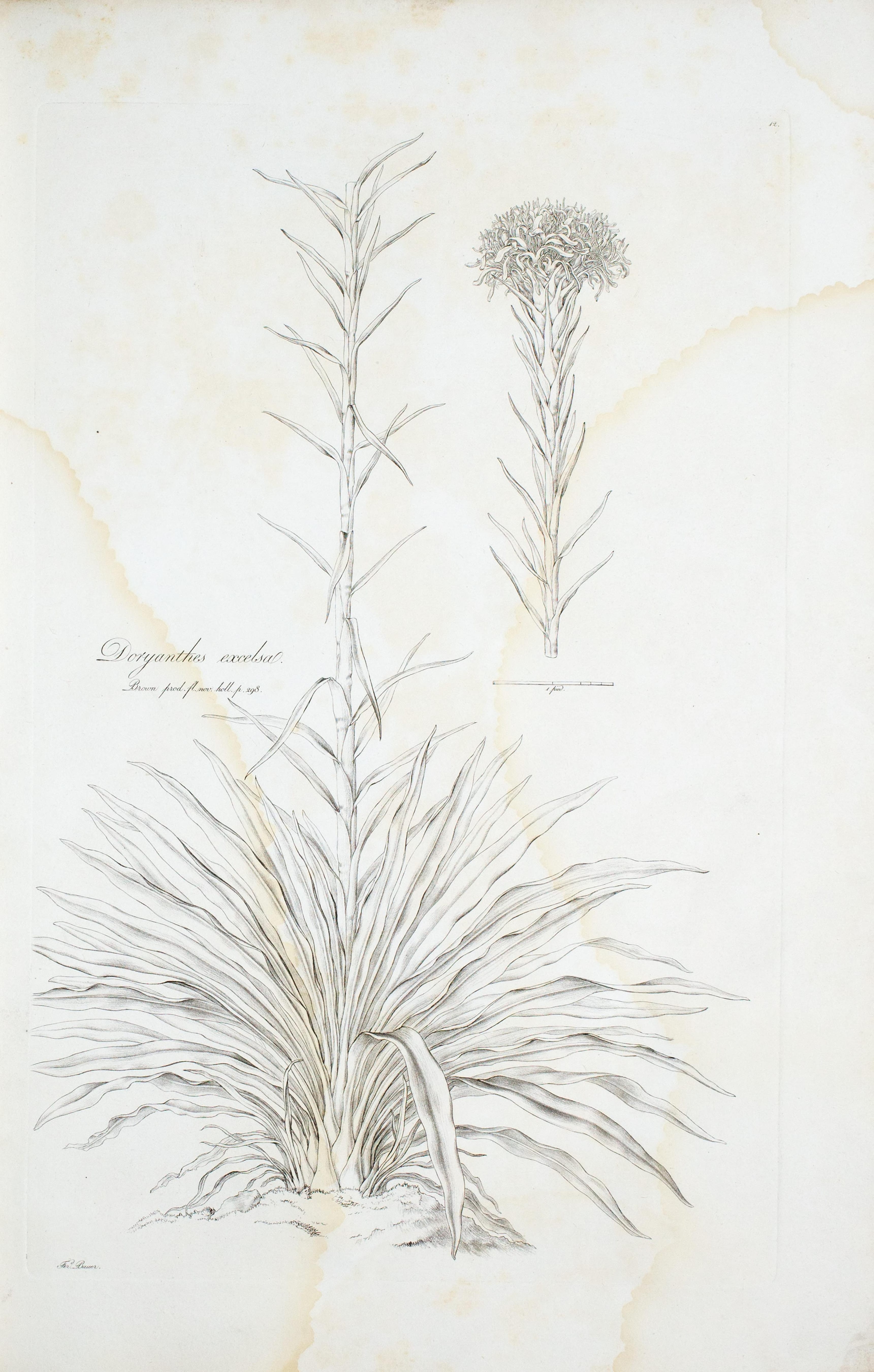
19th century
The Gymea Lily
A flower spike that stands taller than a person.
Doryanthes excelsa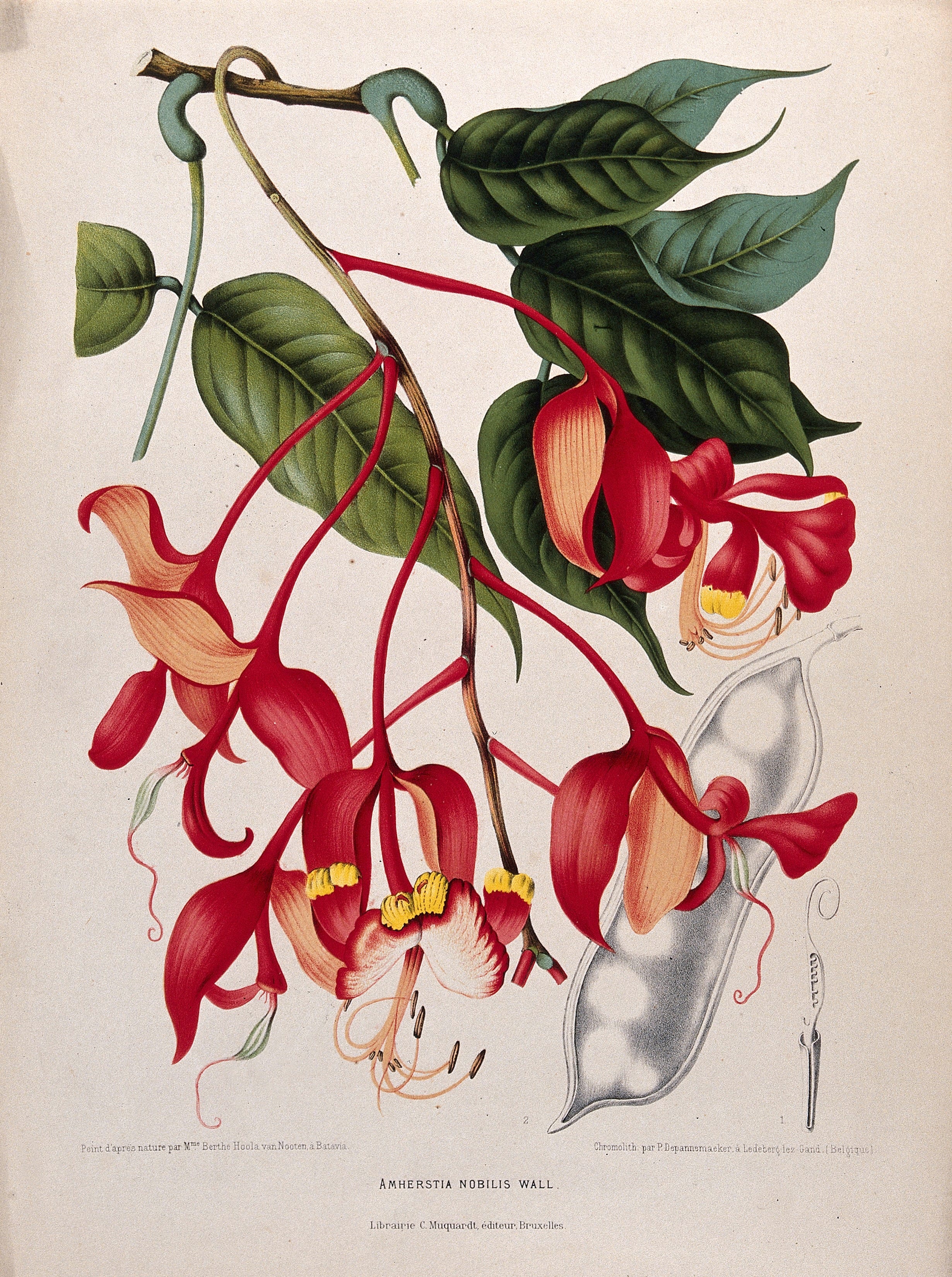
1863–1864
The Pride of Burma
Called the most beautiful flowering tree in the world, and drawn in Java by a widow with four children.
Amherstia nobilis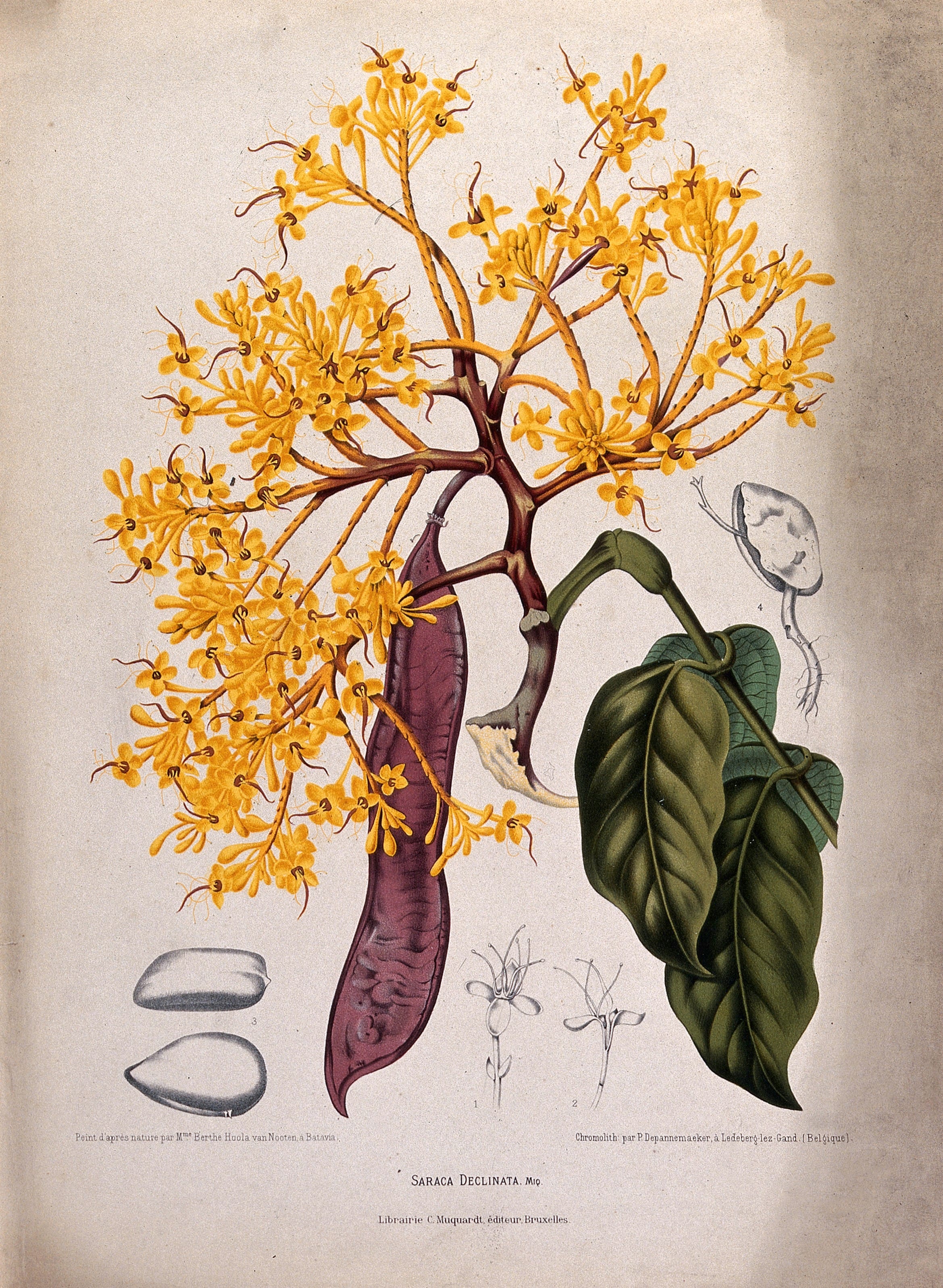
1863–1864
The Asoka Tree
A sacred tree of India and Java, in orange going to red.
Saraca declinata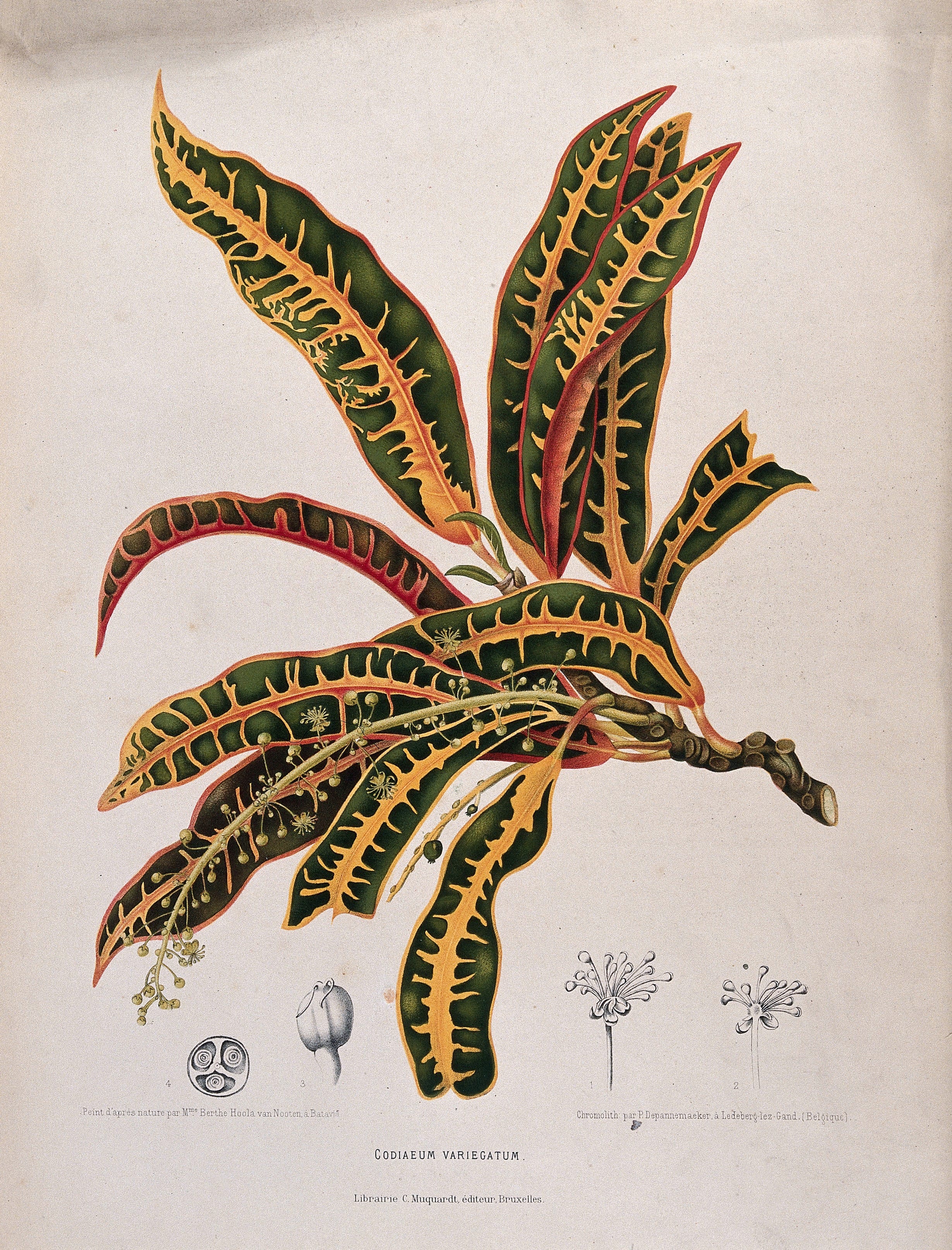
1863–1864
The Croton
A leaf that behaves like a flower — yellow, orange, red and green on one plant.
Codiaeum variegatum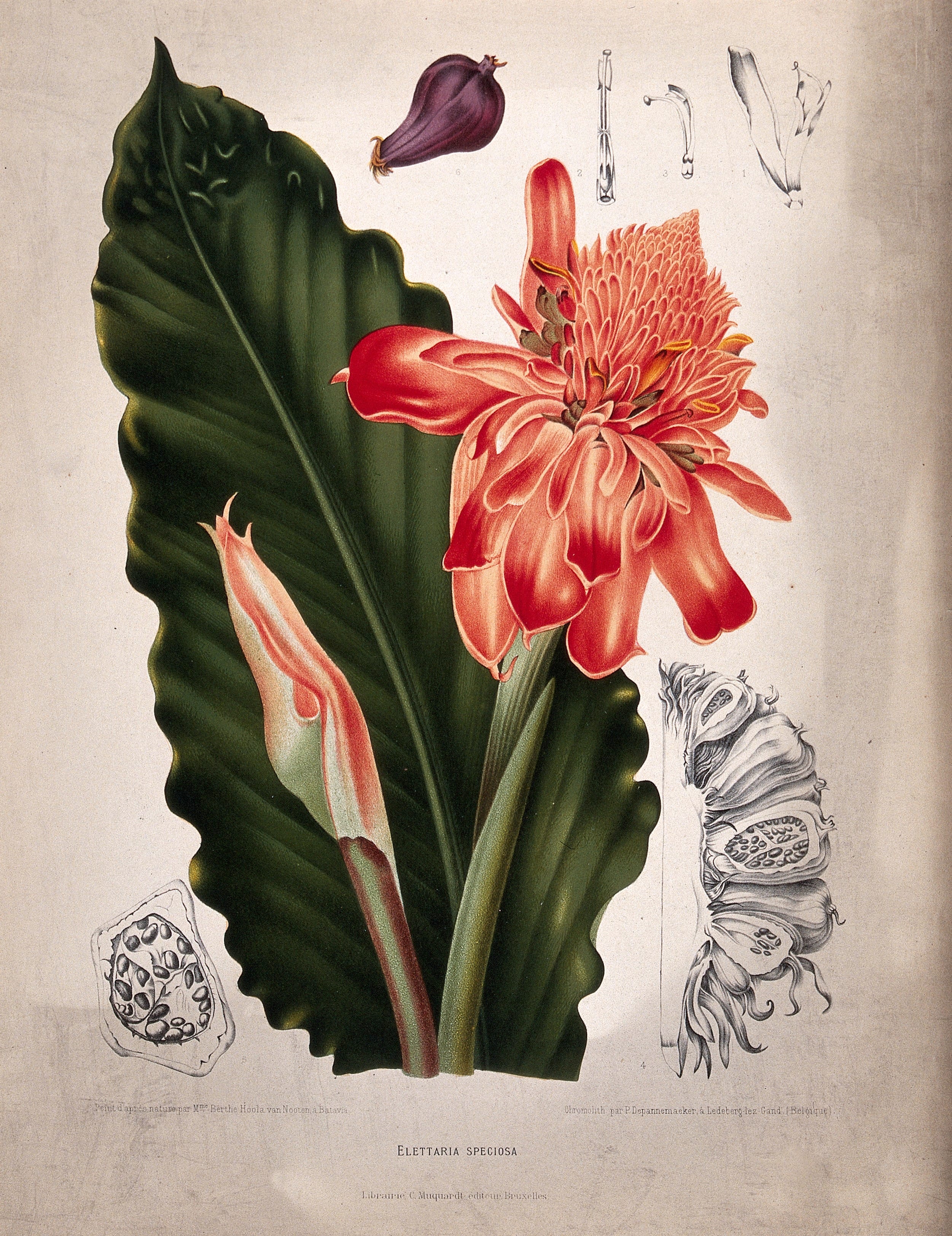
1863–1864
A Wild Cardamom
The spice trade’s own plant, drawn where it grew.
Elettaria speciosaTHE ORCHID HOUSE
The Orchid
1835
Zygopetalum
A Brazilian orchid, from the longest-running flower book in the world.
Zygopetalum mackayi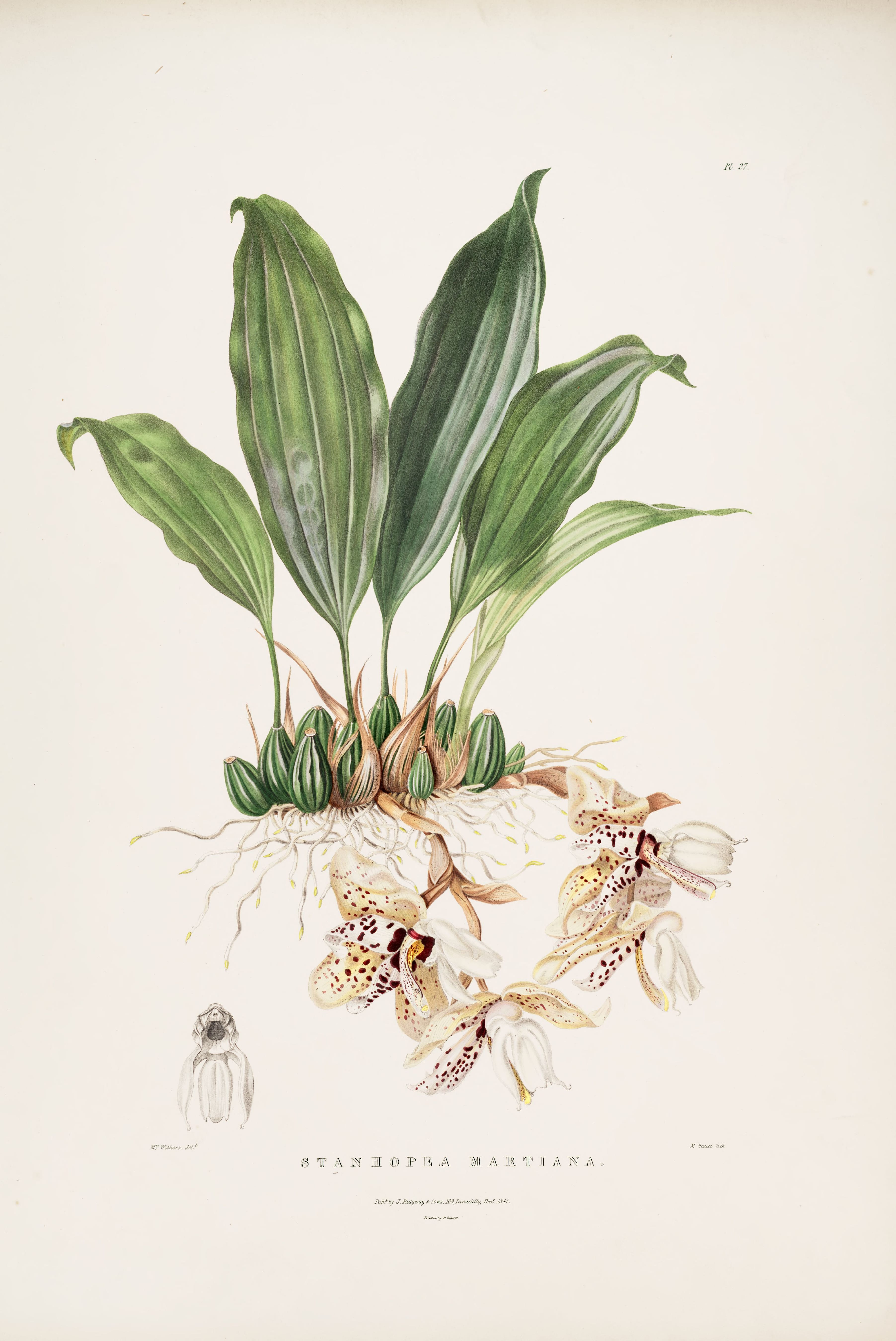
1837–1843
Stanhopea
An orchid that flowers downward, through the bottom of its own basket.
Stanhopea martiana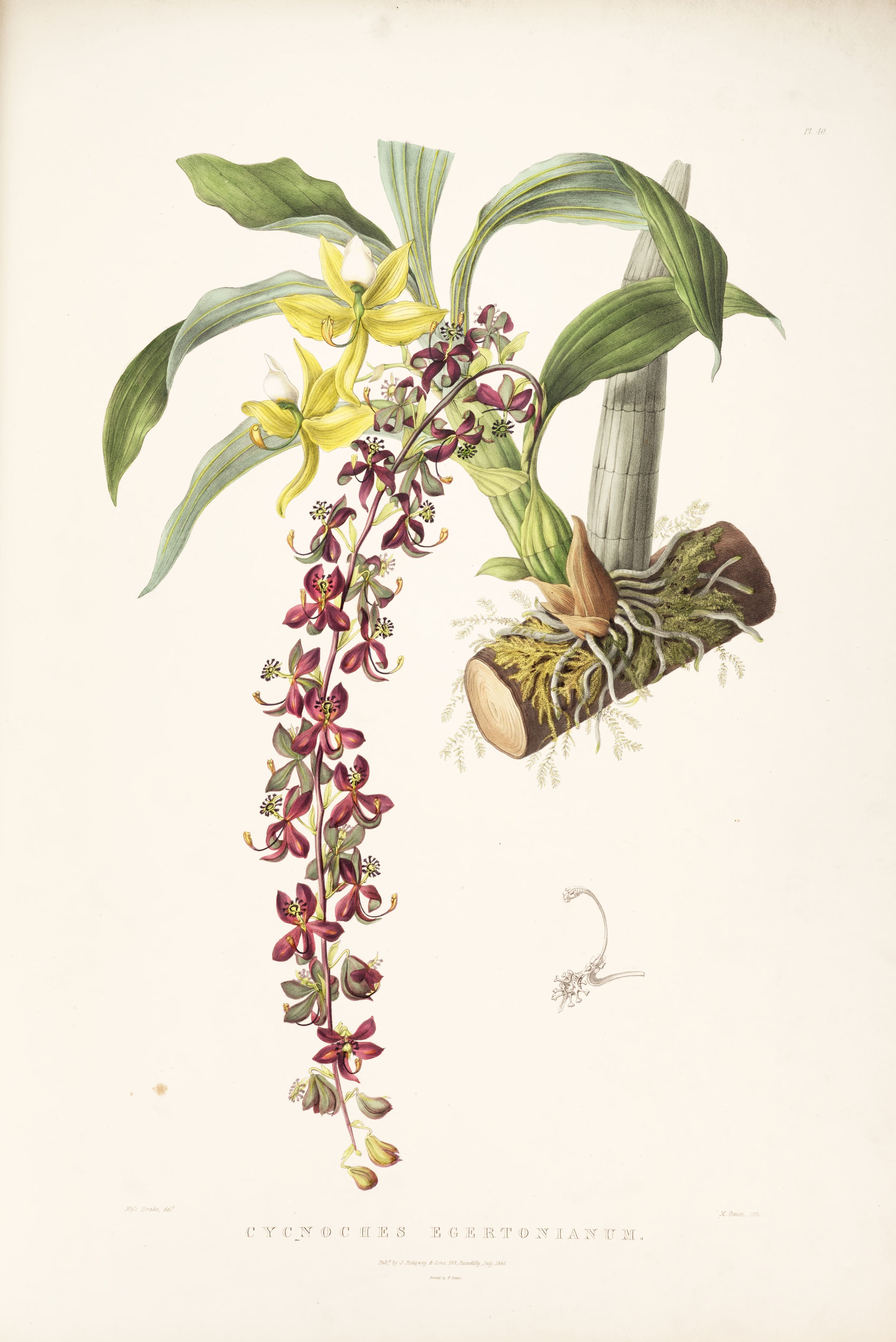
1837–1843
The Swan Orchid
The column arches like a swan’s neck — and the plant changes sex with the light.
Cycnoches egertonianum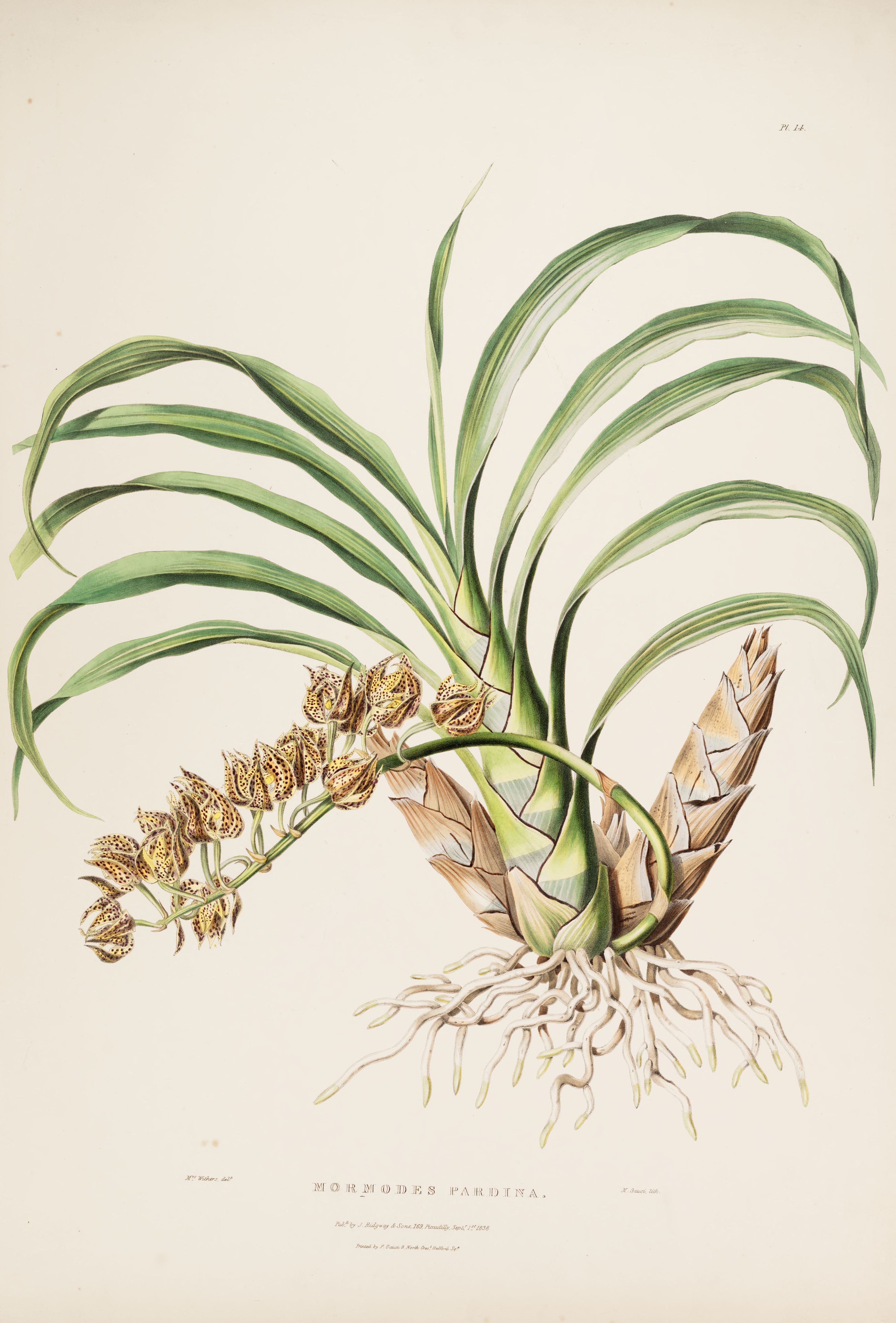
1837–1843
The Goblin Orchid
A flower twisted off its own axis — and it fires pollen at whatever touches it.
Mormodes maculata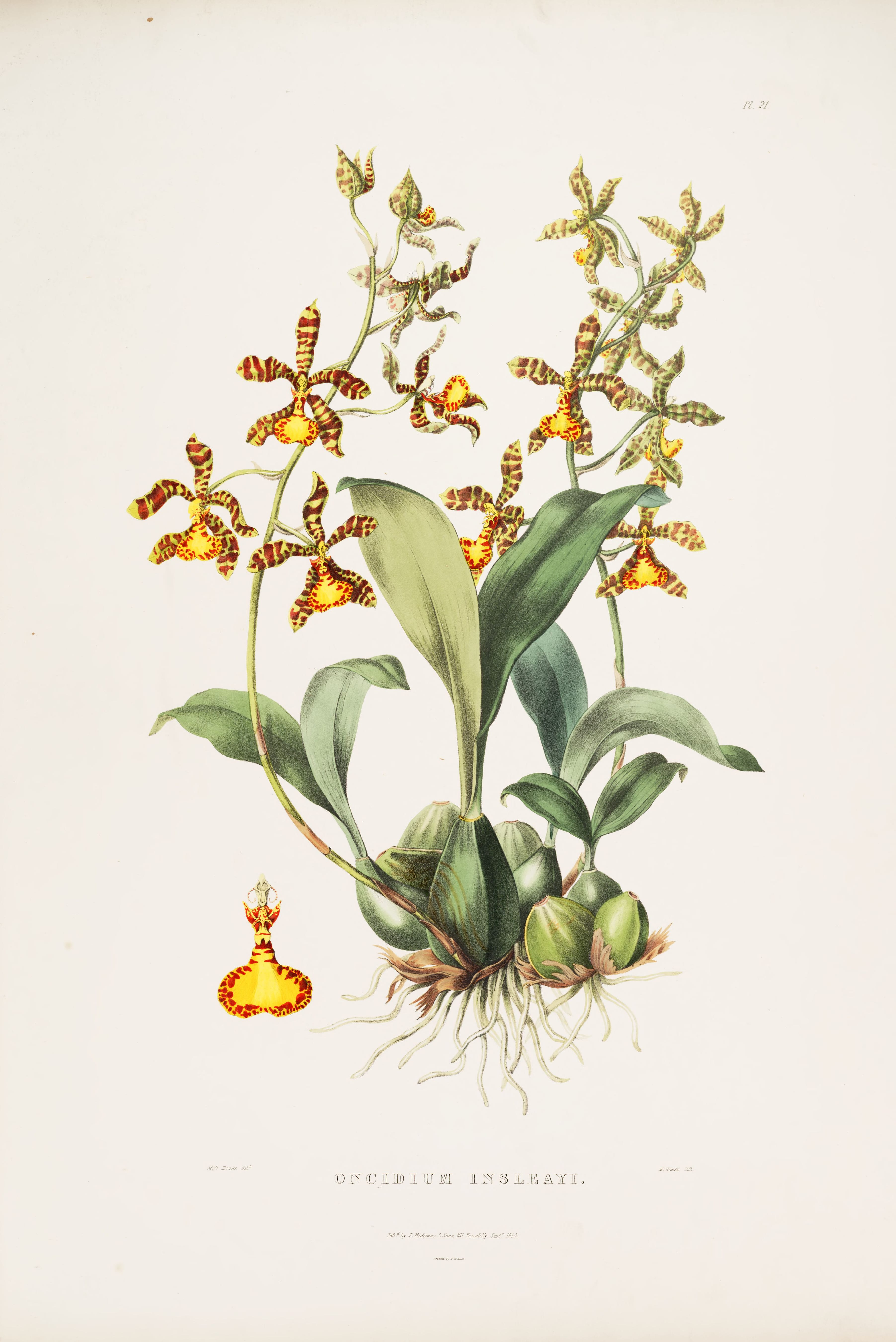
1837–1843
The Clown Orchid
A figure in the middle of the flower with its arms up — everyone sees it.
Rossioglossum insleayi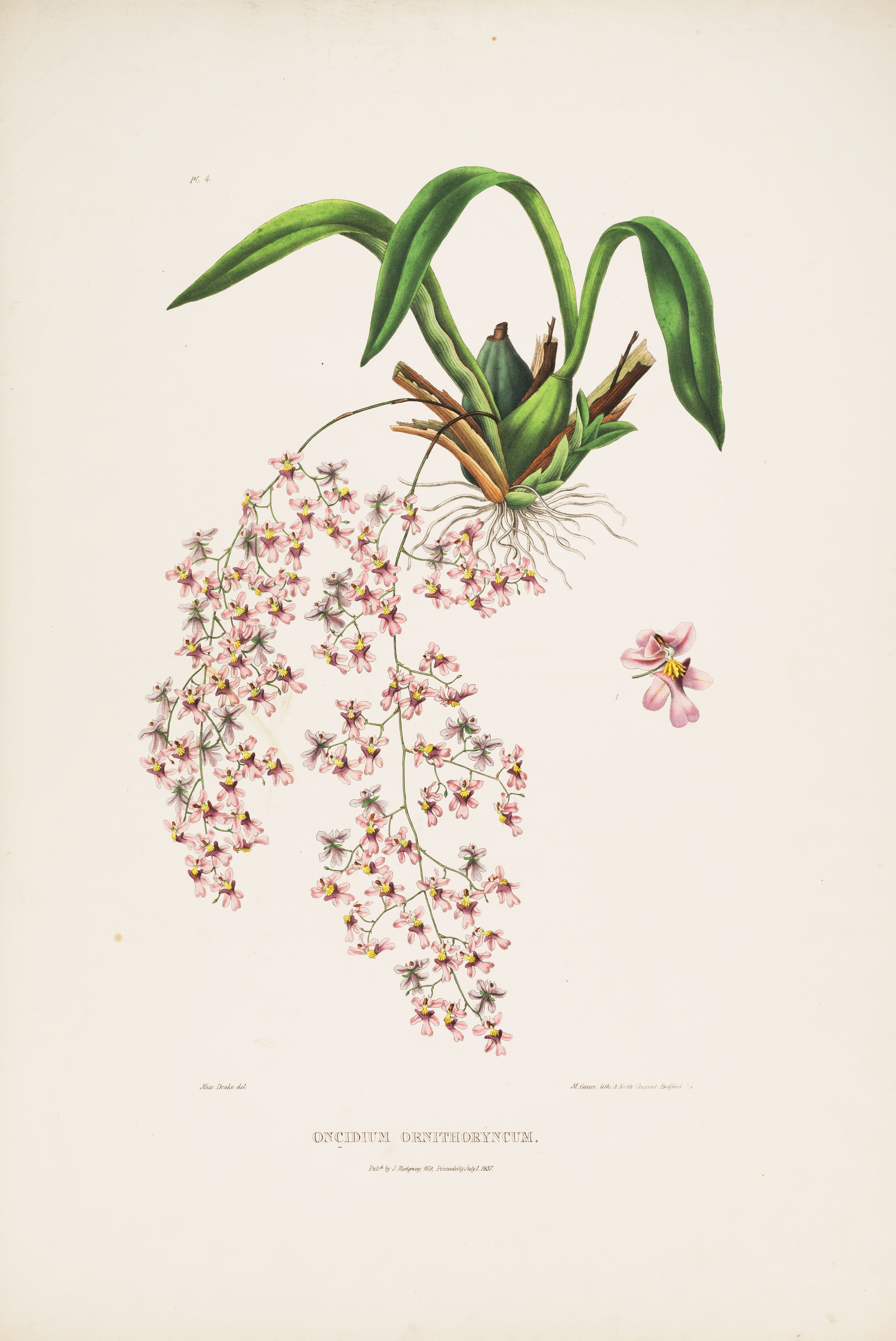
1837–1843
The Bird-Beak Oncidium
A spray of small pink flowers, and one of the very few orchids that smells of chocolate.
Oncidium ornithorhynchum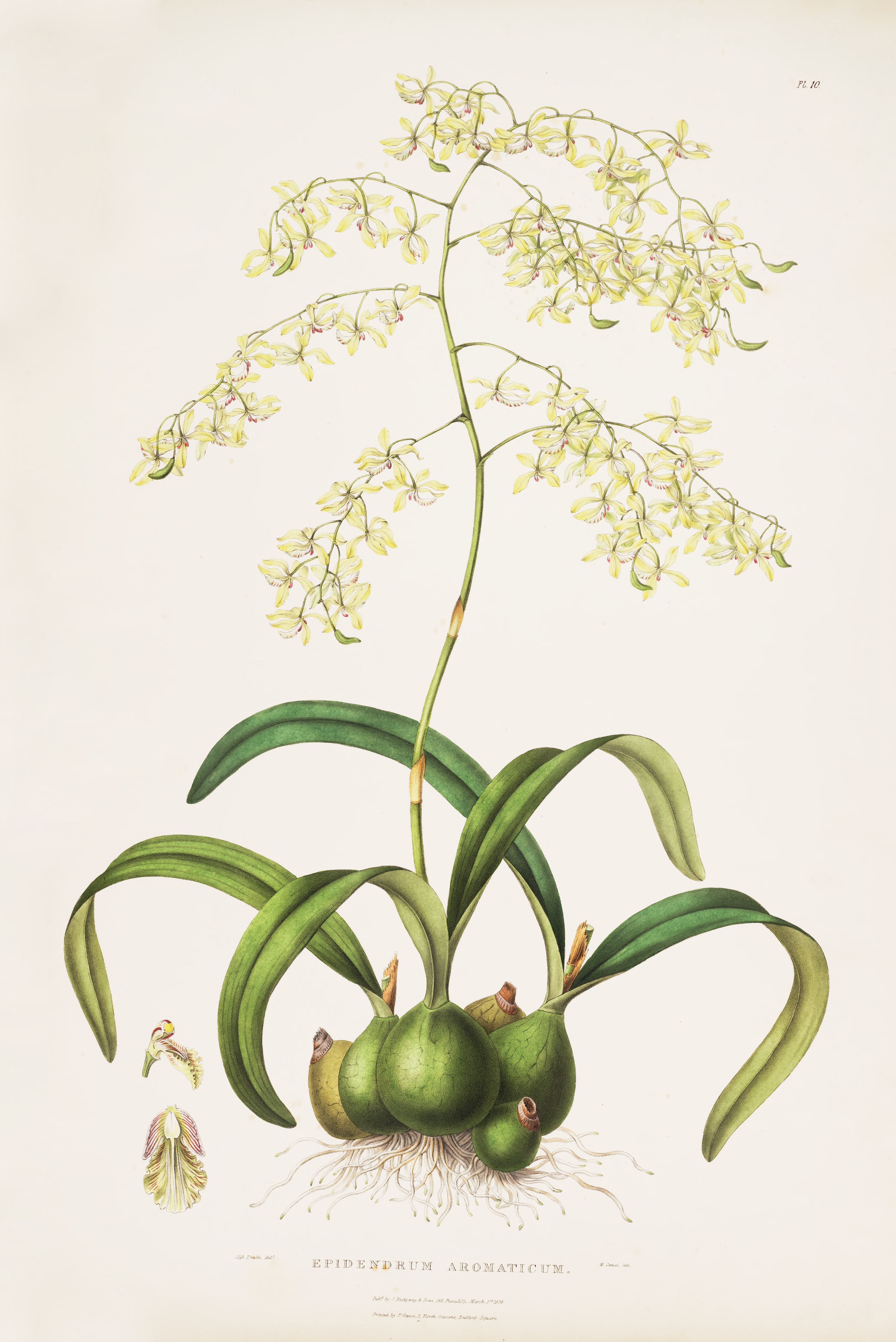
1837–1843
The Fragrant Encyclia
Yellow-green and honey-scented, on a plate the size of a tabletop.
Encyclia incumbens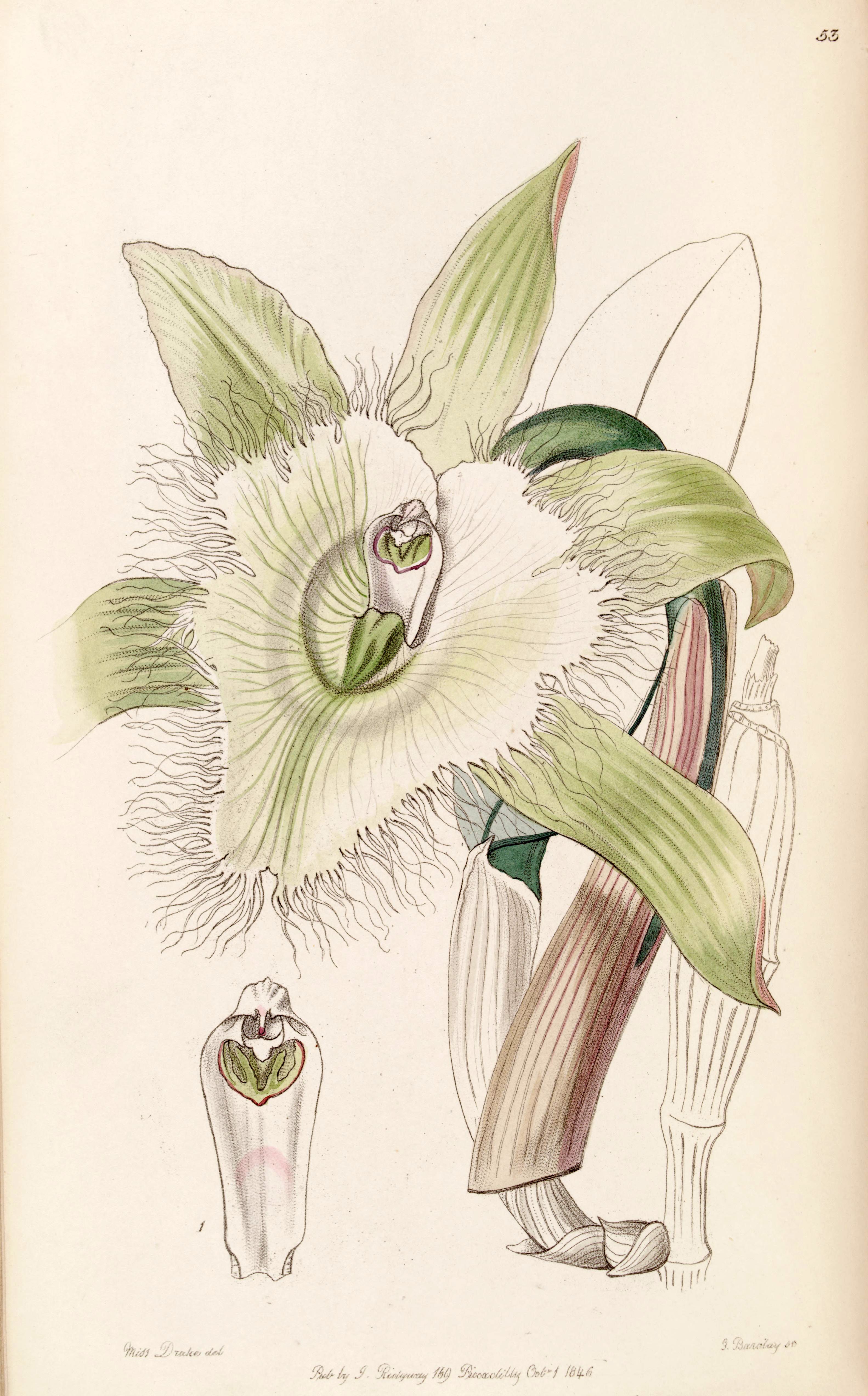
1846
The Lady of the Night
It opens white at dusk and perfumes an entire glasshouse by midnight.
Pl. 53Brassavola digbyana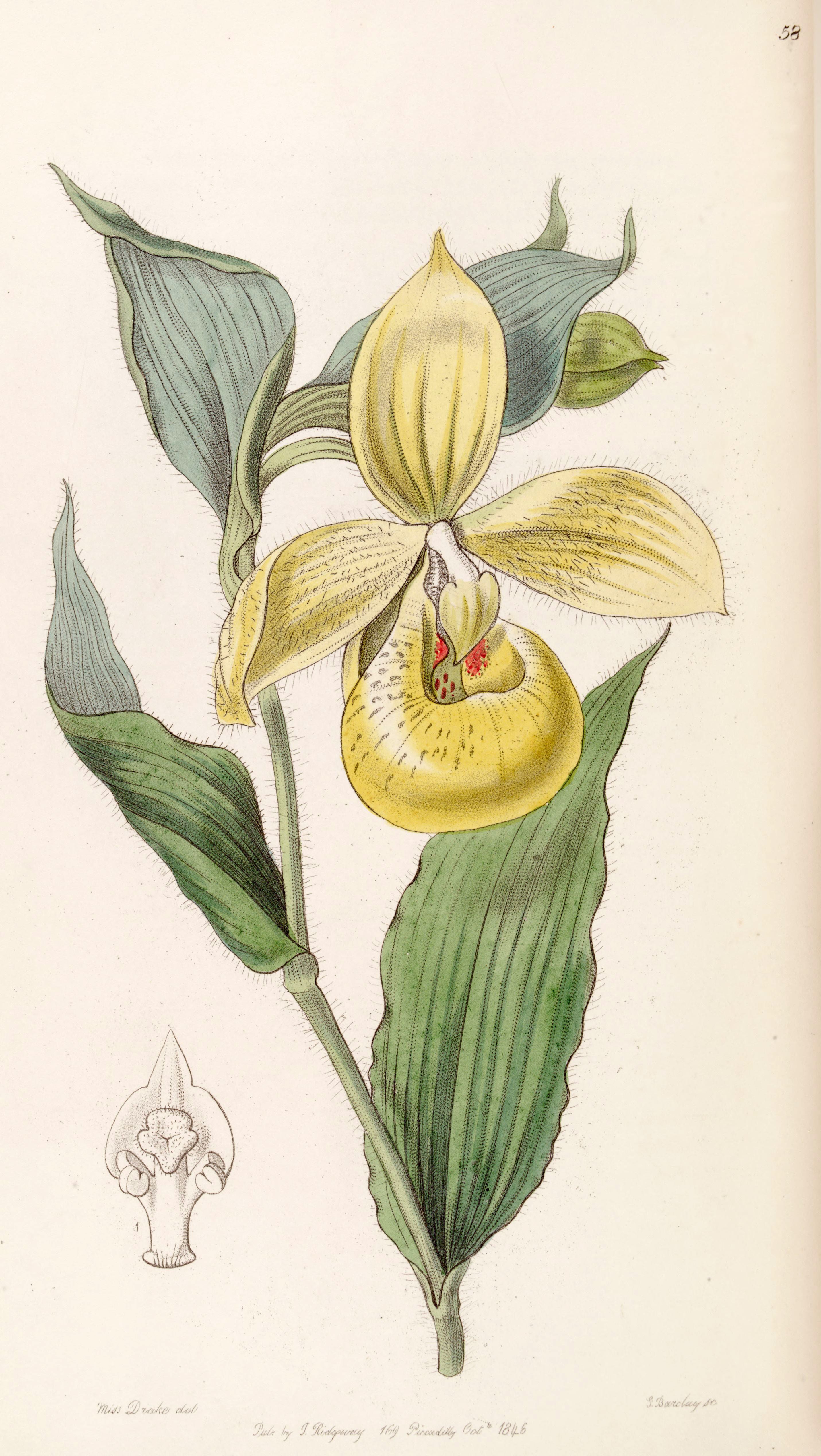
1846
The Mexican Lady’s Slipper
The largest slipper orchid in the Americas, and one of the hardest to keep alive.
Pl. 58Cypripedium irapeanum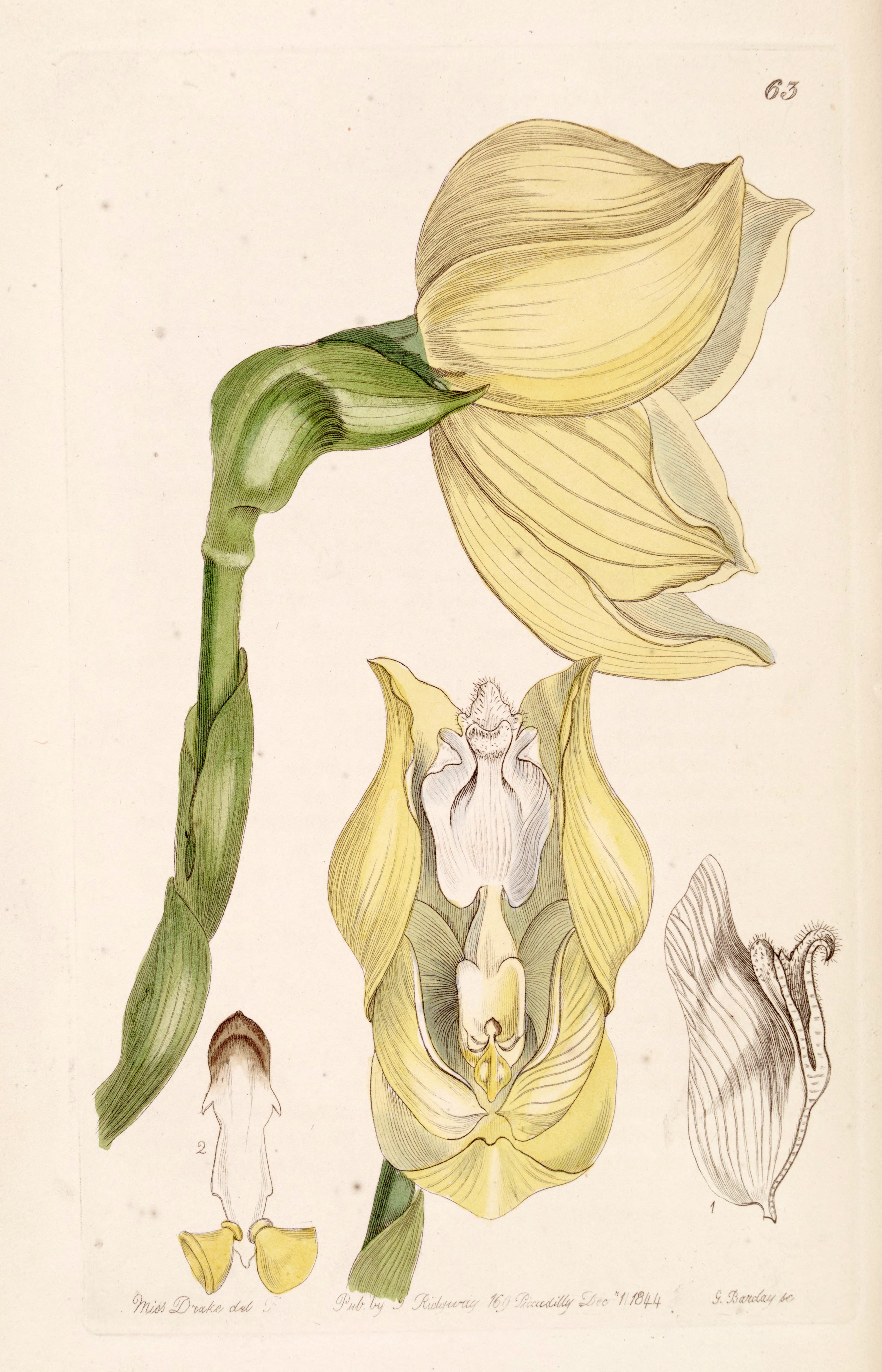
1844
The Tulip Orchid
A cupped flower with a loose figure rocking inside it — the “cradle orchid.”
Pl. 63Anguloa clowesii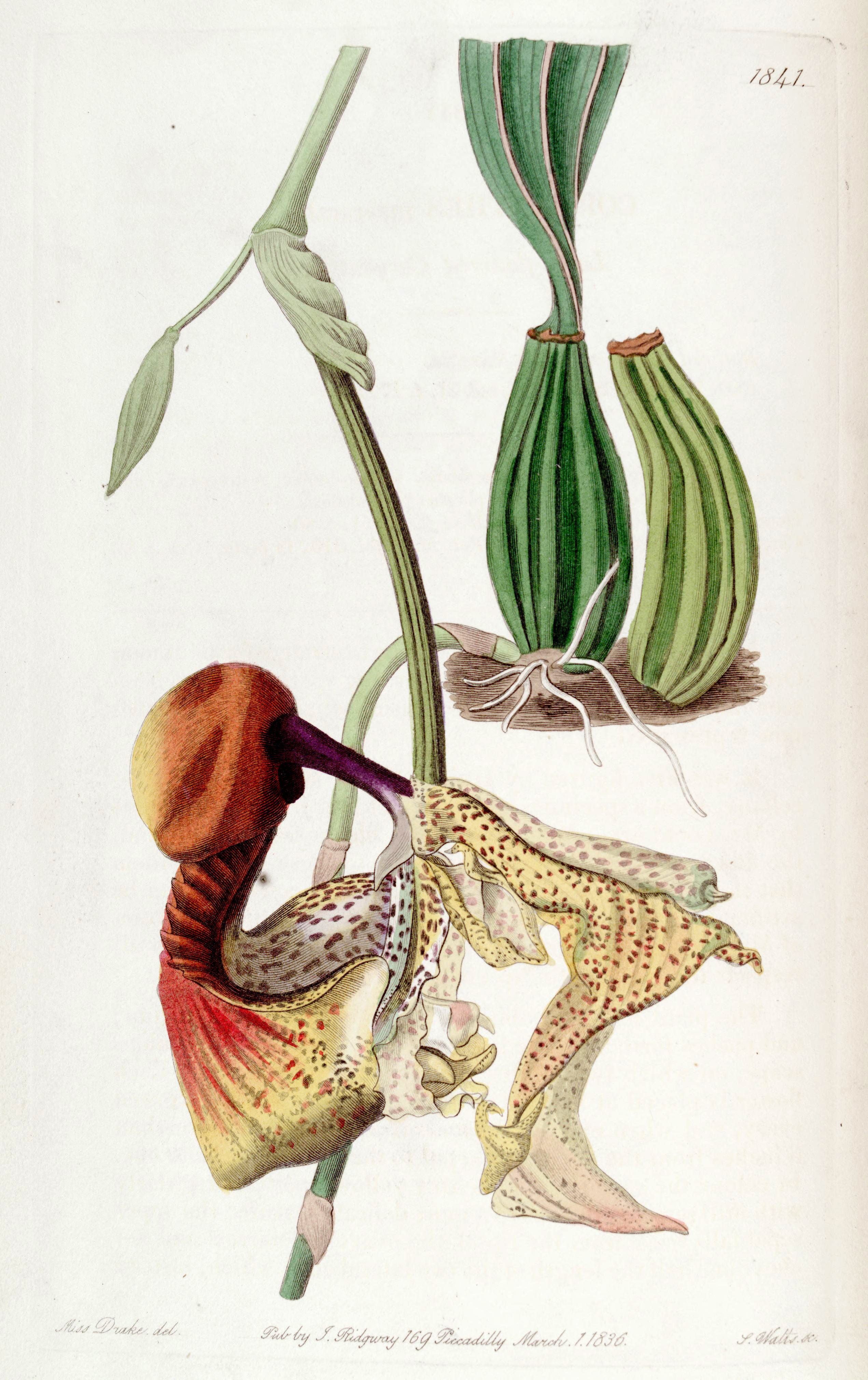
1836
The Bucket Orchid
It fills a bucket with its own fluid and drops the bee in.
Pl. 1841Coryanthes macrantha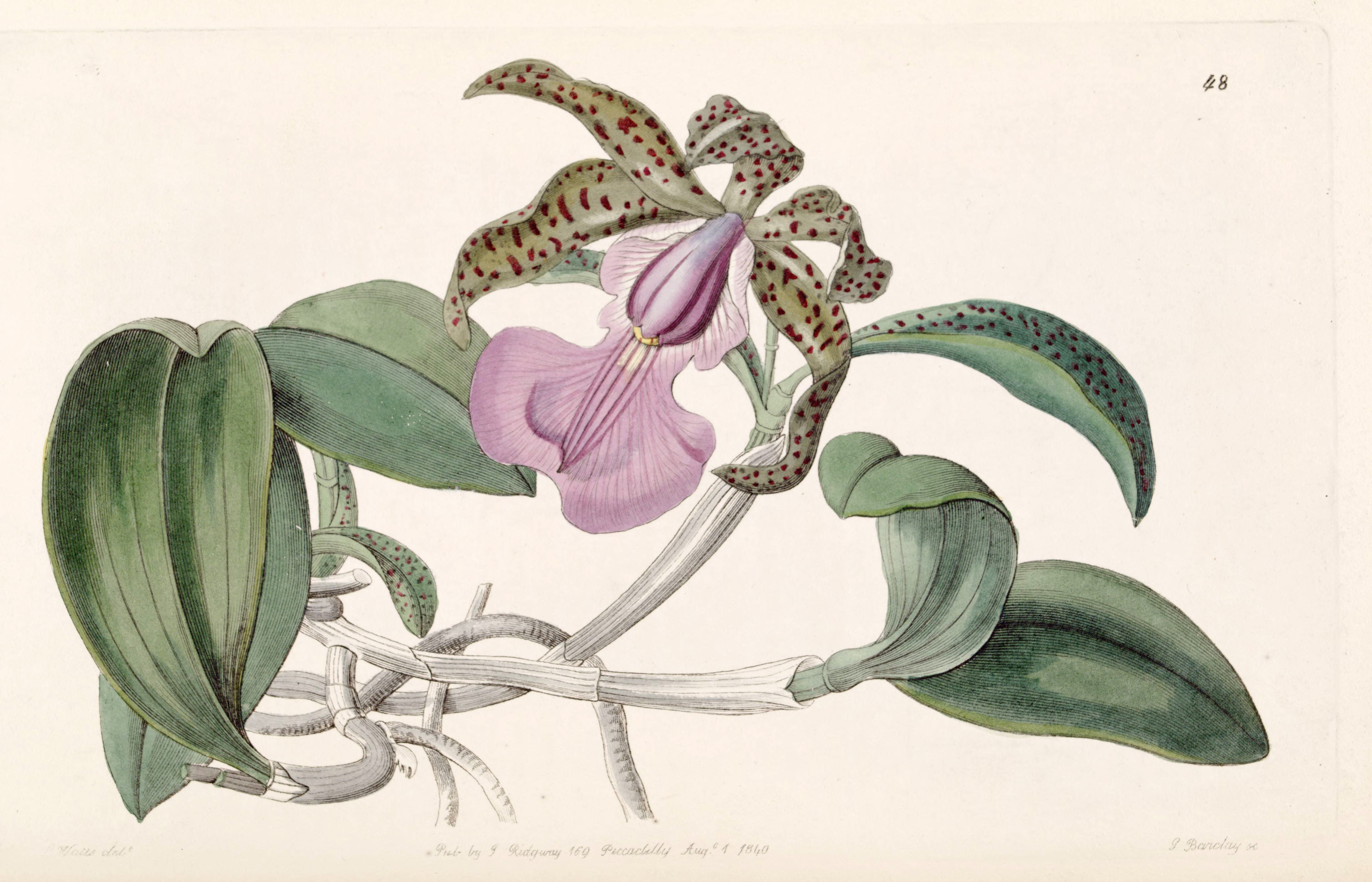
1840
Acland’s Cattleya
Olive-green barred with maroon, and a lip of shocking magenta.
Pl. 48Cattleya aclandiae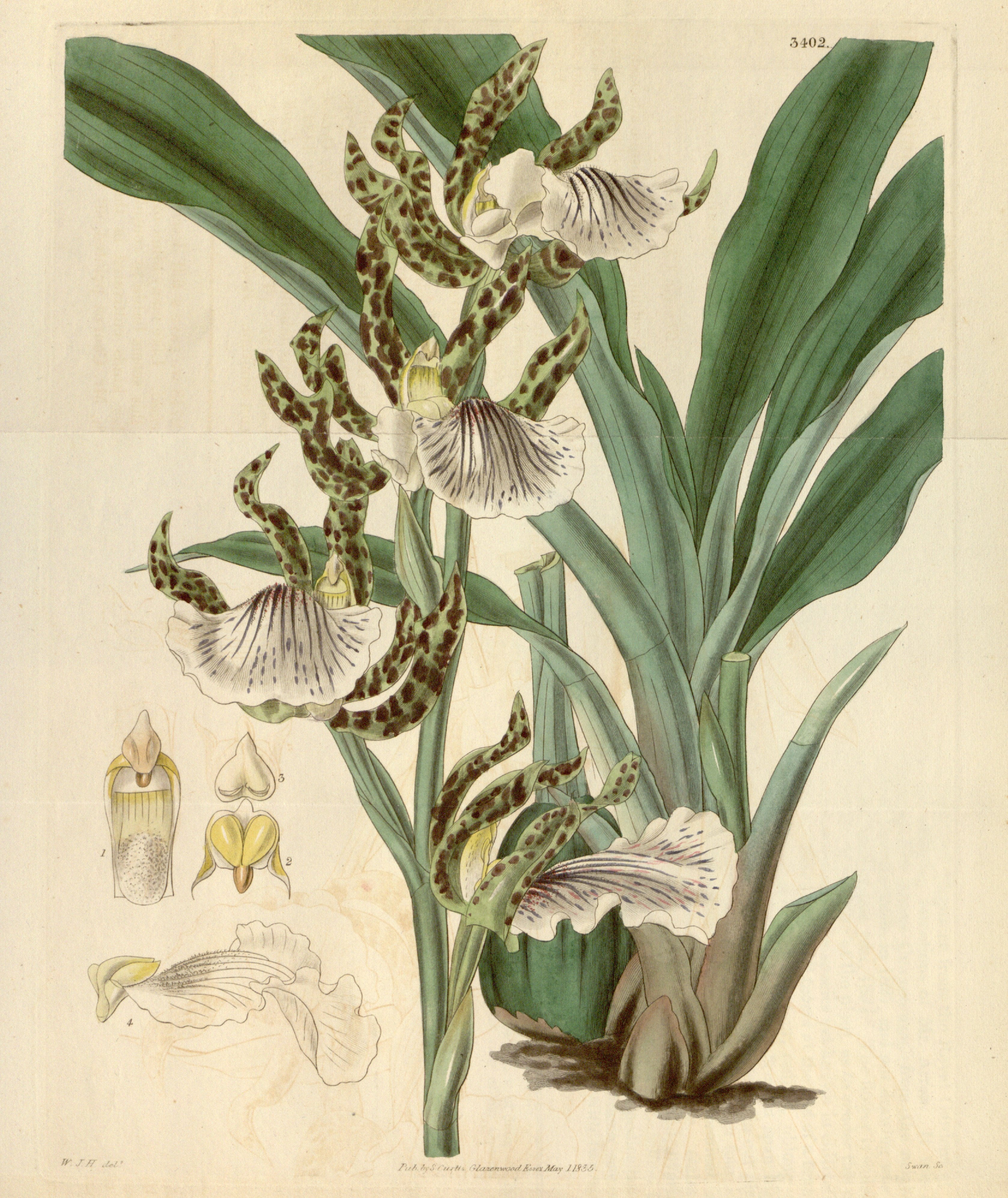
1835
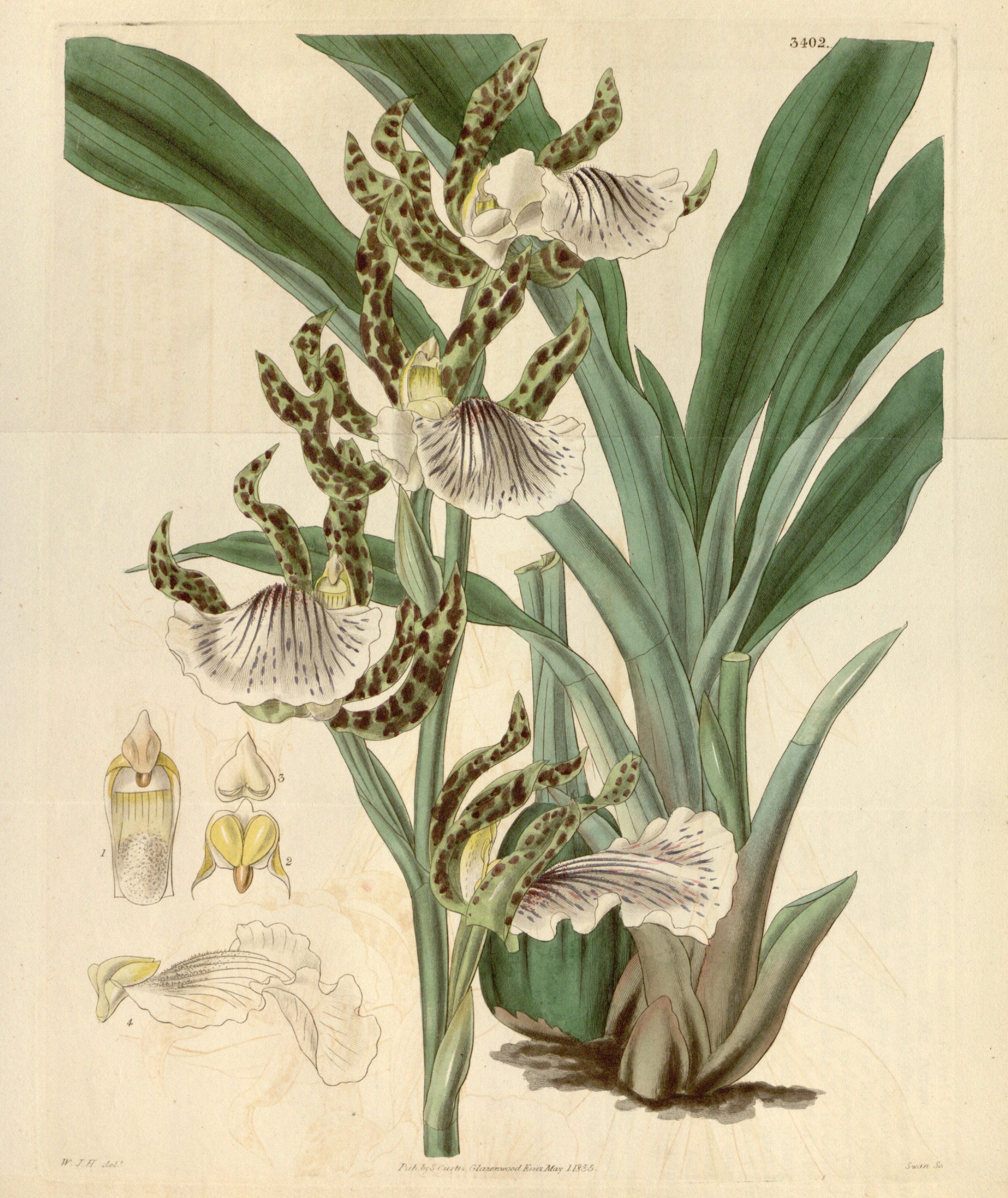
The Zygopetalum
Green and chocolate-brown petals, a lip streaked violet, and a scent of hyacinth.
Zygopetalum maculatumTHE ROMANTIC STAGE
The Temple of Flora
1799–1807
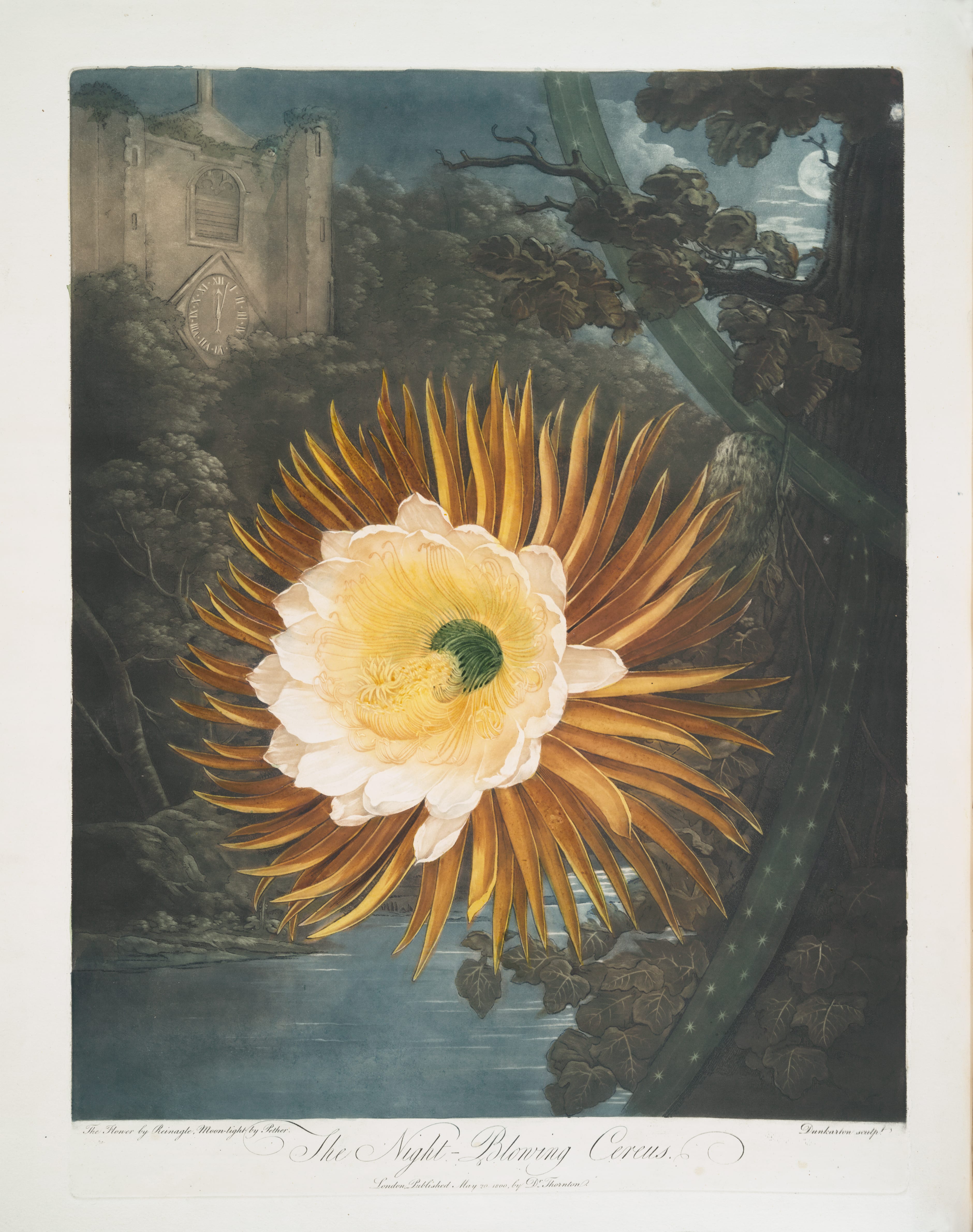
The Night-Blowing Cereus
A flower that blooms once, by moonlight.
Selenicereus grandiflorus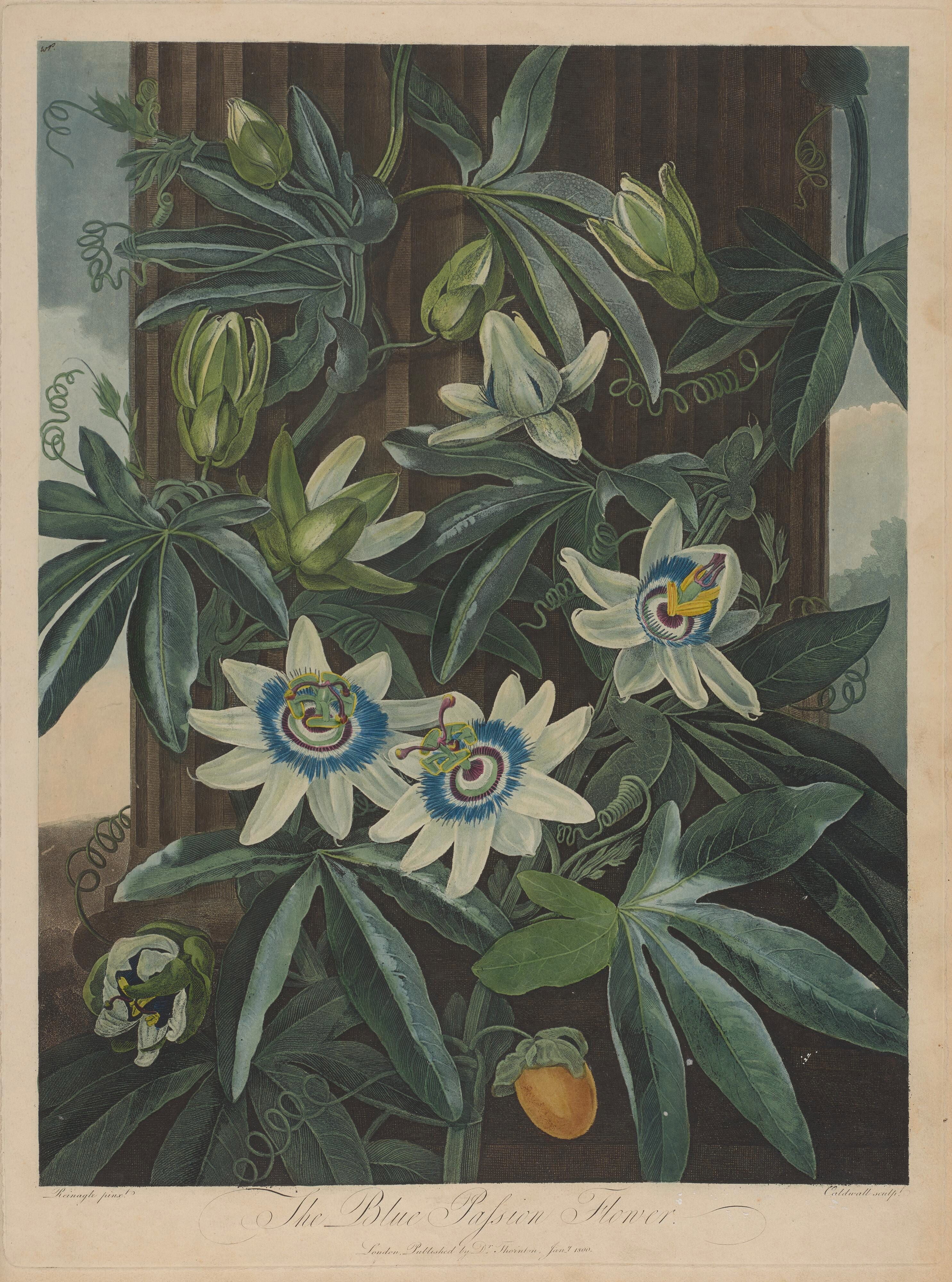
1799–1807
The Blue Passion Flower
An intricate bloom against a brooding sky.
Passiflora caerulea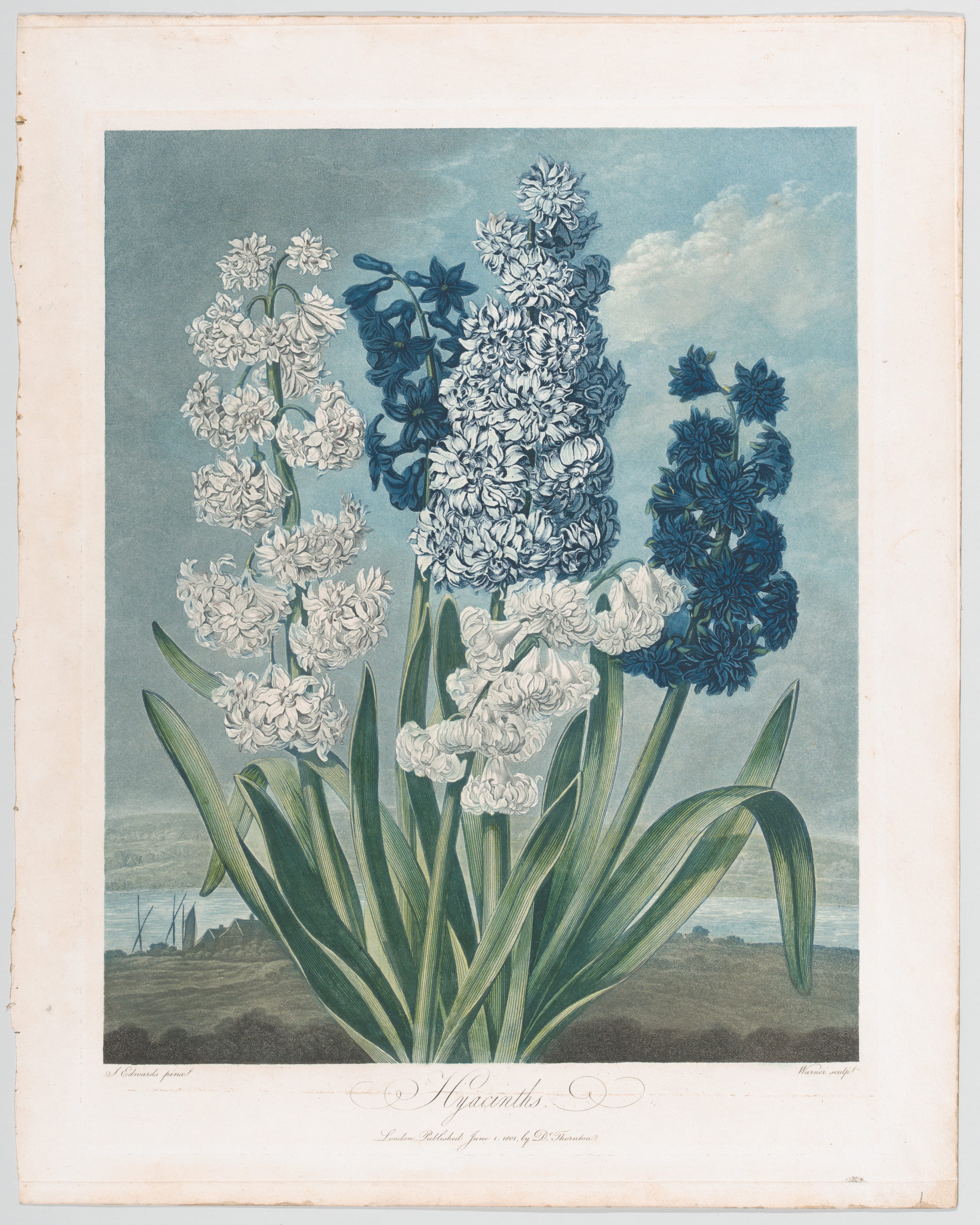
1799–1807
Hyacinths
Hyacinths massed against a stormy sky.
Hyacinthus orientalis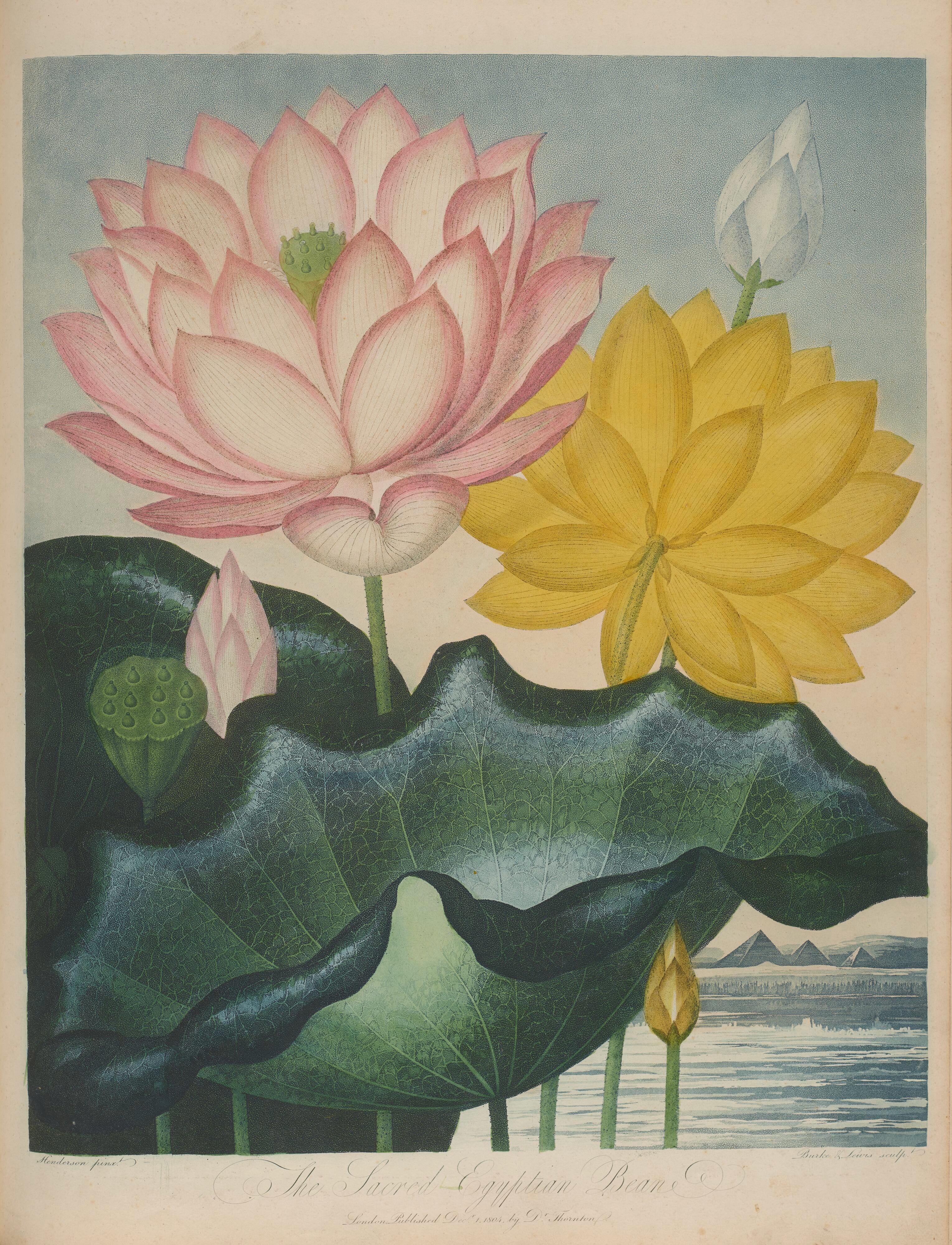
1799–1807
The Sacred Egyptian Bean
The lotus of the Nile, in full Romantic splendour.
Nelumbo nucifera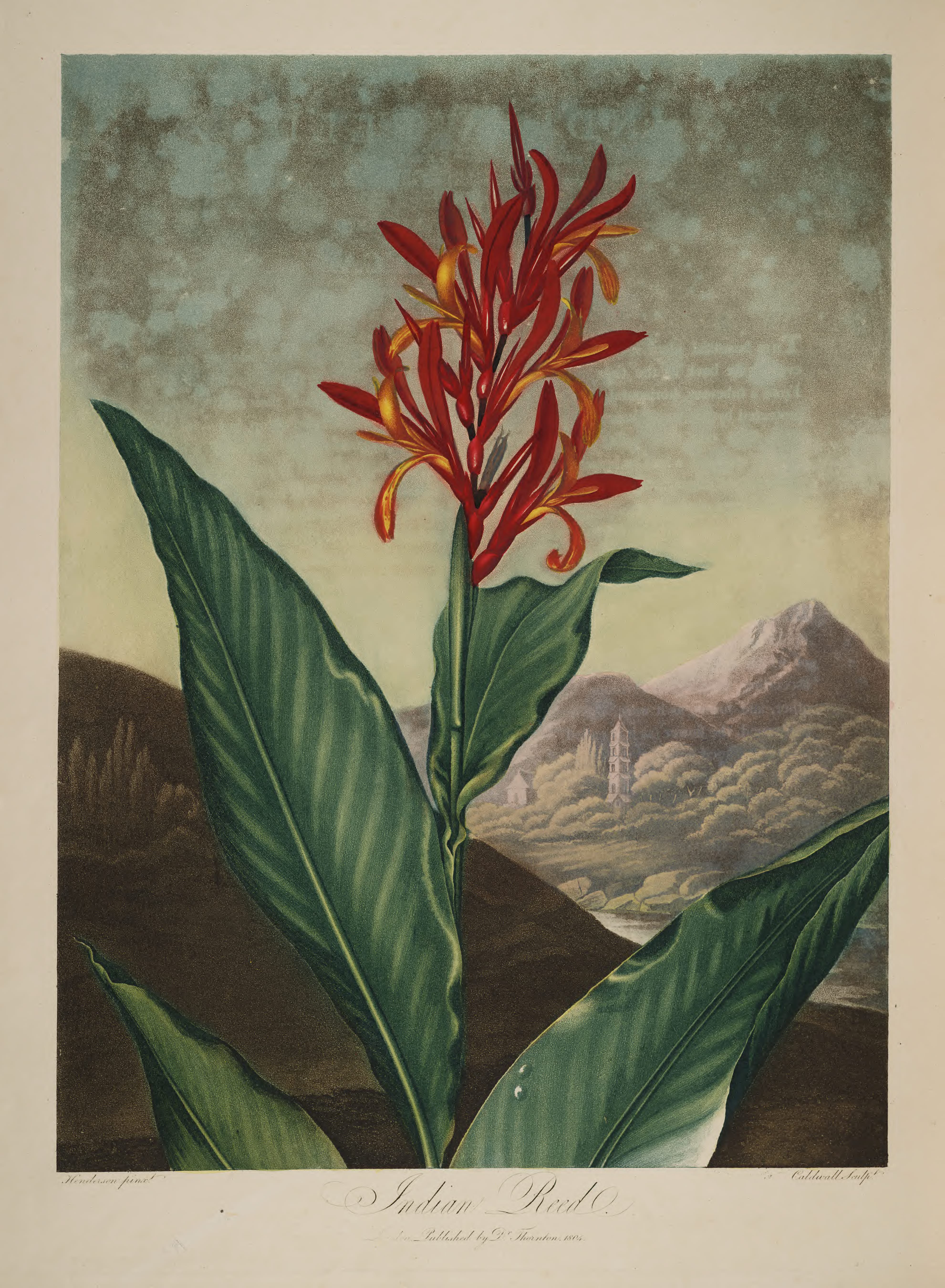
1799–1807
The Indian Reed
A scarlet canna against a Himalayan sky — botany staged as weather.
Canna indica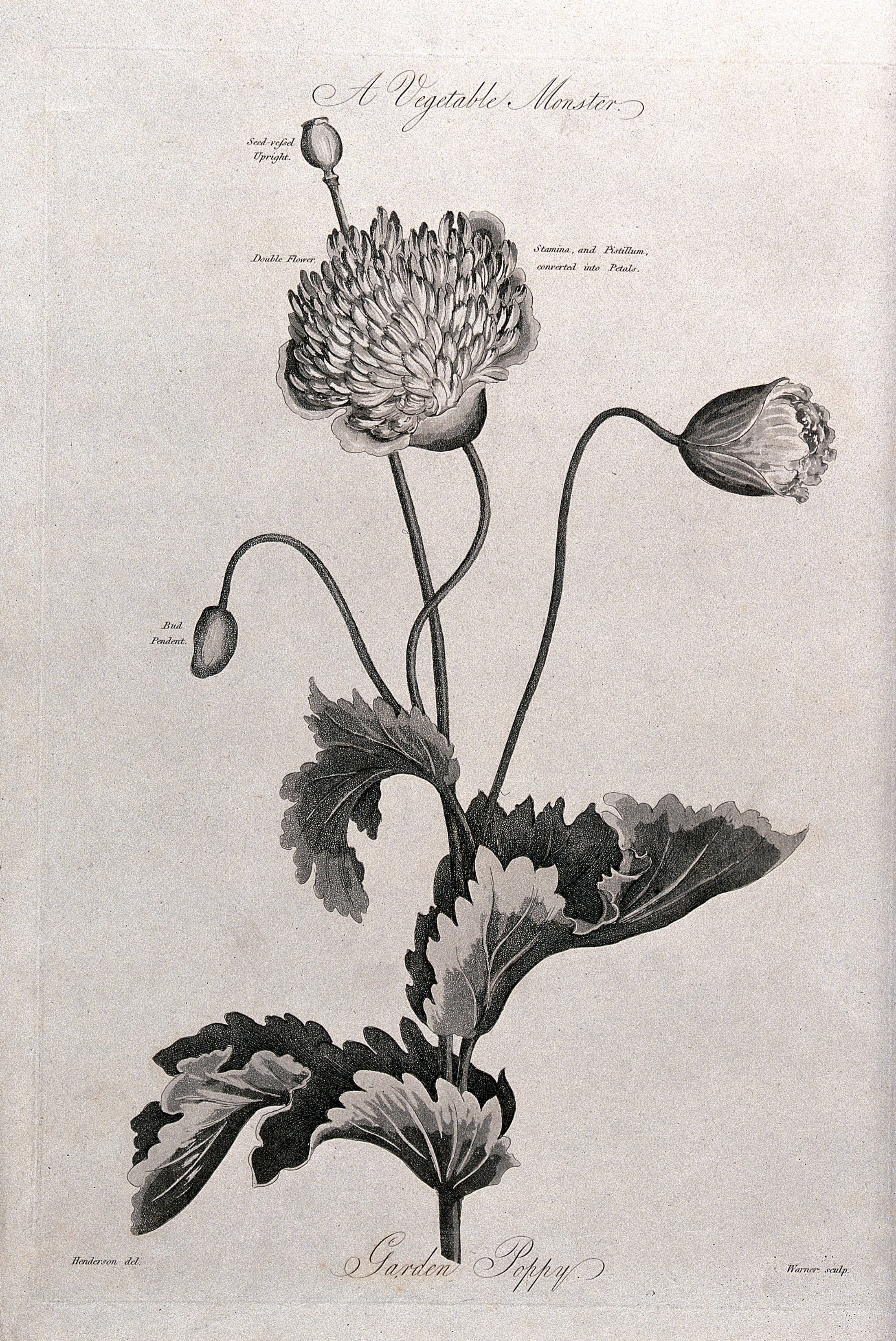
1799–1807
The Garden Poppy
The flowering stem and the seed head together — beauty and its consequence.
Papaver somniferum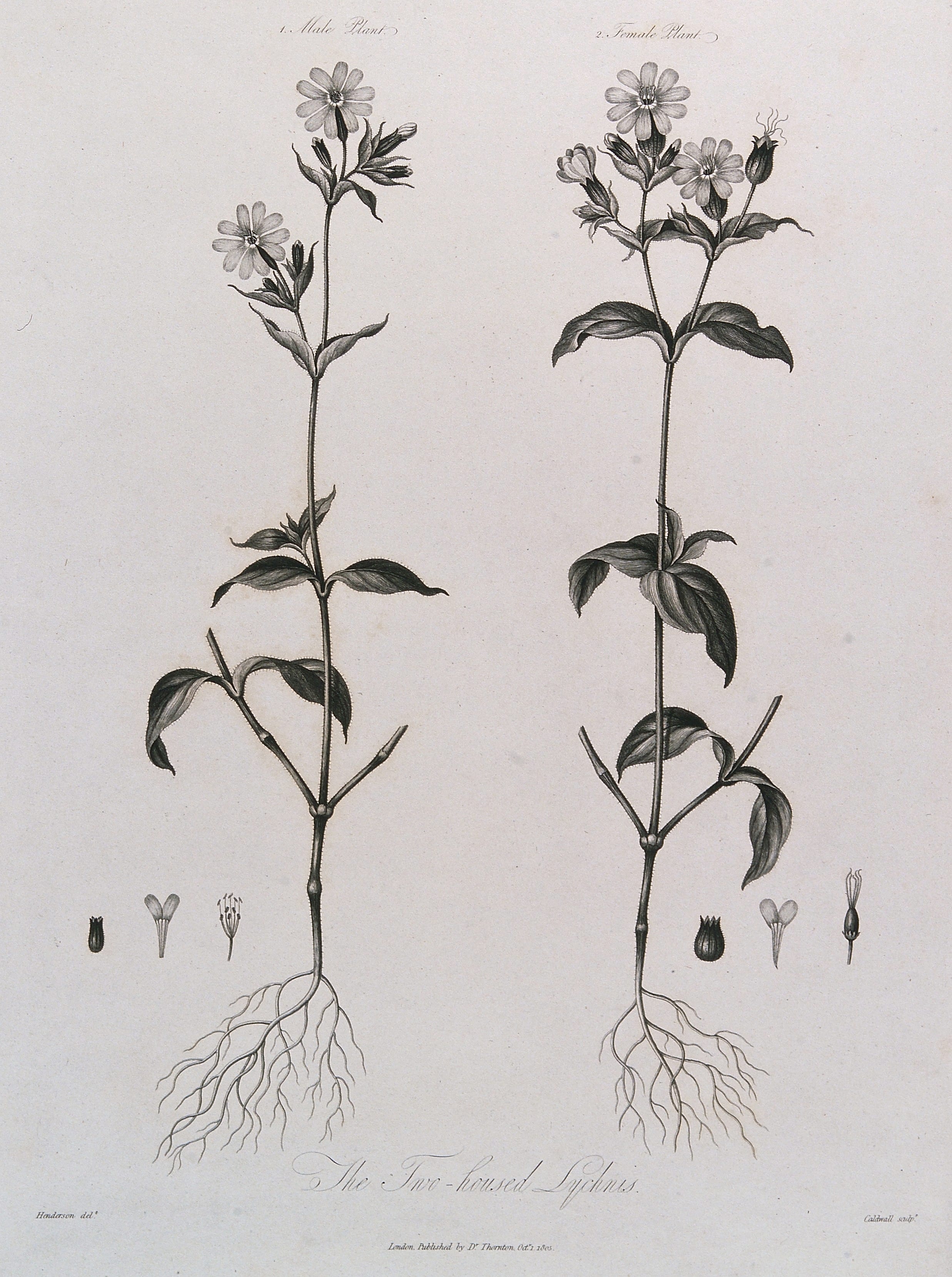
1799–1807
The Campion, Male and Female
Two plants on one plate — because this species keeps its sexes apart.
Lychnis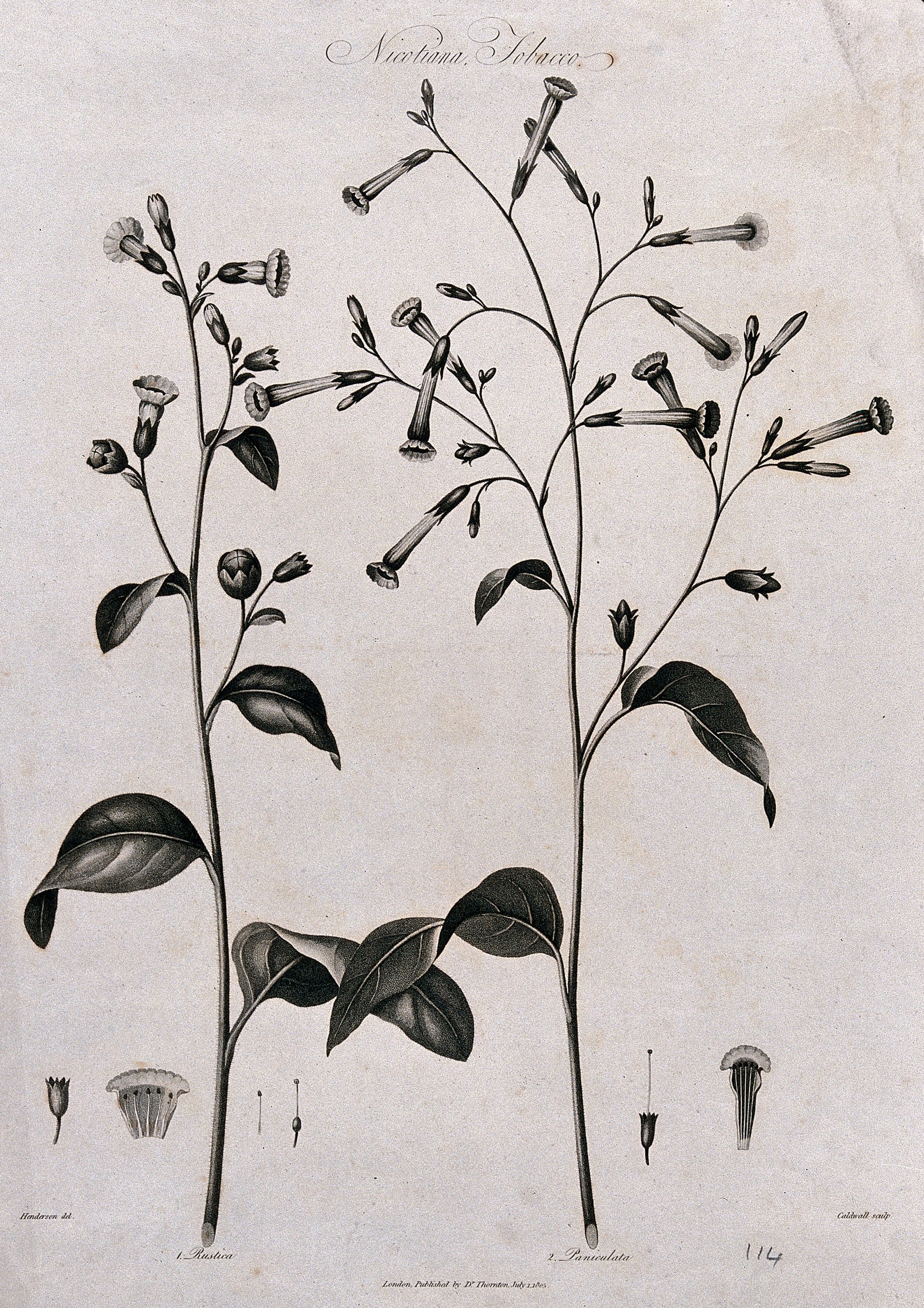
1799–1807
The Tobacco Plant
Two species of the plant that paid for the eighteenth century.
Nicotiana rustica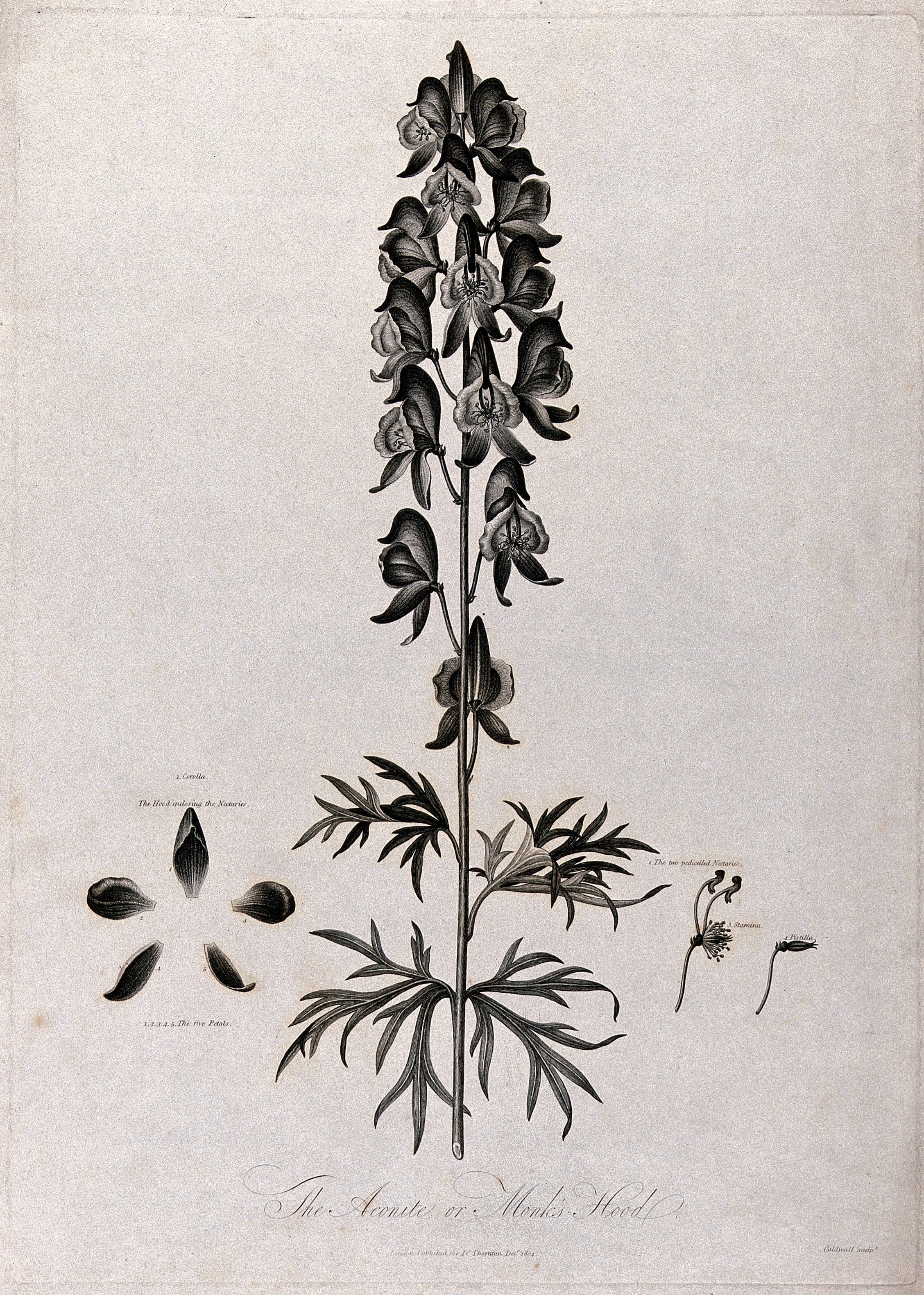
1799–1807
Monkshood
The most poisonous plant in an English garden, drawn as a decoration.
Aconitum napellus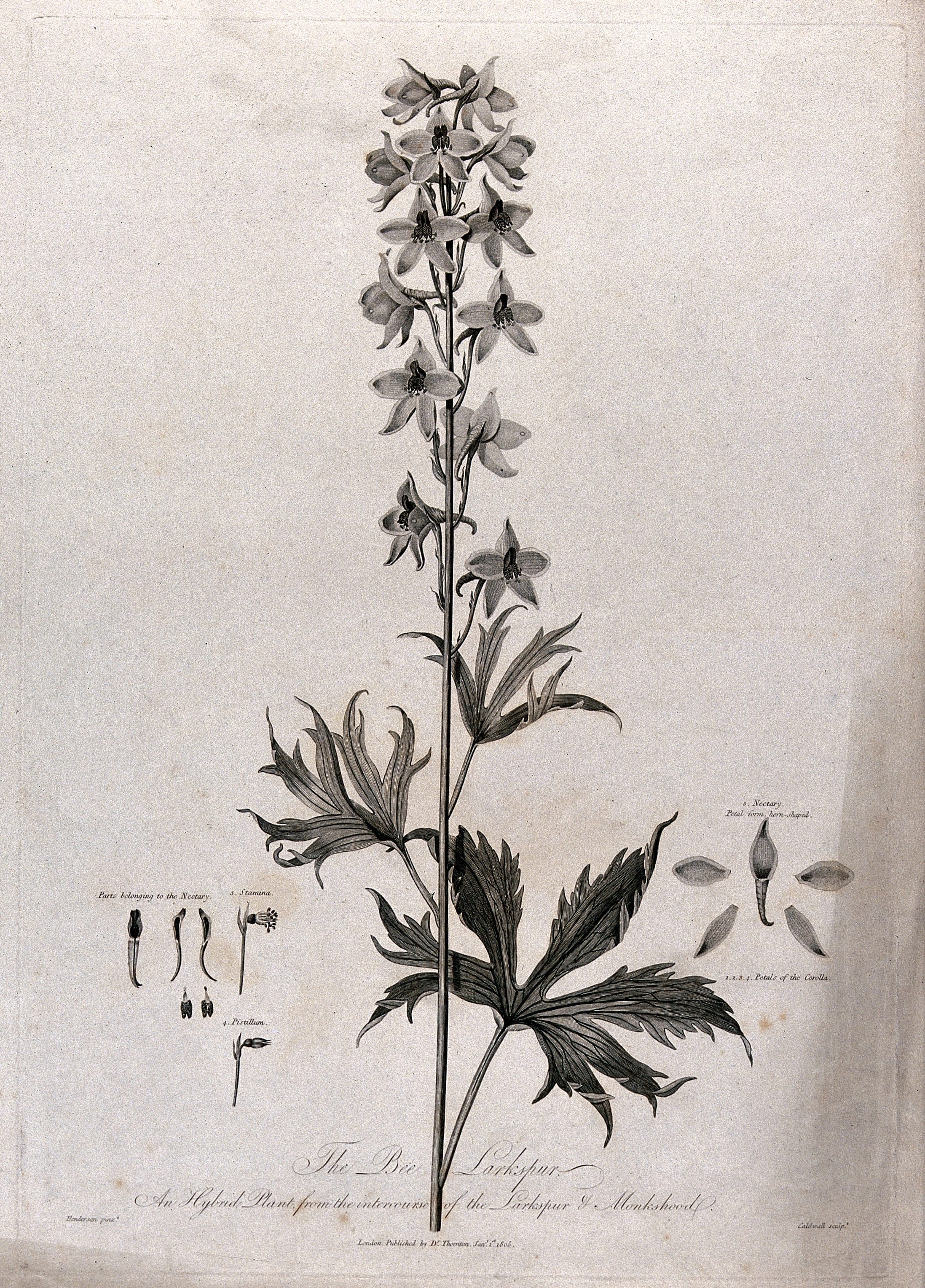
1799–1807
The Bee Larkspur
A flower with a false bee at its centre, to tell real ones where to land.
Delphinium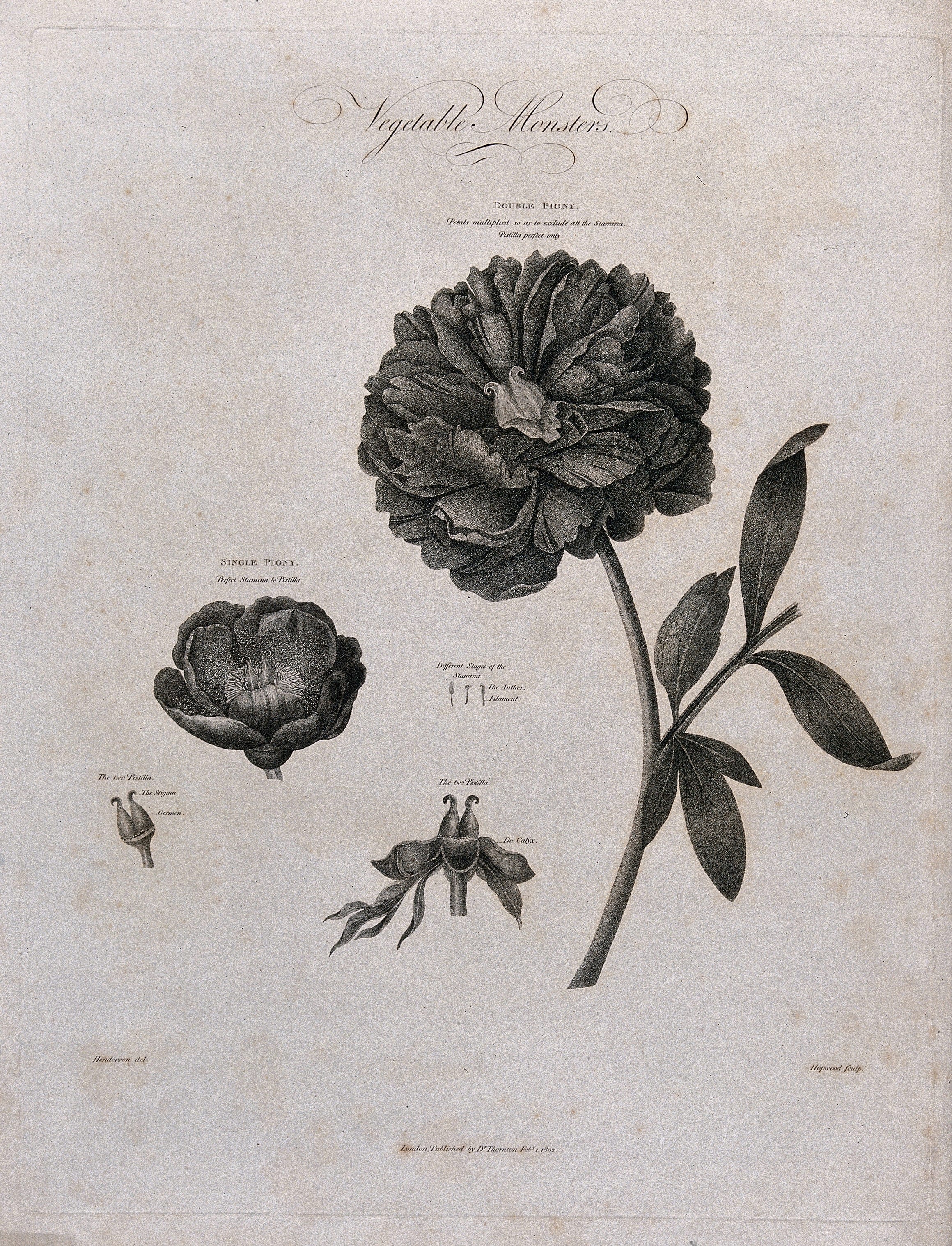
1799–1807
The Paeony, Double and Single
The same flower twice — as nature made it, and as gardeners remade it.
Paeonia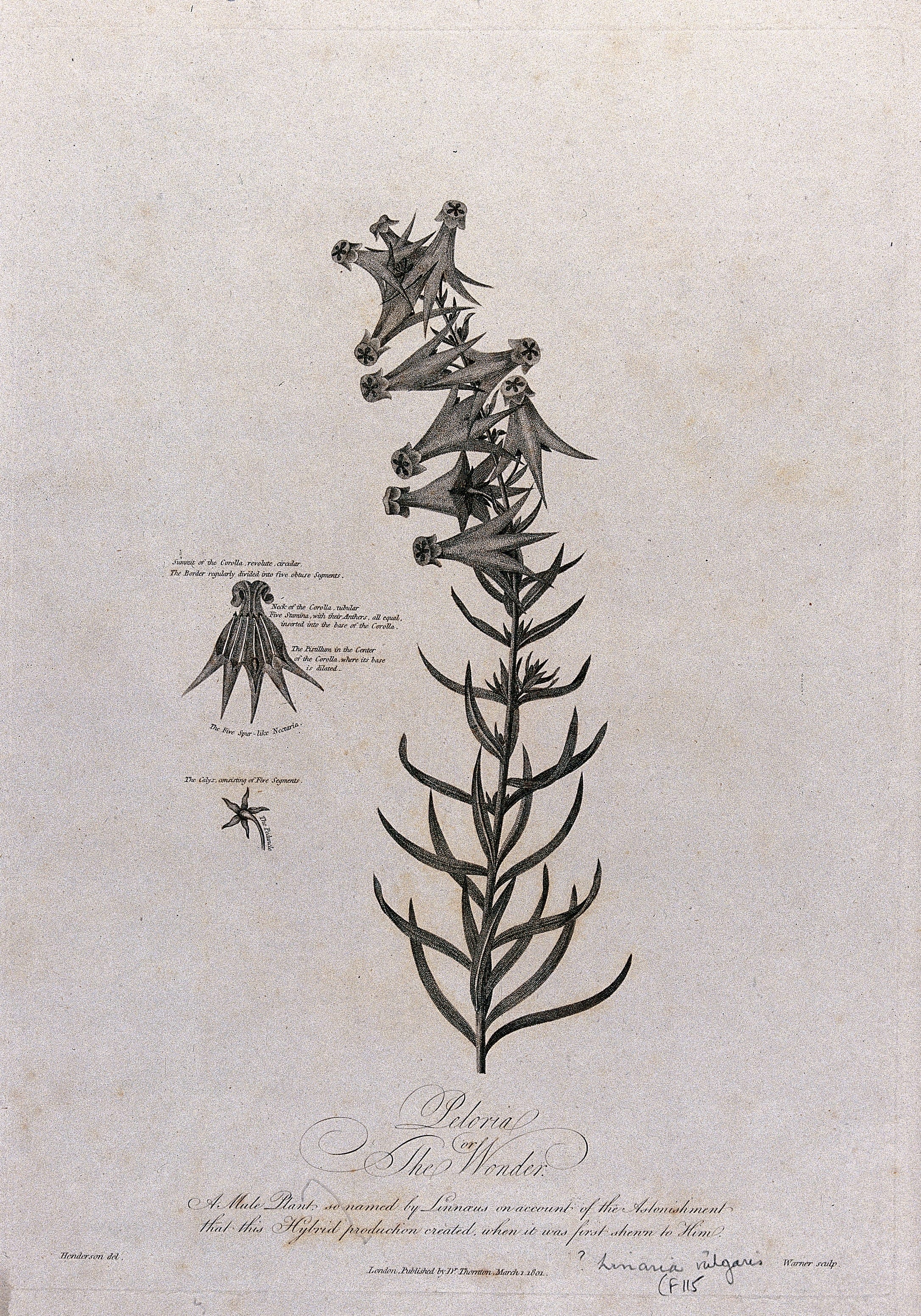
1799–1807
Toadflax
A wild roadside flower given a full plate in a book about empire’s hothouses.
Linaria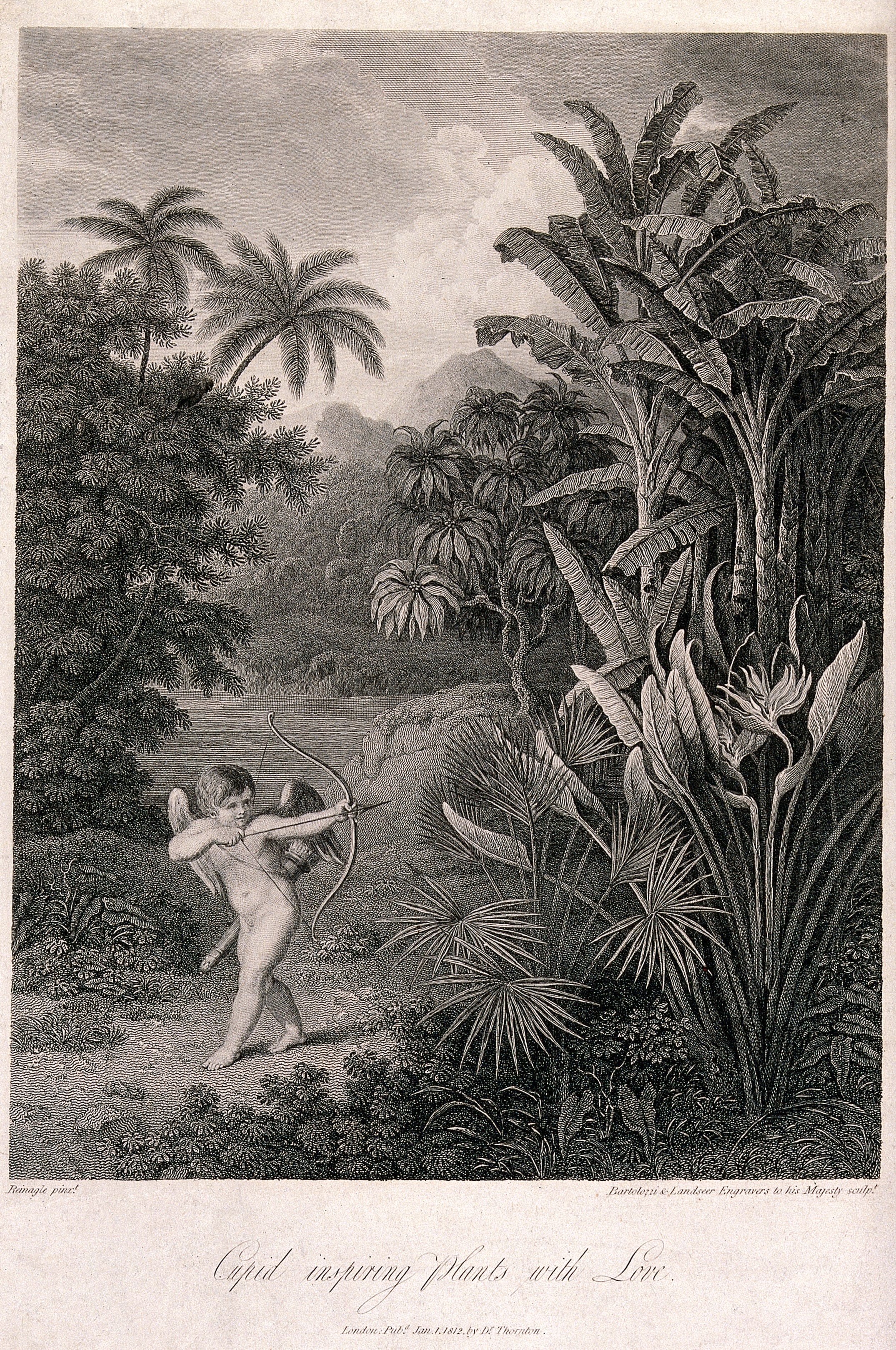
1799–1807
Cupid Inspiring the Plants with Love
The allegory that opens the book — botany announced as a romance.
1805
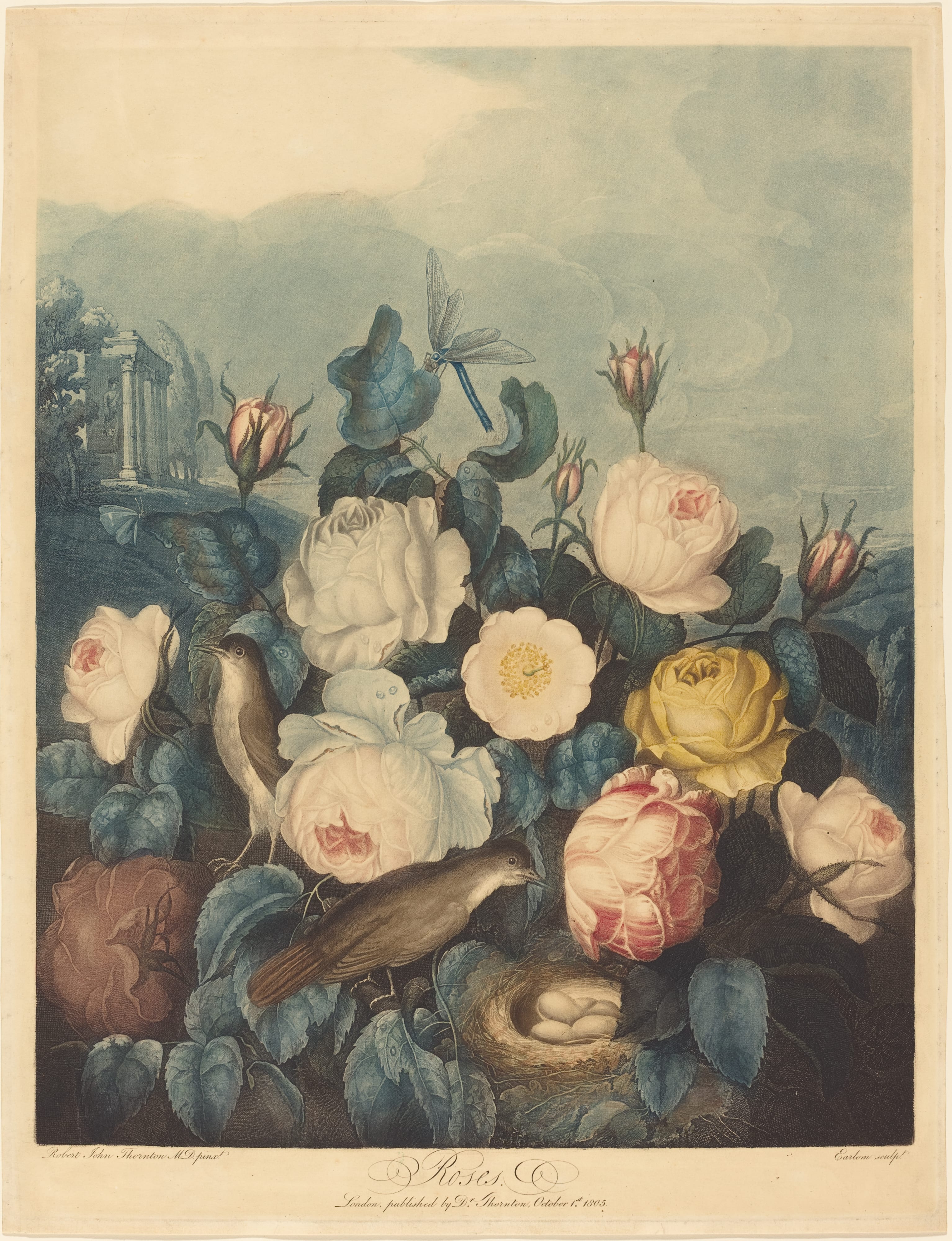
Roses
Earlom’s mezzotint after Thornton — the darkest, richest surface in the book.
THE GREAT GARDEN
The Florilegium
1613 (1713 edition)
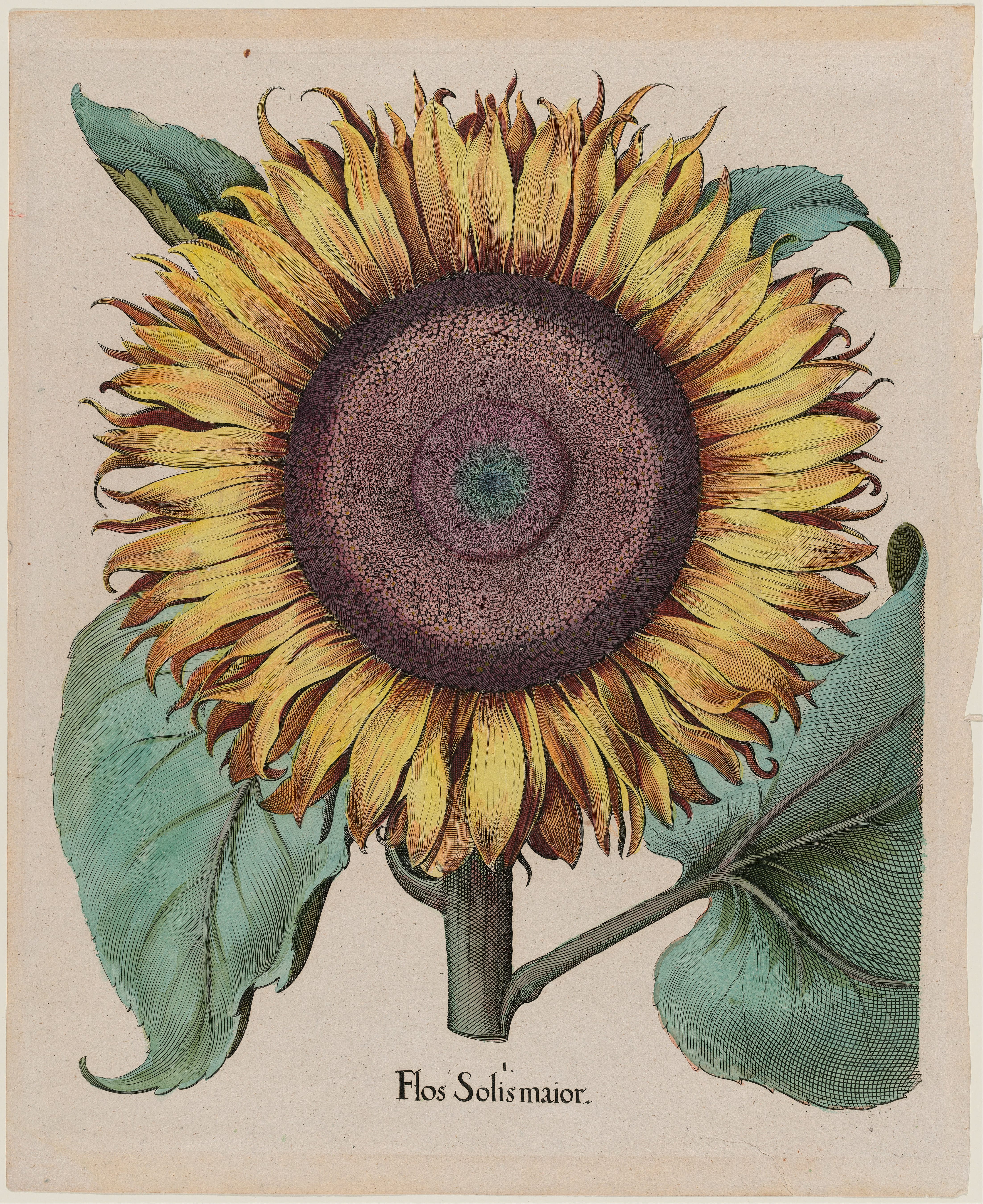
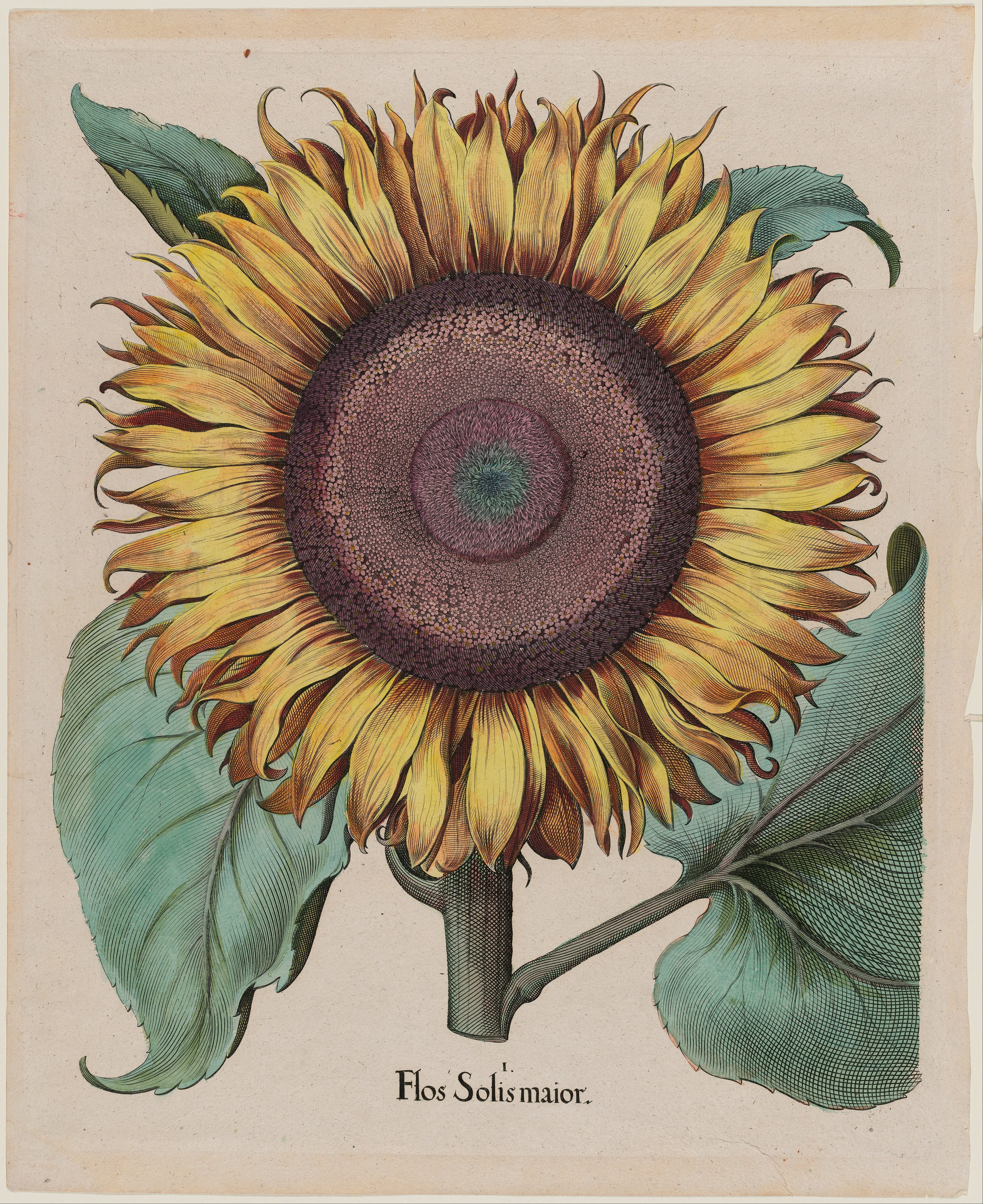
The Large Sunflower
Flos Solis Maior, from the first great garden book ever printed.
Helianthus annuus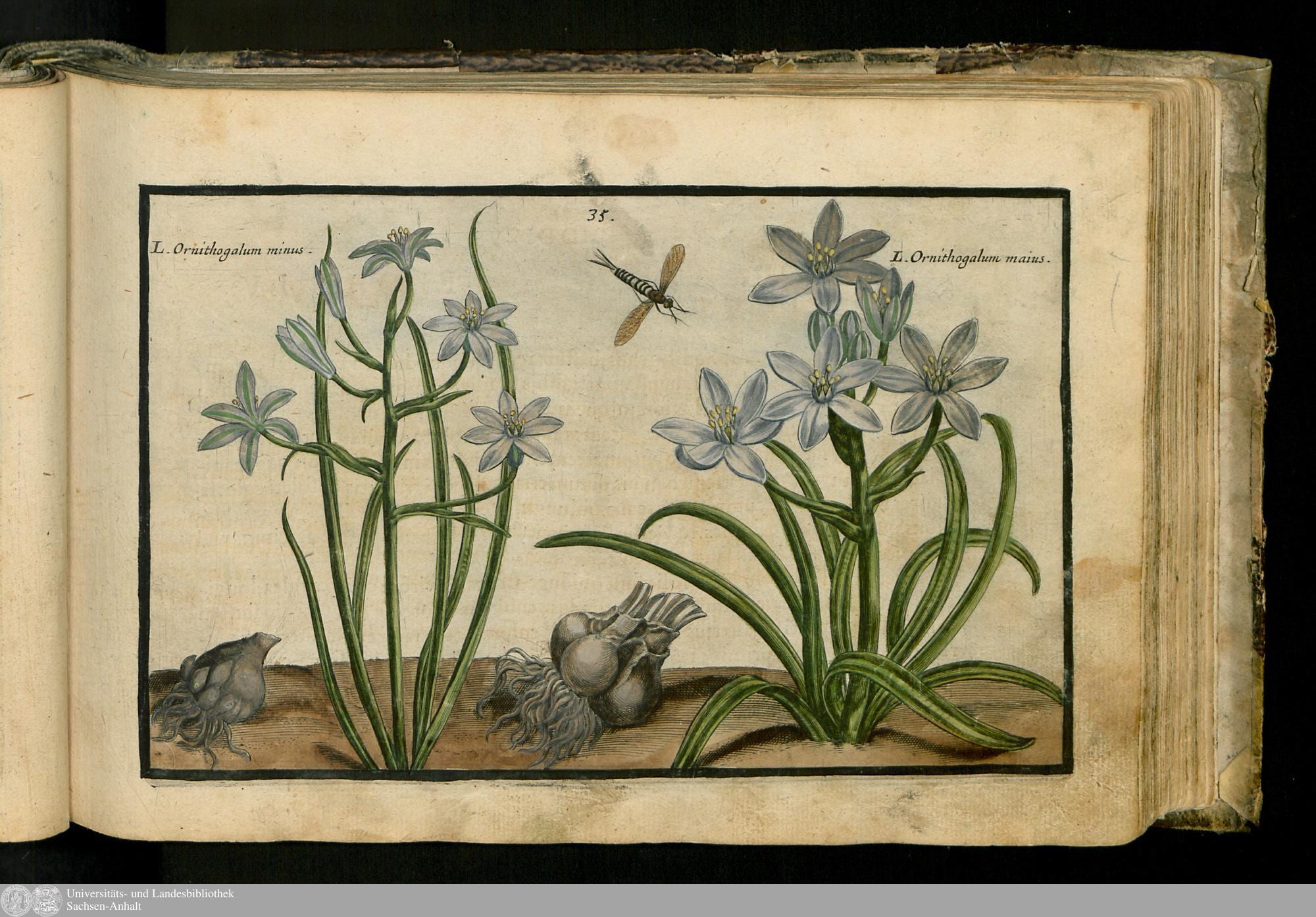
1614
Star of Bethlehem
Two ornithogalums and a hoverfly, engraved at eye level with the soil.
Ornithogalum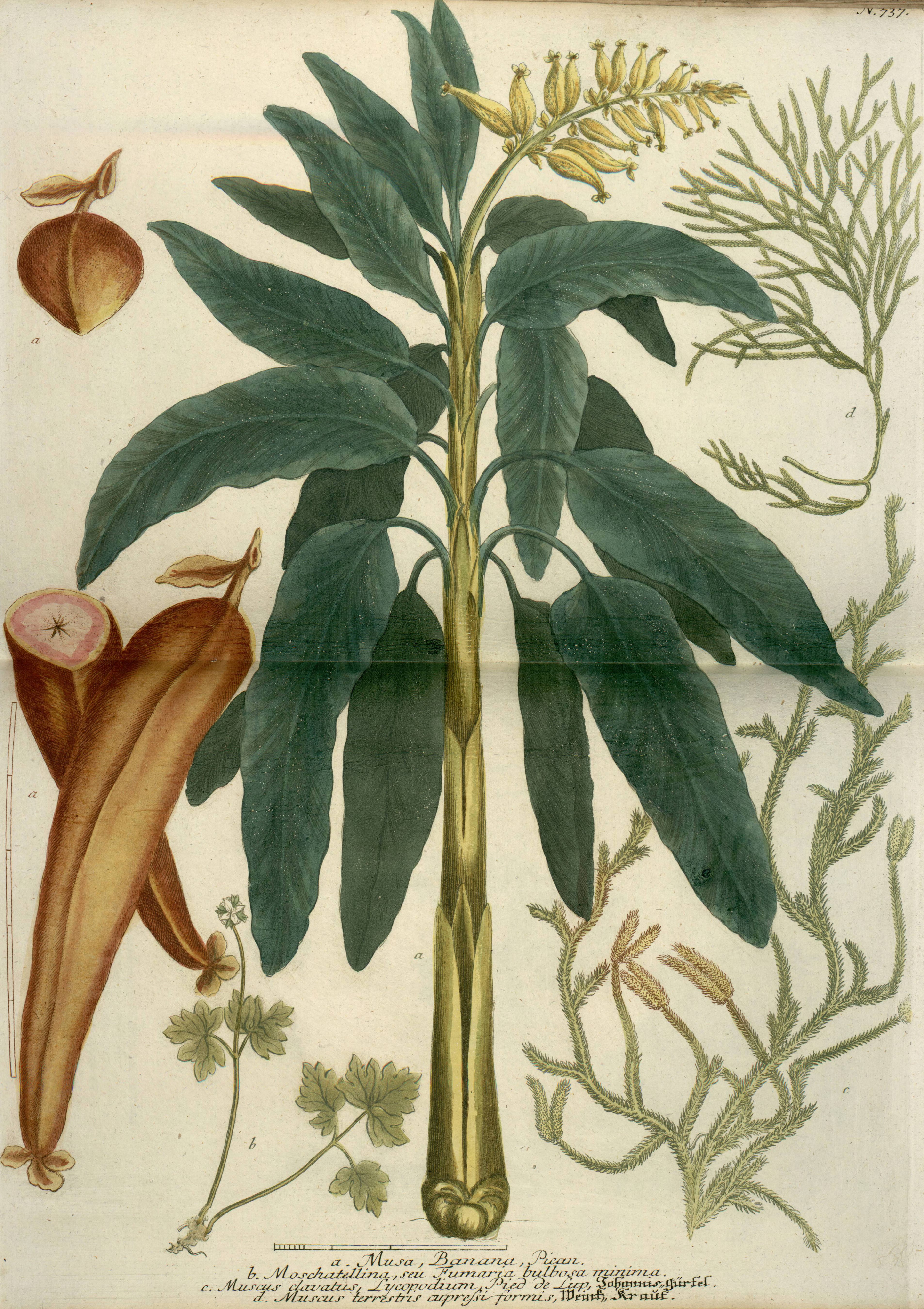
1737–1745
A Weinmann Plate
Early colour-printing, luminous and strange.
1613
The Great Sunflower
From the Hortus Eystettensis — a whole prince-bishop’s garden, printed on the largest paper in Europe.
Helianthus annuus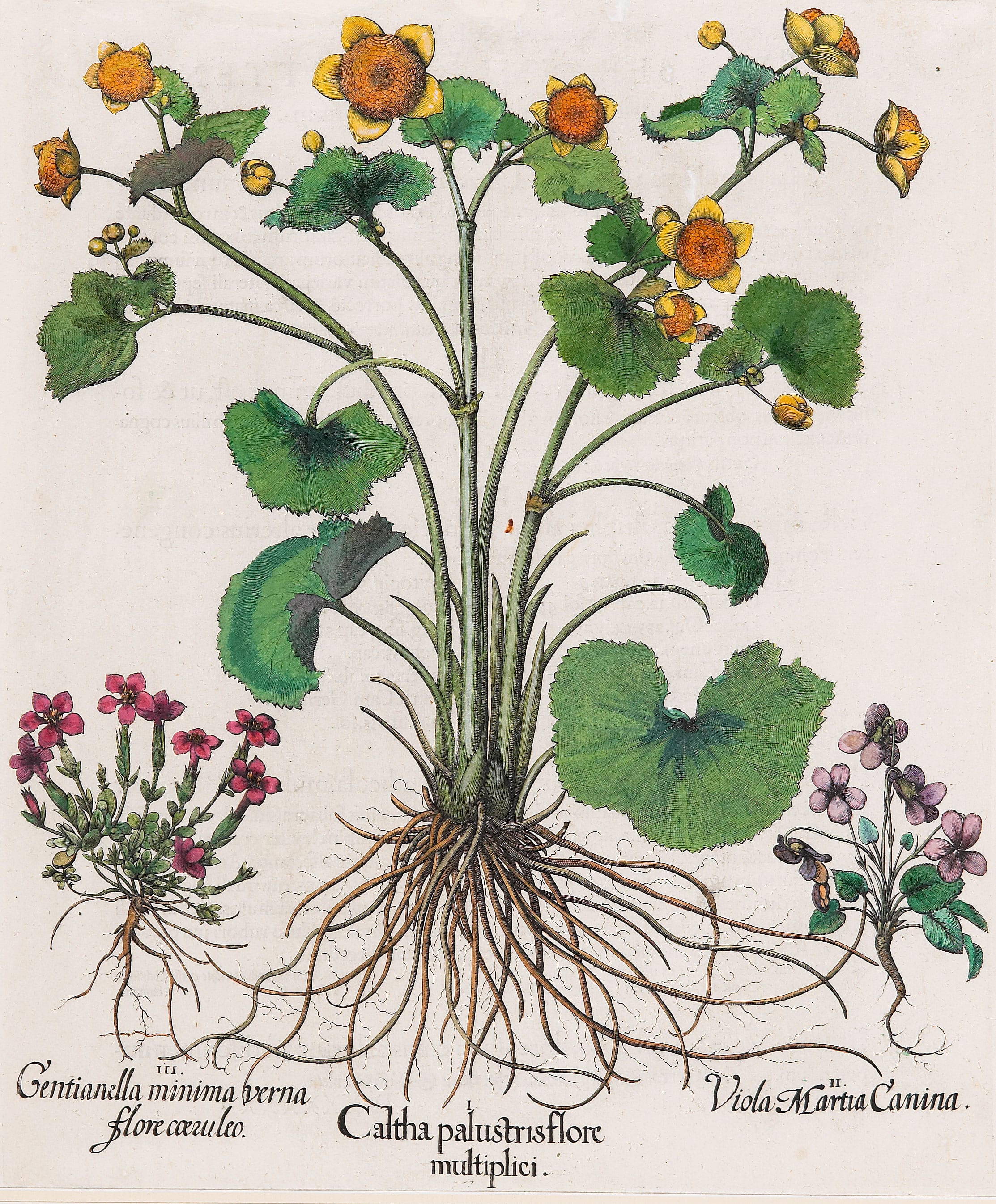
1613
The Marsh Marigold
The first flower of the Eichstätt spring — plain, wet-ground gold.
Caltha palustris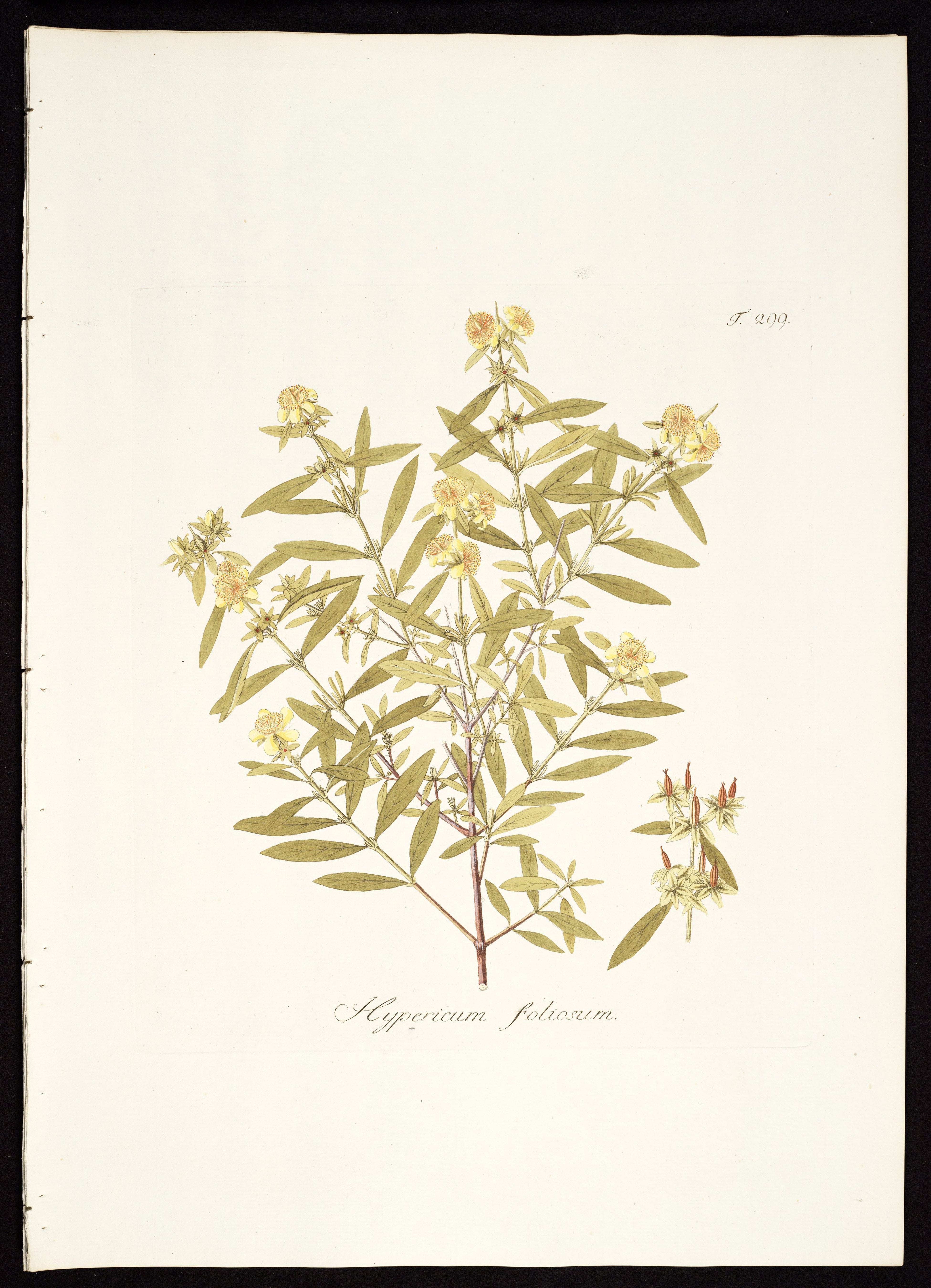
1797–1804
The Shrubby St John’s Wort
From the imperial garden at Schönbrunn, drawn under an emperor’s patronage.
Hypericum prolificum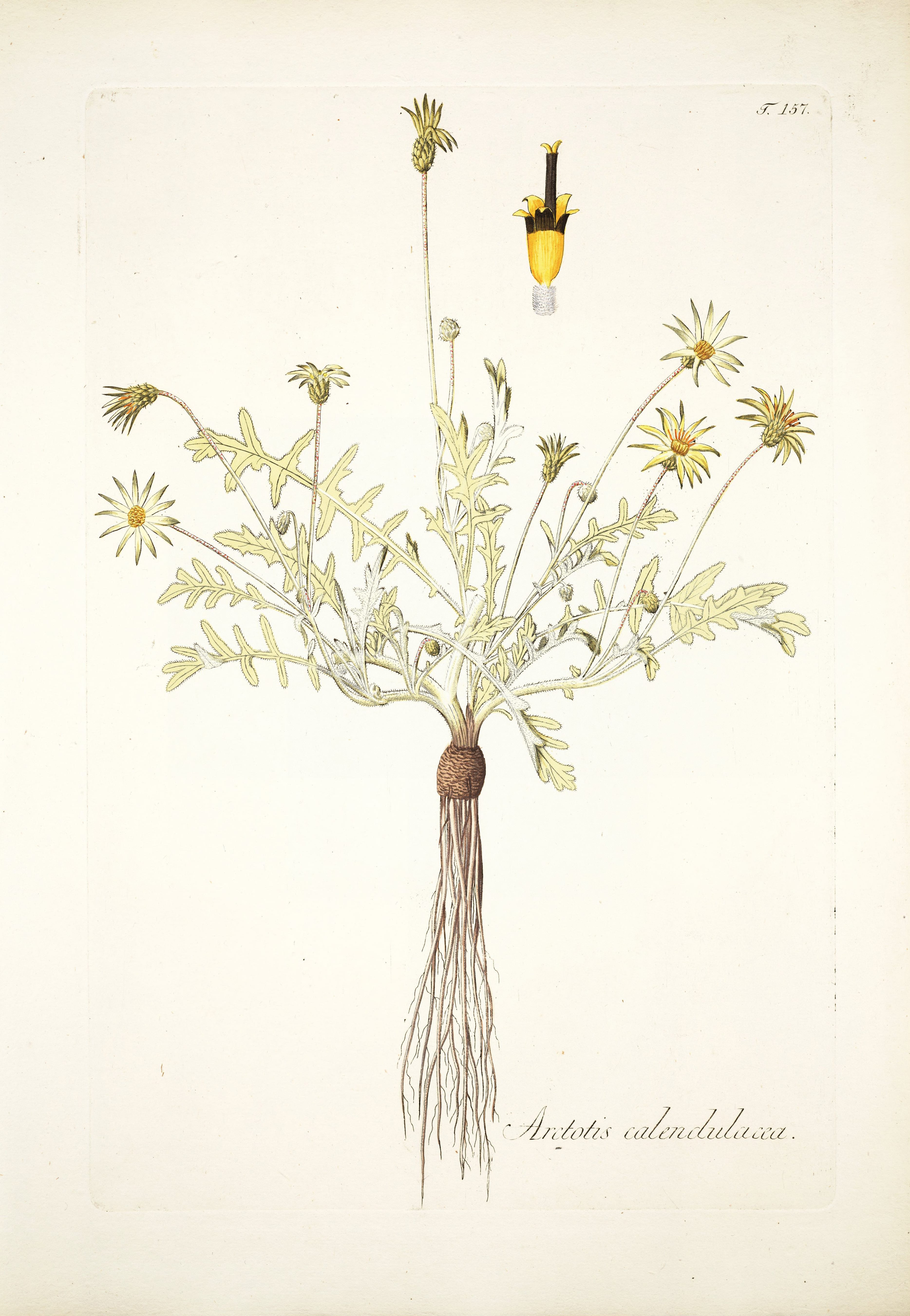
1797–1804
The Cape Weed
A daisy from the Cape, and one of the great botanical travellers.
Arctotheca calendula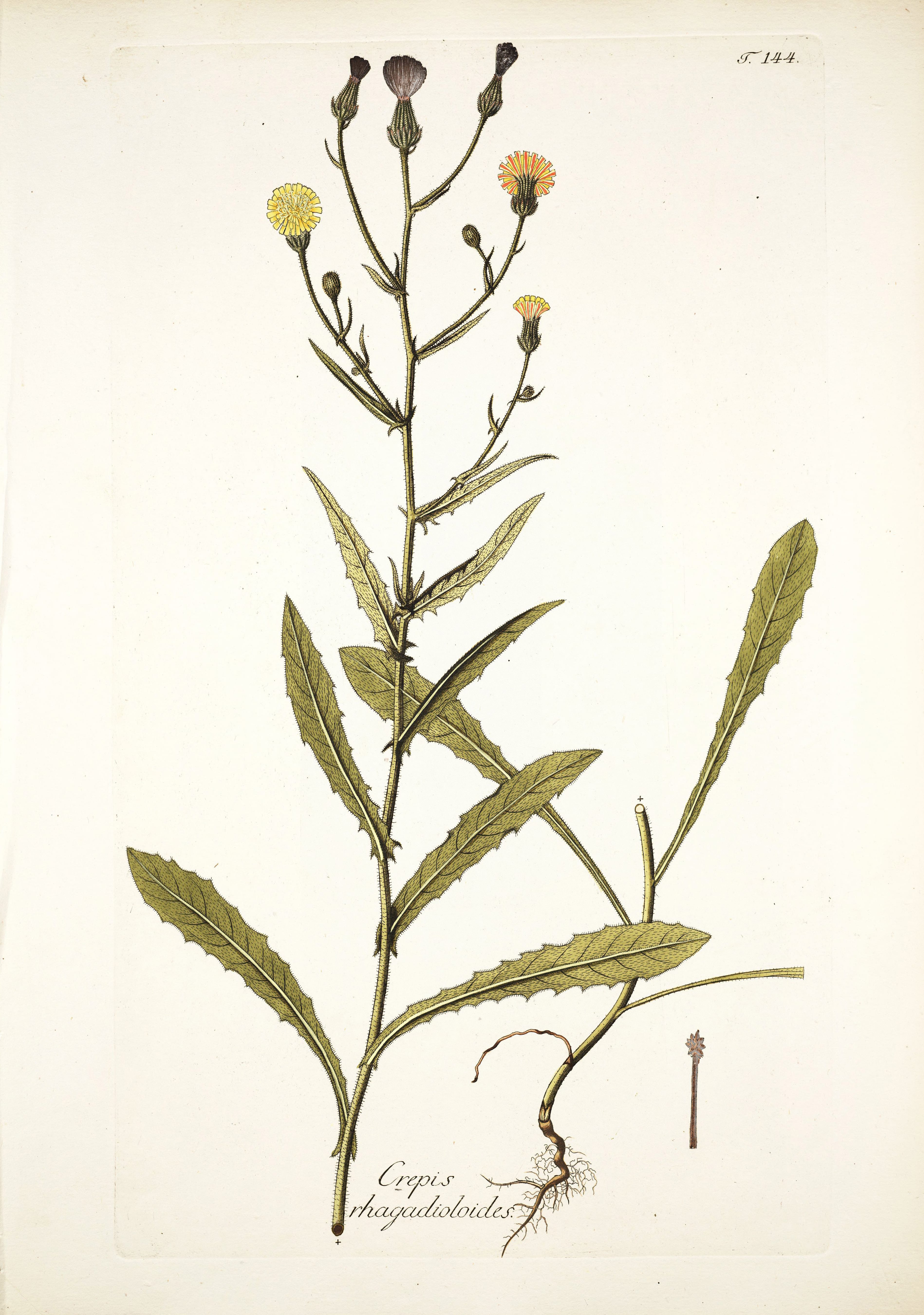
1797–1804
The Ox-Tongue
A rough-leaved yellow daisy, drawn with imperial resources.
Picris rhagadioloides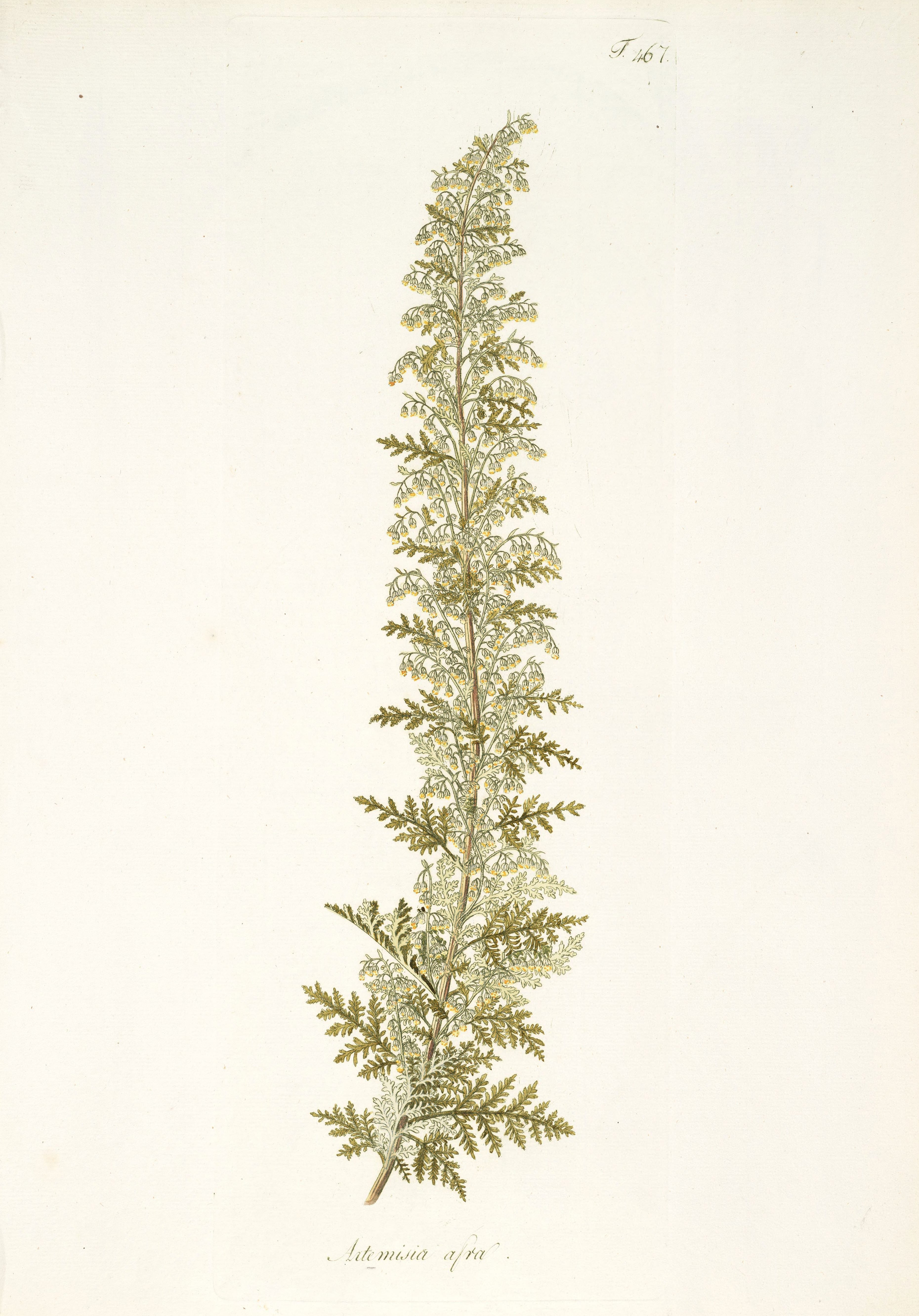
1797–1804
The African Wormwood
A silver-grey medicinal shrub of the southern African highlands.
Artemisia afra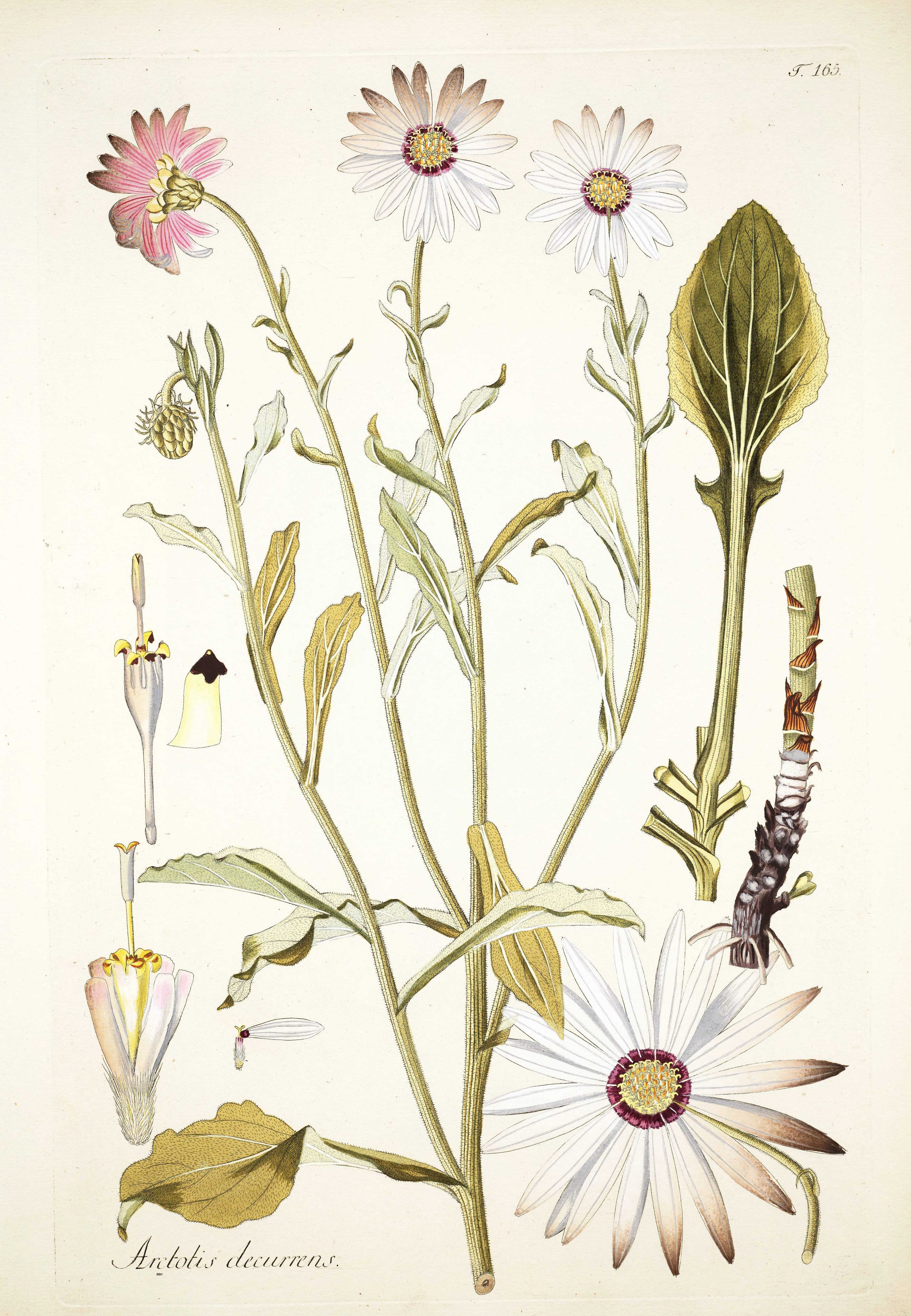
1797–1804
The African Daisy
A Cape daisy that closes at night and opens with the sun.
Arctotis micranthaTHE KITCHEN GARDEN
The Herbal & the Kitchen Garden
1737–1739
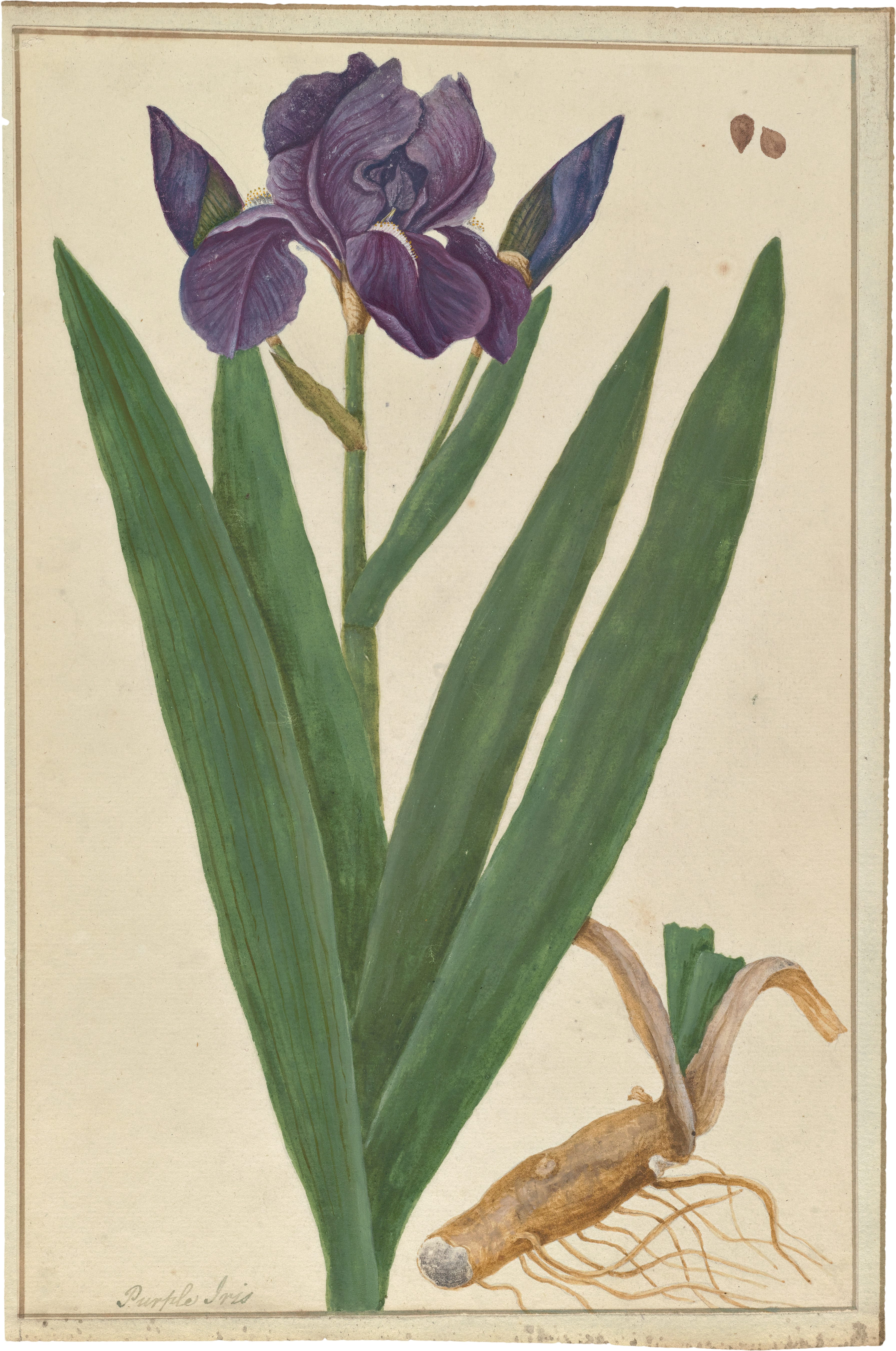
The German Iris
The medicinal plant that saved a family — in Blackwell’s own watercolour.
Iris germanica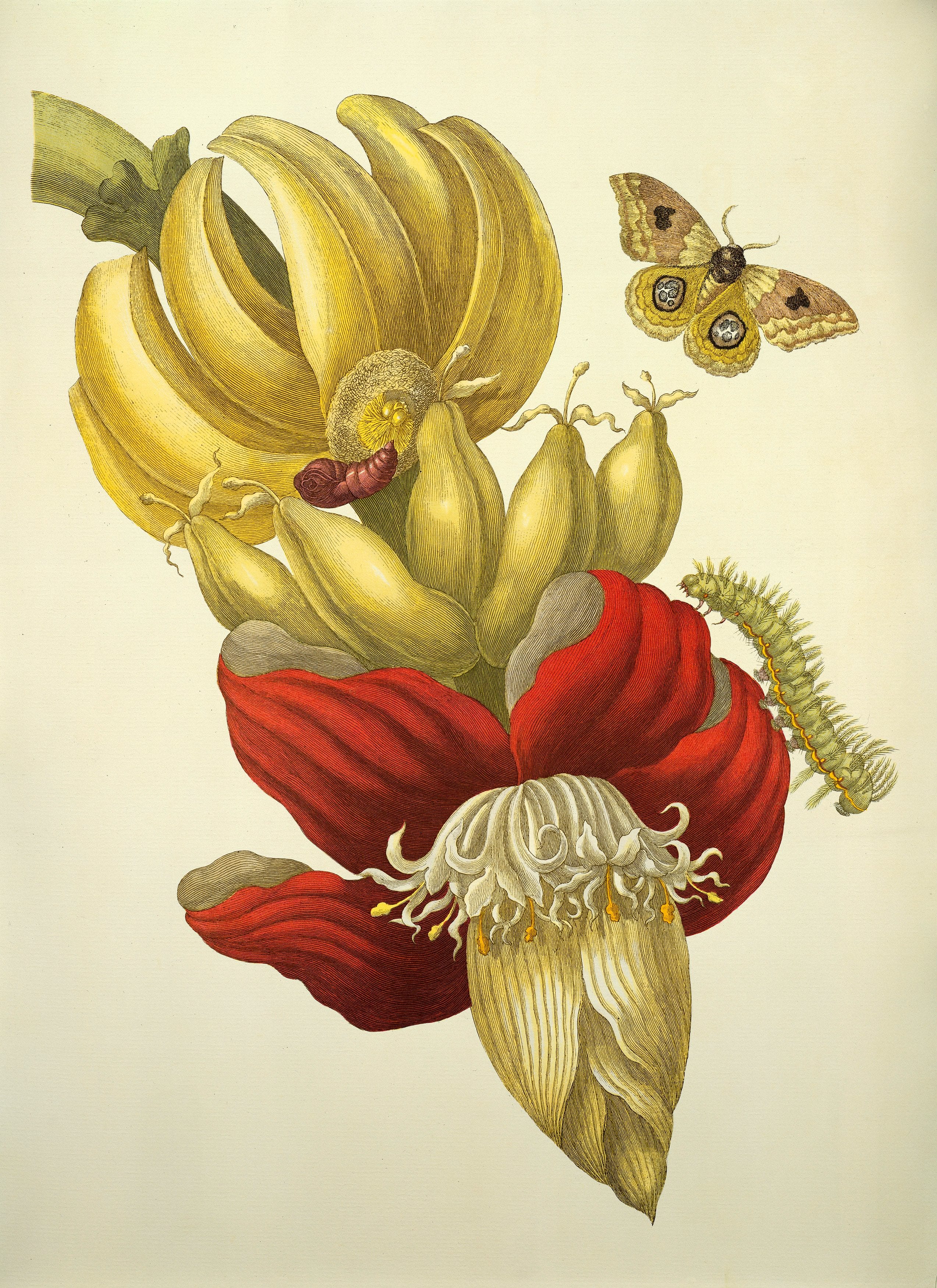
1705
The Banana
A banana in flower and in fruit, with the life that lives upon it.
Musa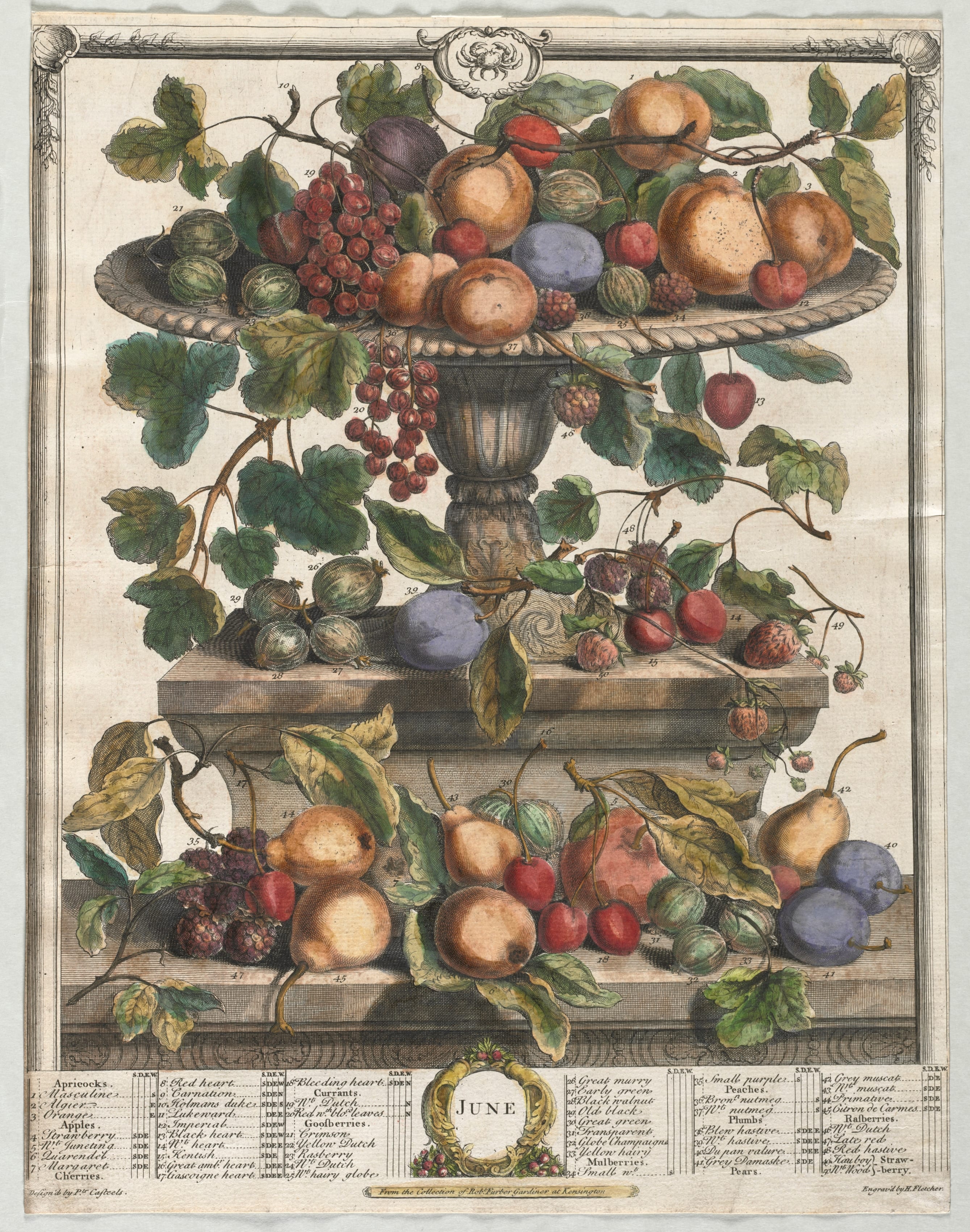
1732
The Twelve Months of Fruit
An abundance of fruit, in the grand manner.
1737–1739
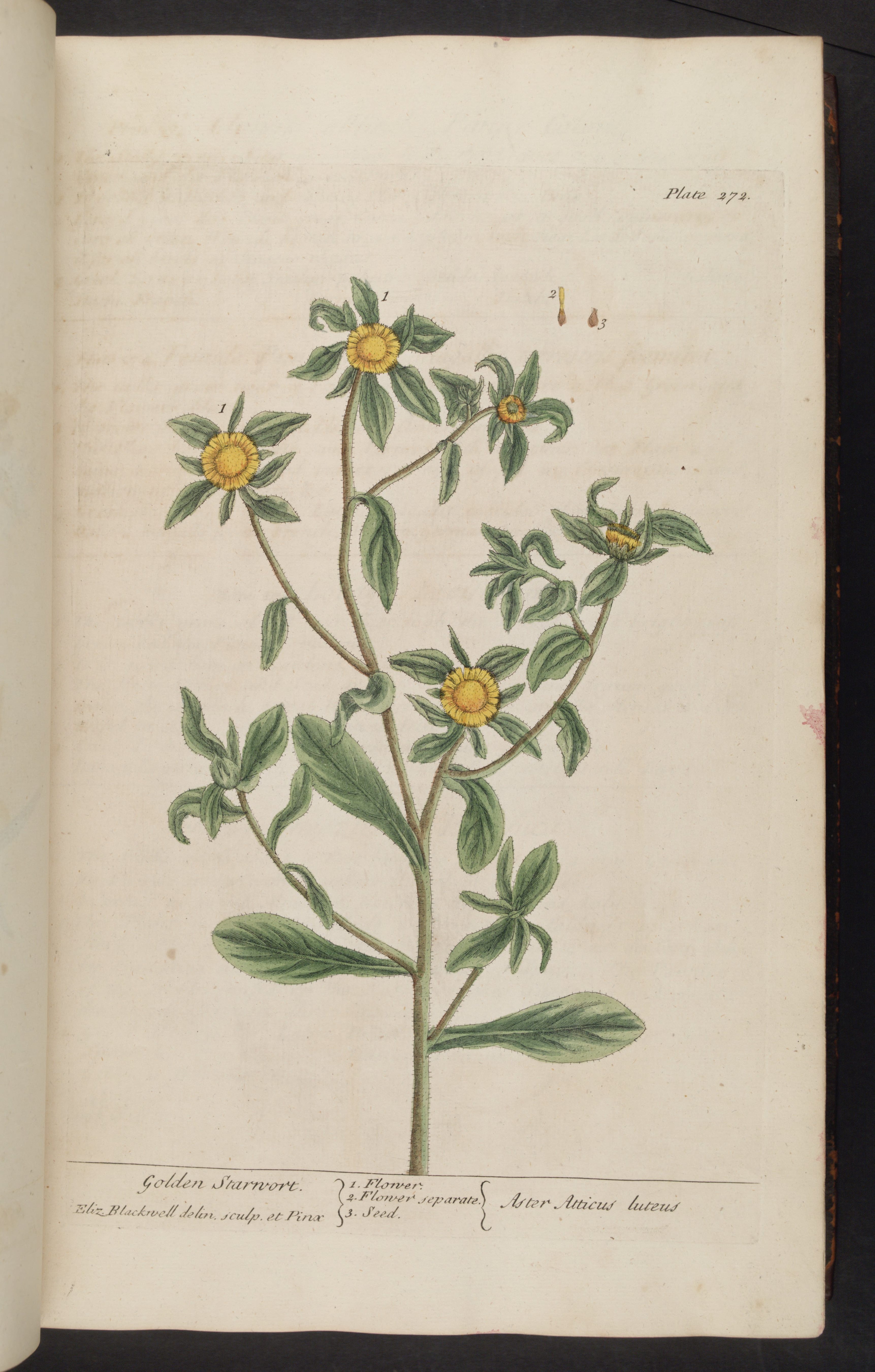
The Spiny Golden Star
From the herbal a woman drew, engraved and coloured herself, to get her husband out of debtors’ prison.
t. 272Pallenis spinosa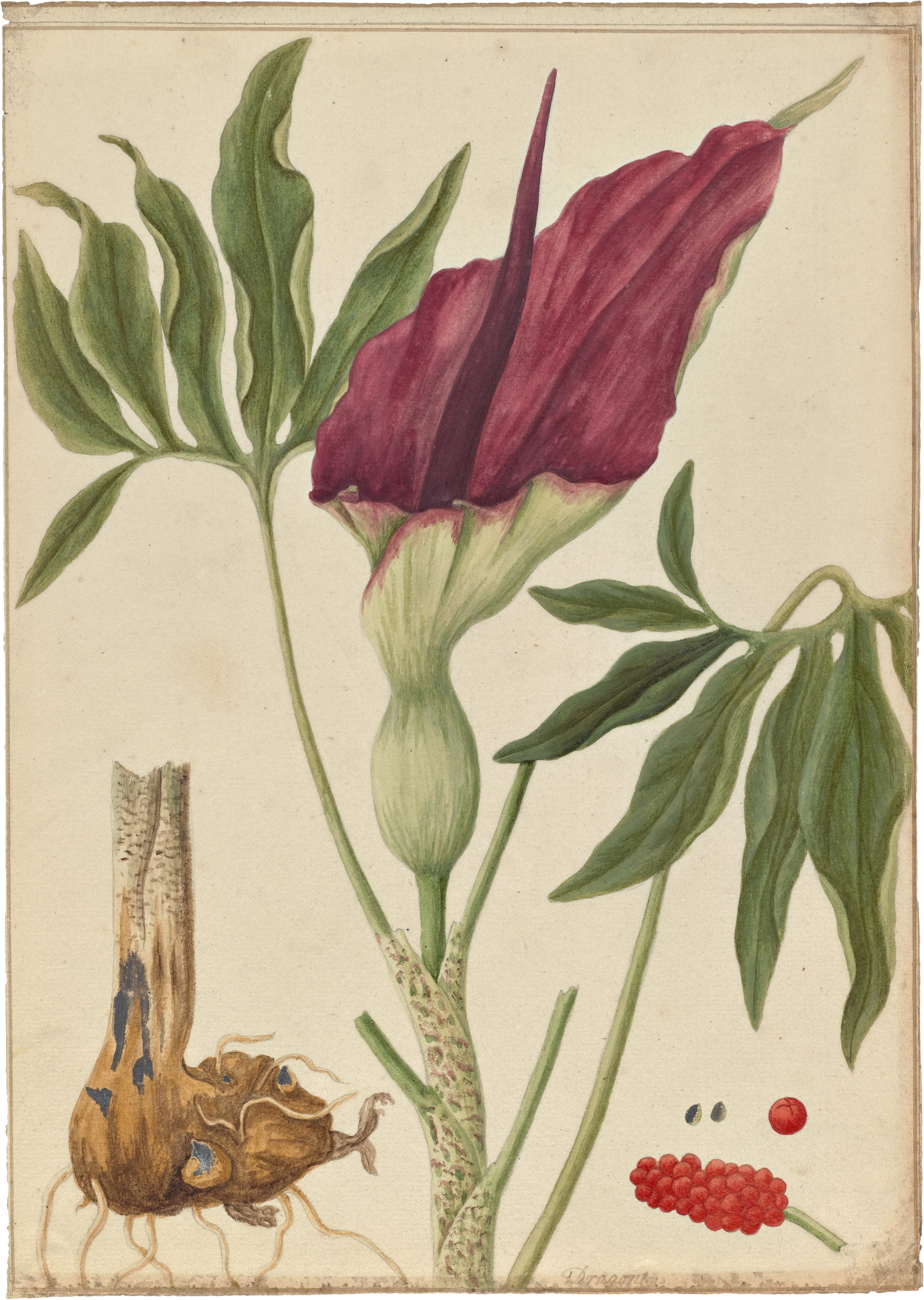
19th century
The Dragon Arum
A metre-tall purple hood that smells, deliberately, of rotting meat.
Dracunculus vulgaris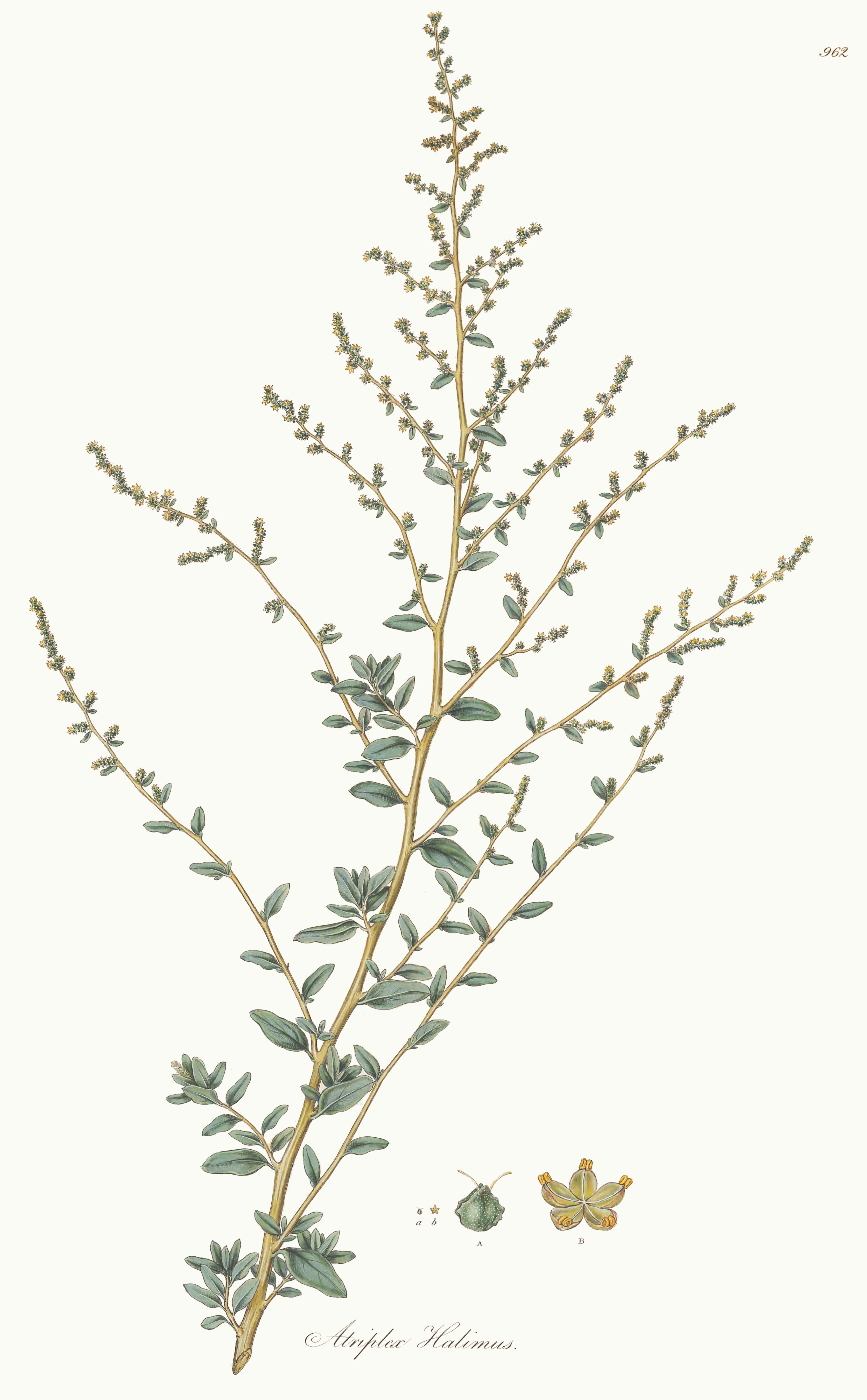
1806–1840
The Sea Orache
From the most expensive flora ever produced — thirty copies, forty years, one fortune.
vol. 10, t. 962Atriplex halimus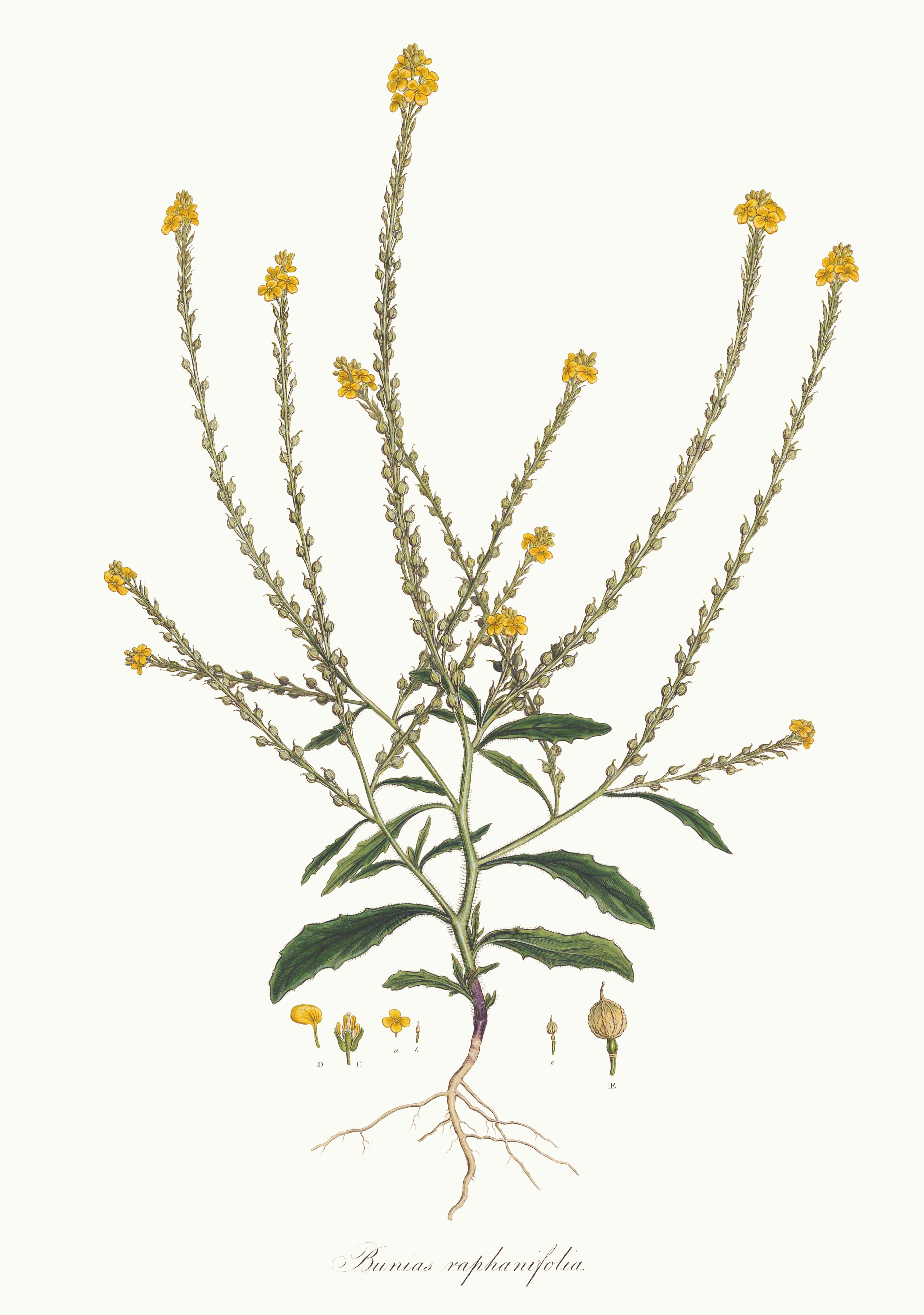
1806–1840
The Bastard Cabbage
A roadside weed of the Aegean, recorded to the same standard as a rare orchid.
vol. 7, t. 612Rapistrum rugosum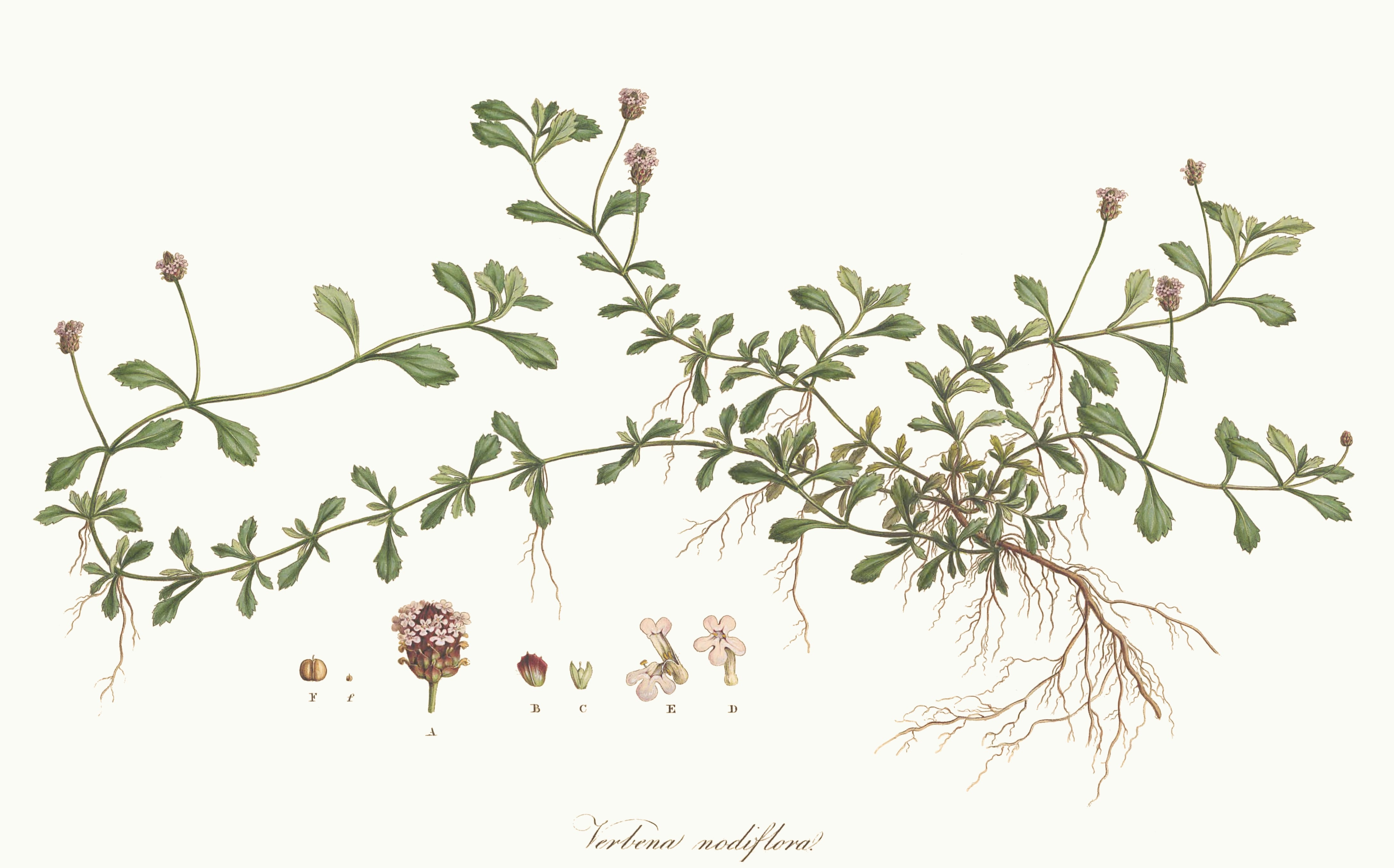
1806–1840
The Frog Fruit
A creeping mat plant, drawn wide — one of the few landscape plates in the flora.
vol. 6, t. 553Phyla nodiflora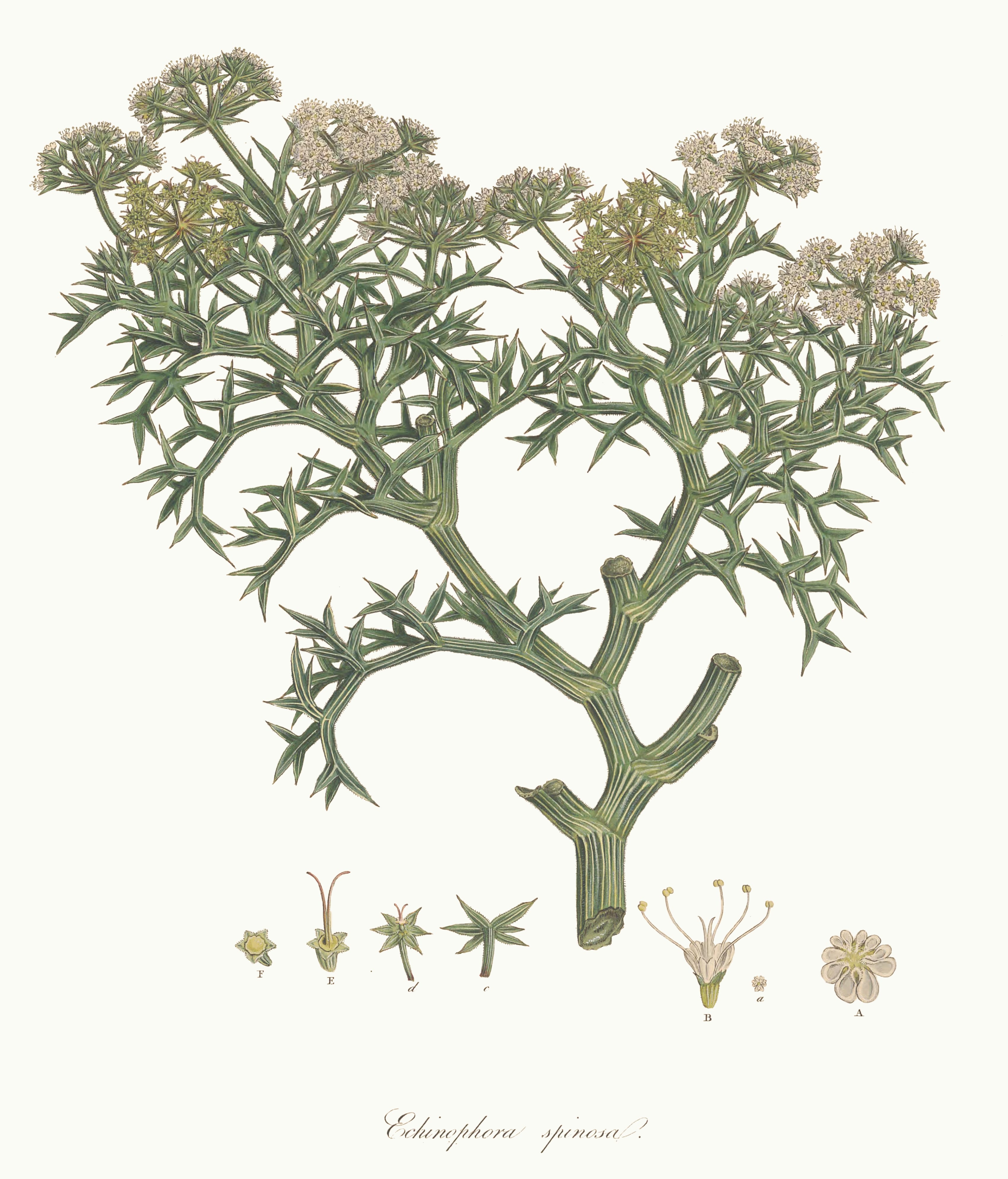
1806–1840
The Prickly Samphire
A spined umbellifer of Mediterranean sand — architecture disguised as a weed.
vol. 3, t. 265Echinophora spinosaTHE YEAR
The Twelve Months
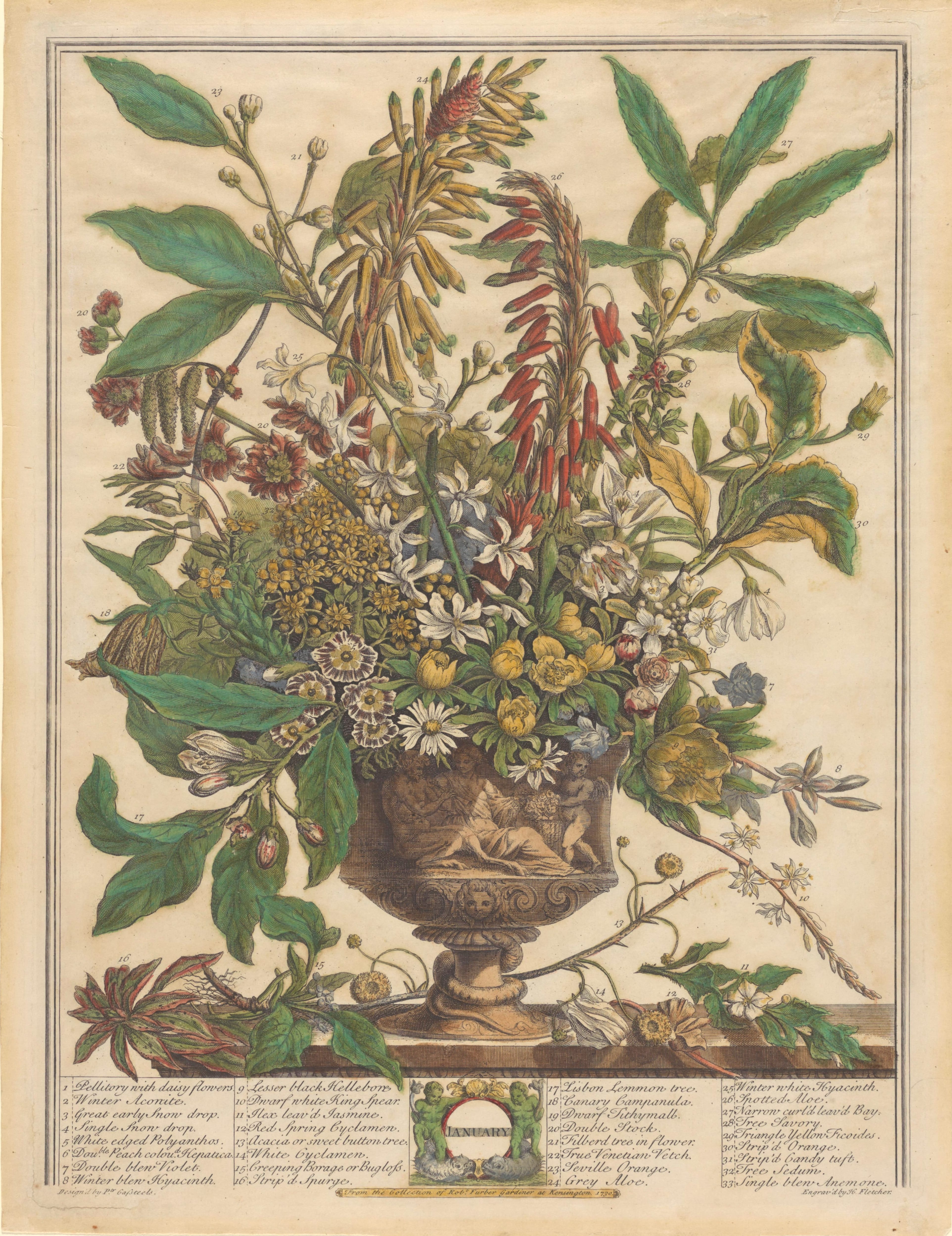
1730
January
The winter urn — and January’s carnation.
Pl. 1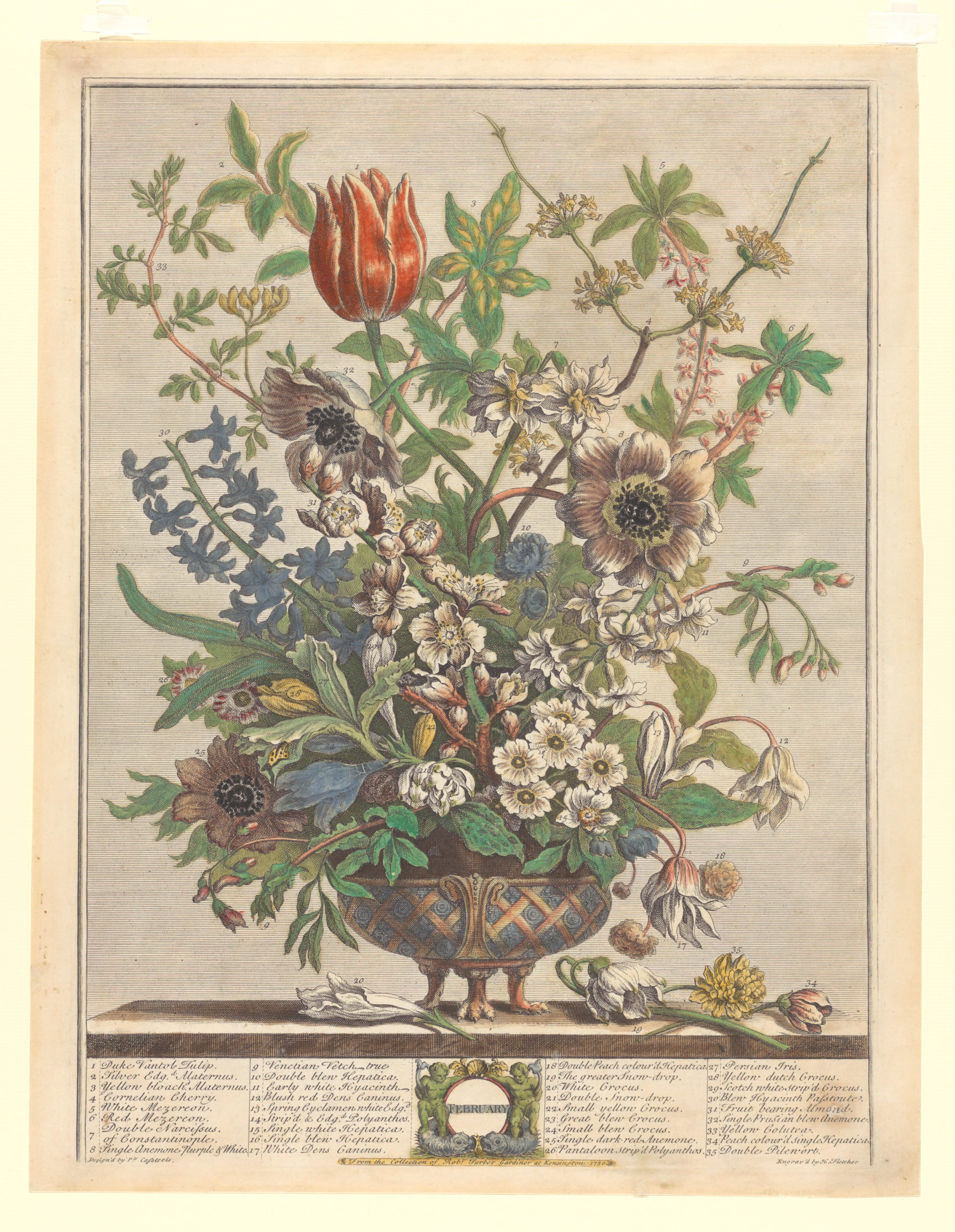
1730
February
The first sweetness — and February’s violet.
Pl. 2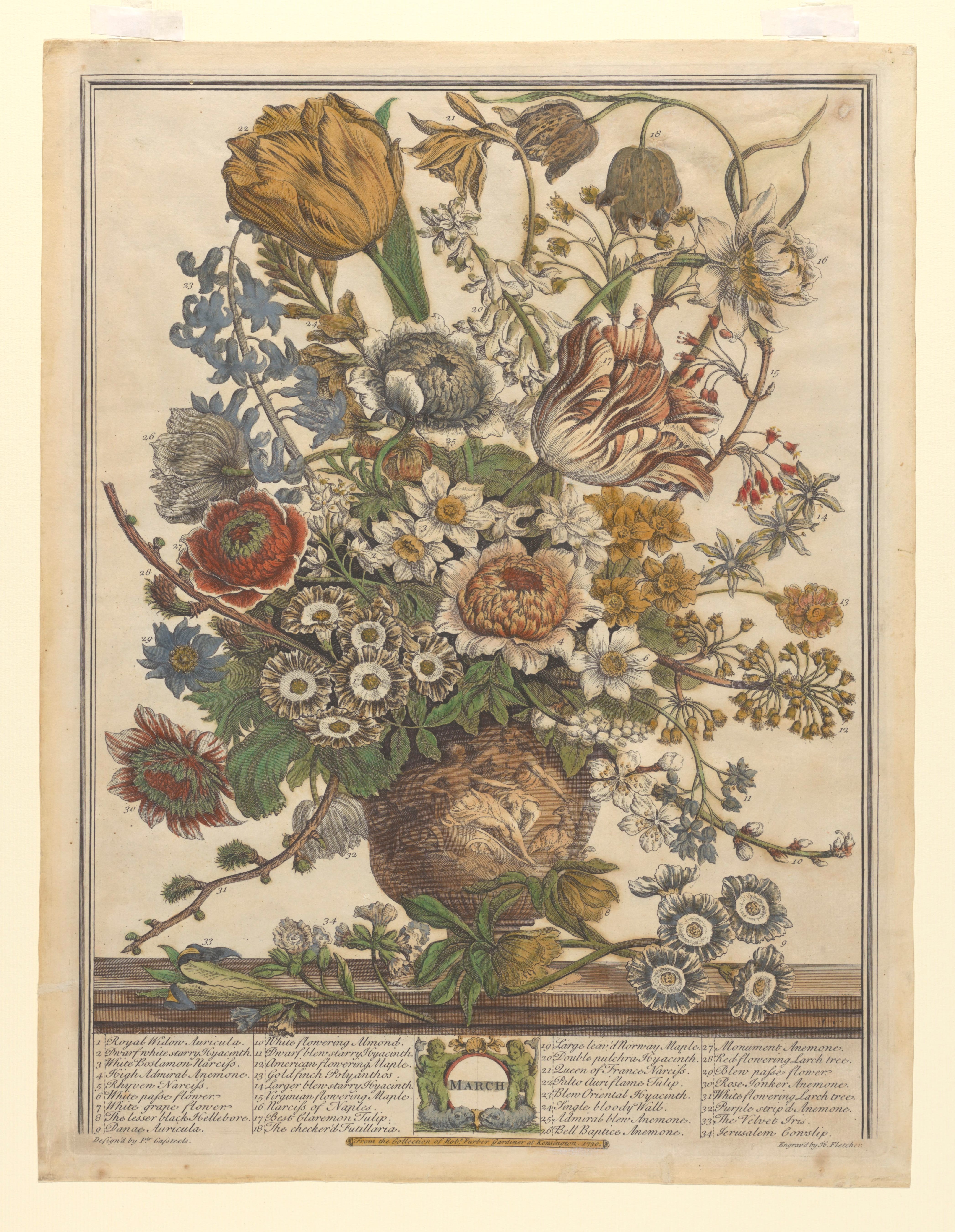
1730
March
The trumpet of the returning light — March’s daffodil.
Pl. 3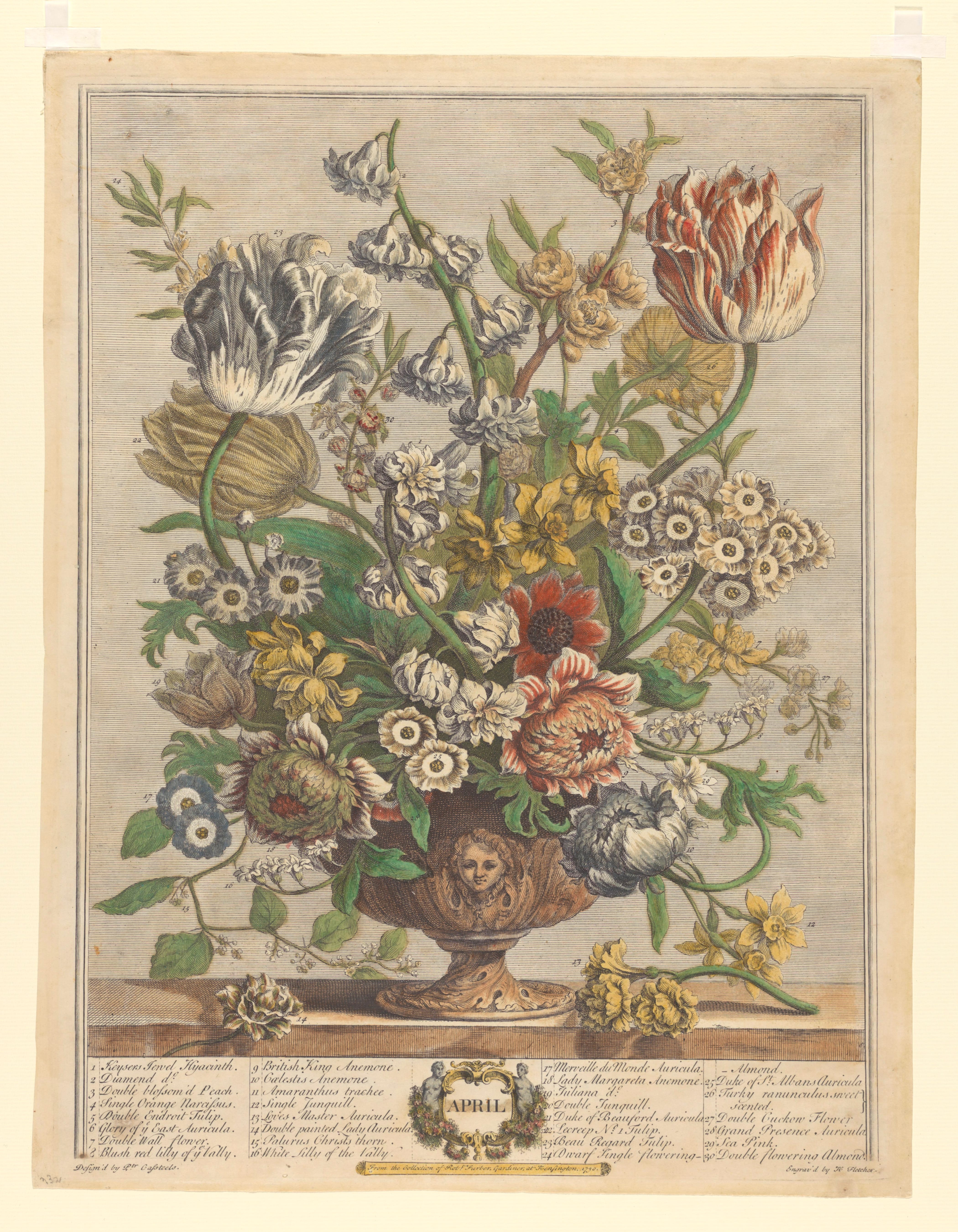
1730
April
The day’s eye opens — April’s daisy.
Pl. 4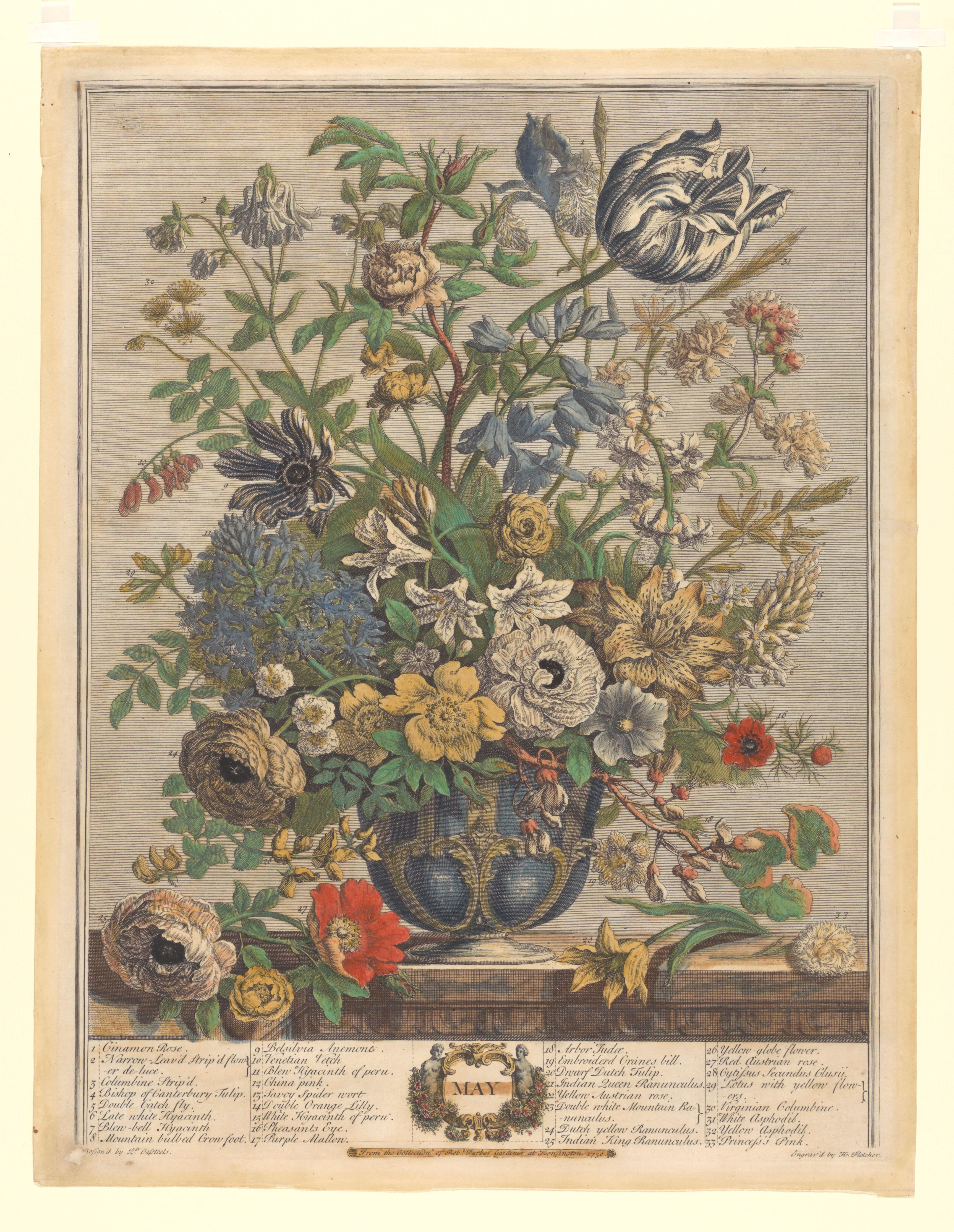
1730
May
The scent of the whole month — May’s lily of the valley.
Pl. 5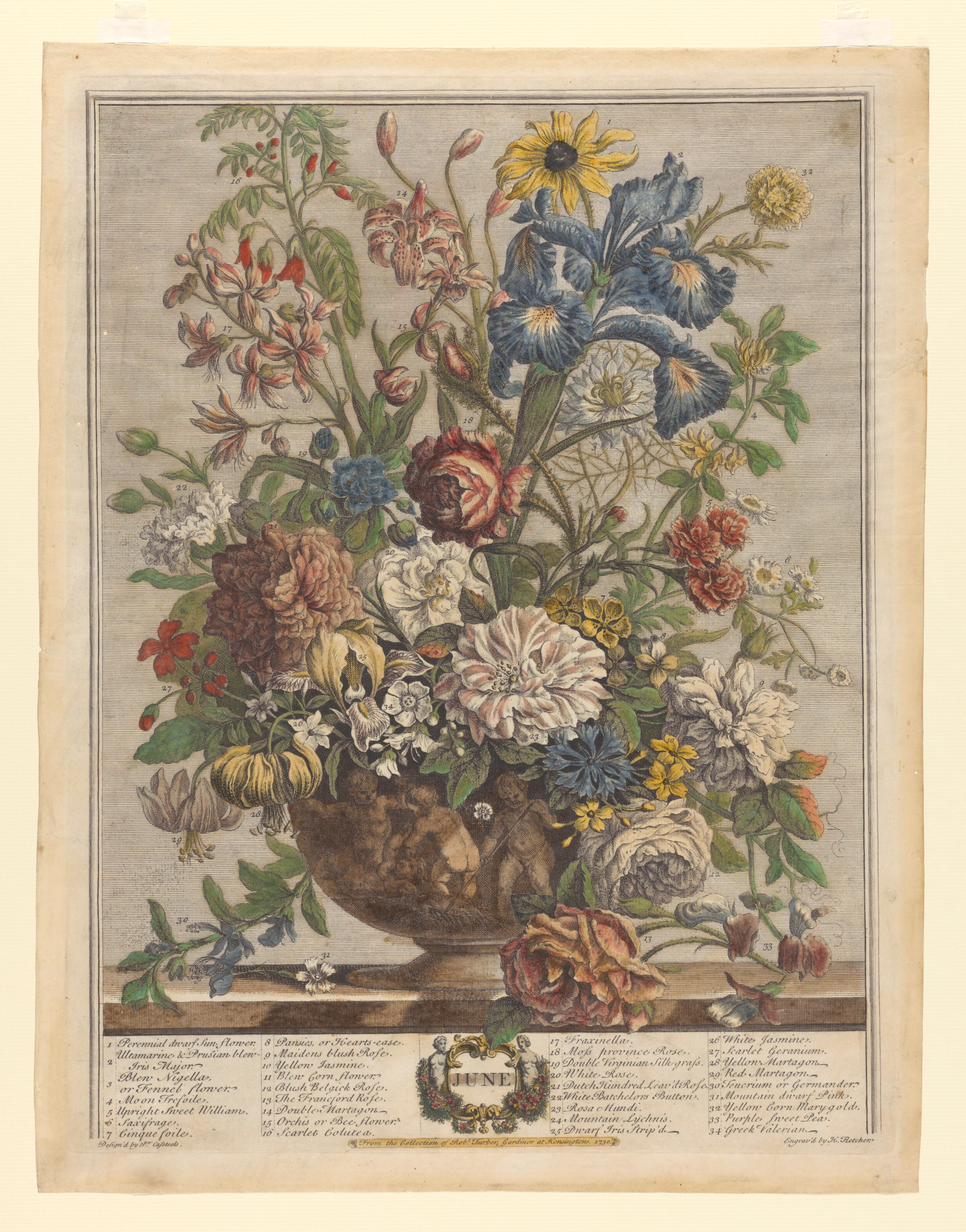
1730
June
The rose arrives — June’s own flower, and the year’s.
Pl. 6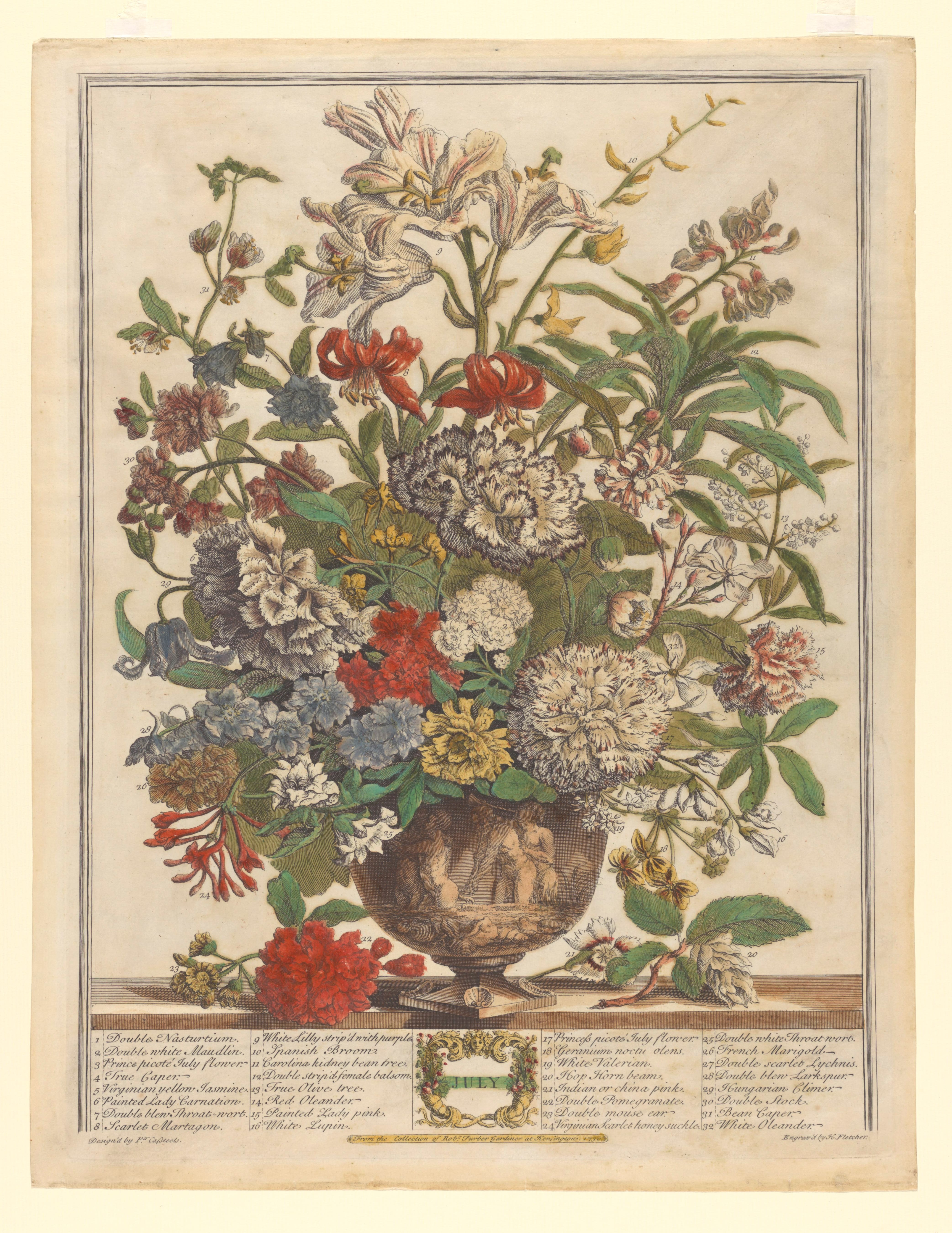
1730
July
The high summer border — July’s larkspur.
Pl. 7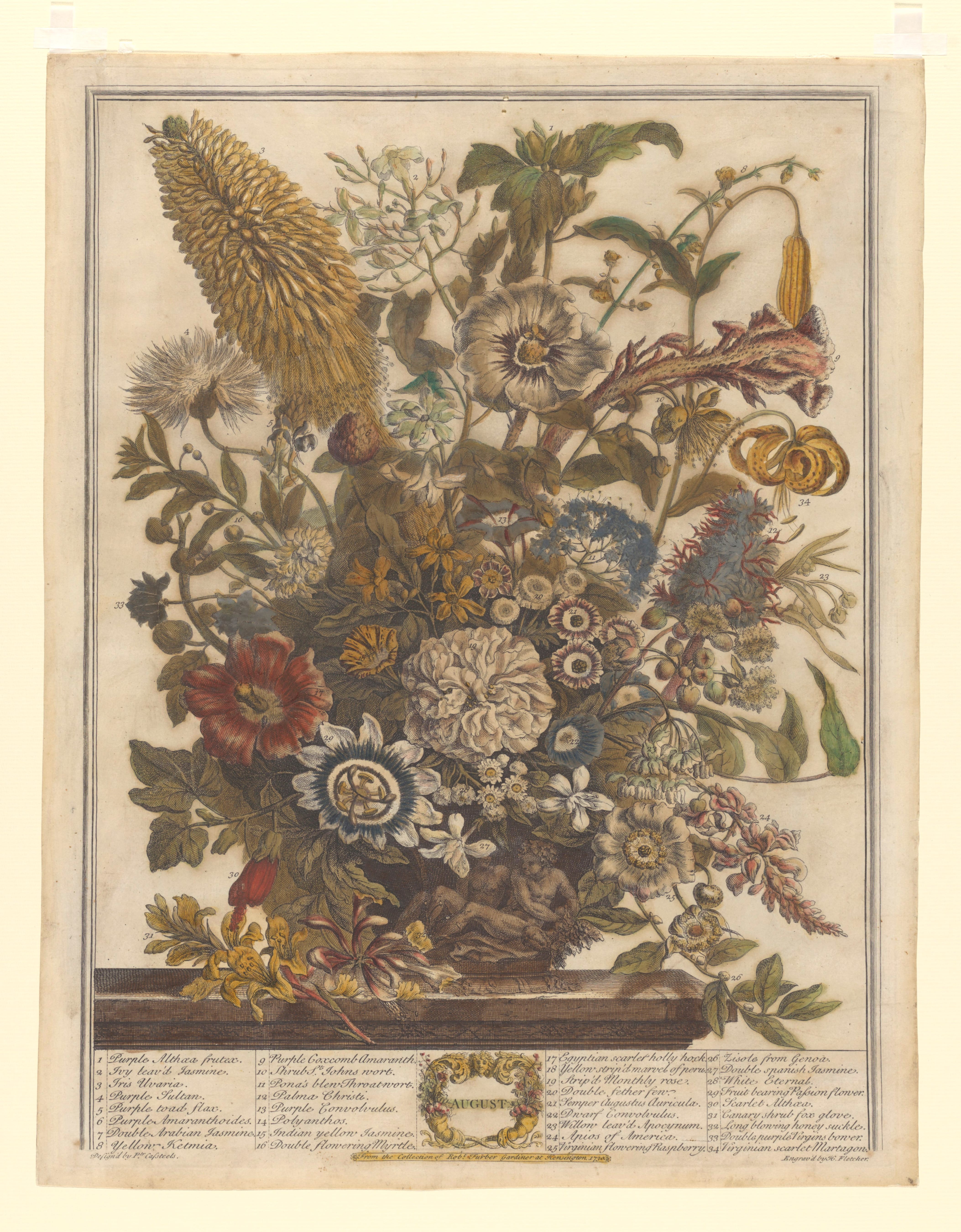
1730
August
The most fragile red in the garden — August’s poppy.
Pl. 8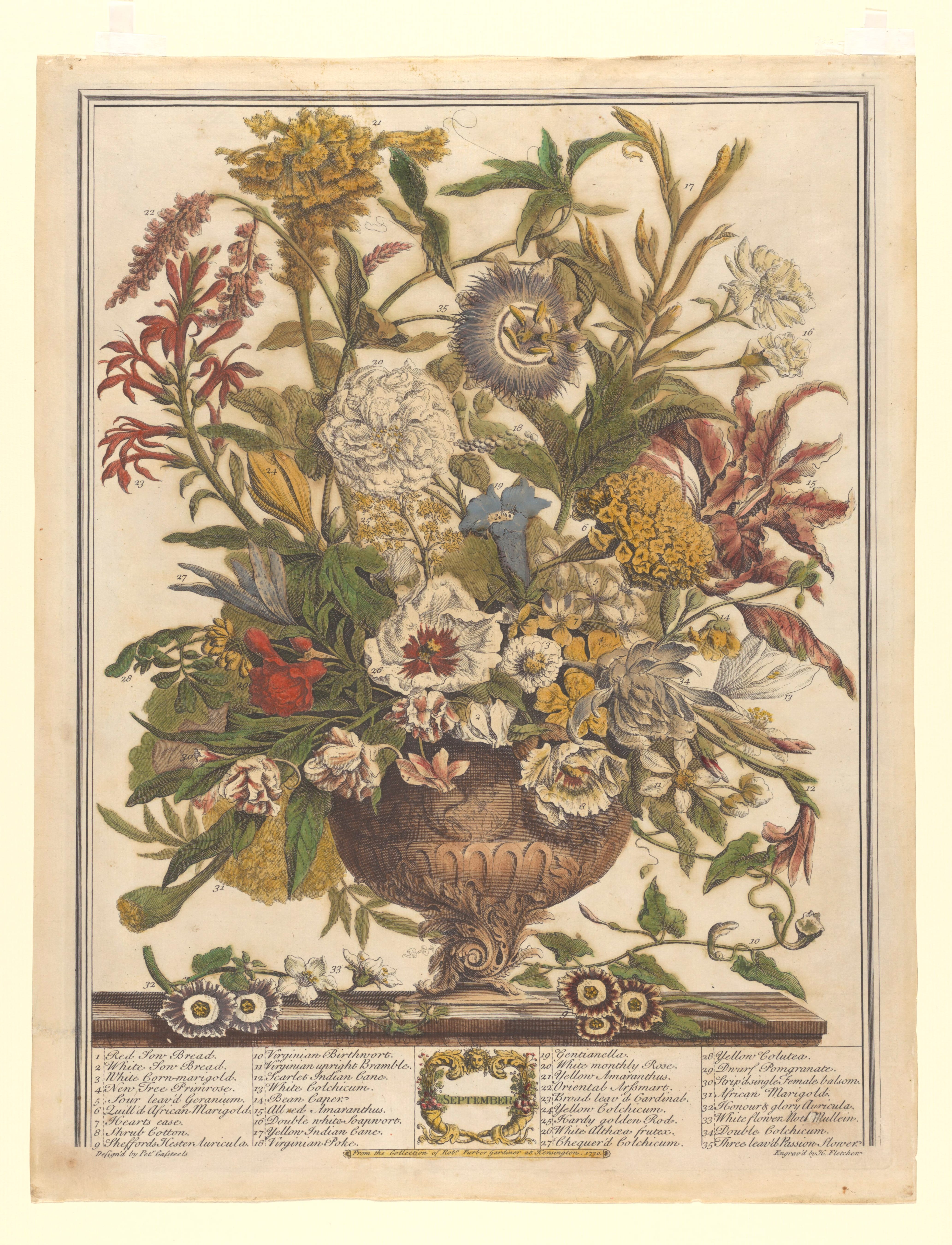
1730
September
The last blue before the turn — September’s aster.
Pl. 9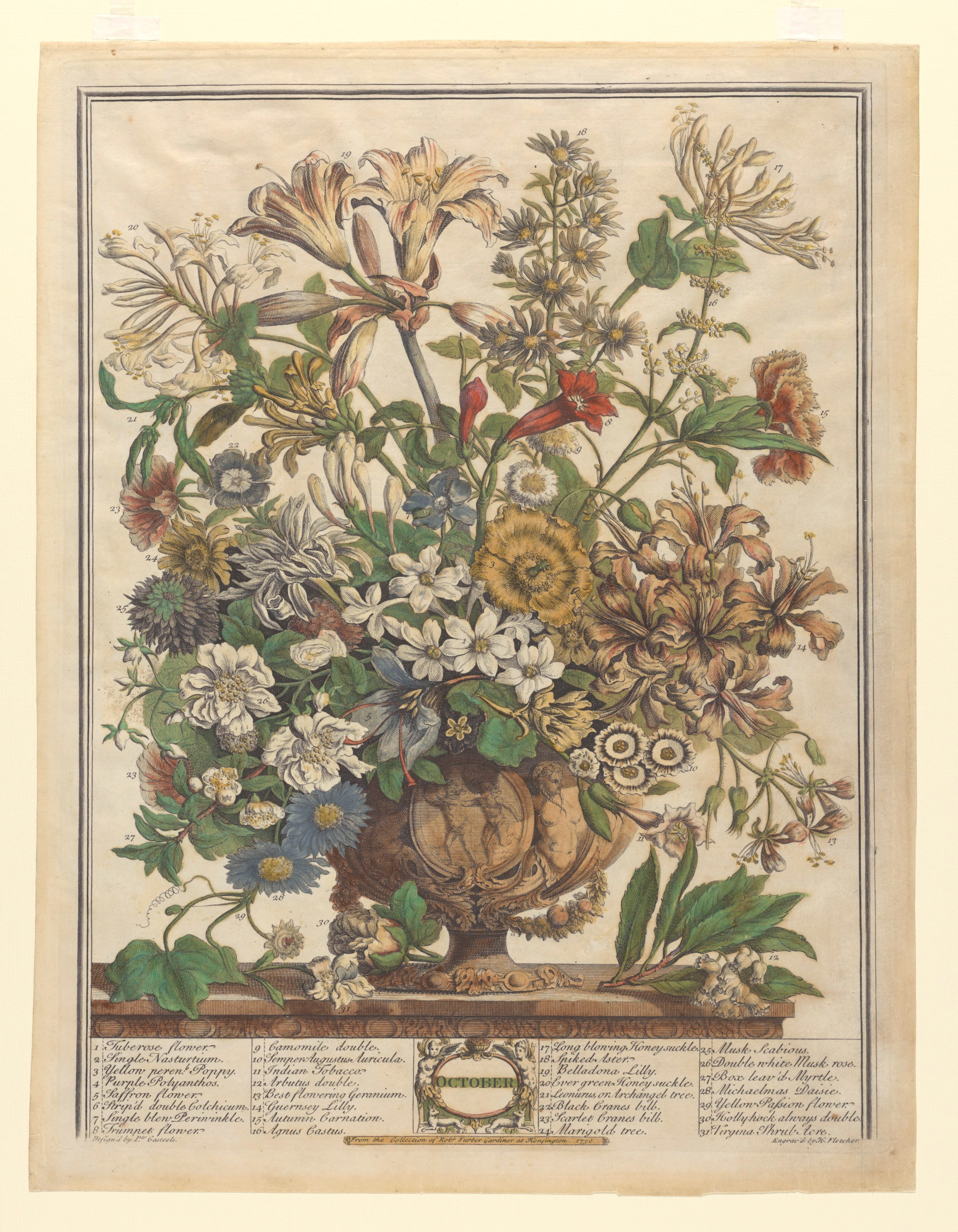
1730
October
Hot orange, held late — October’s marigold.
Pl. 10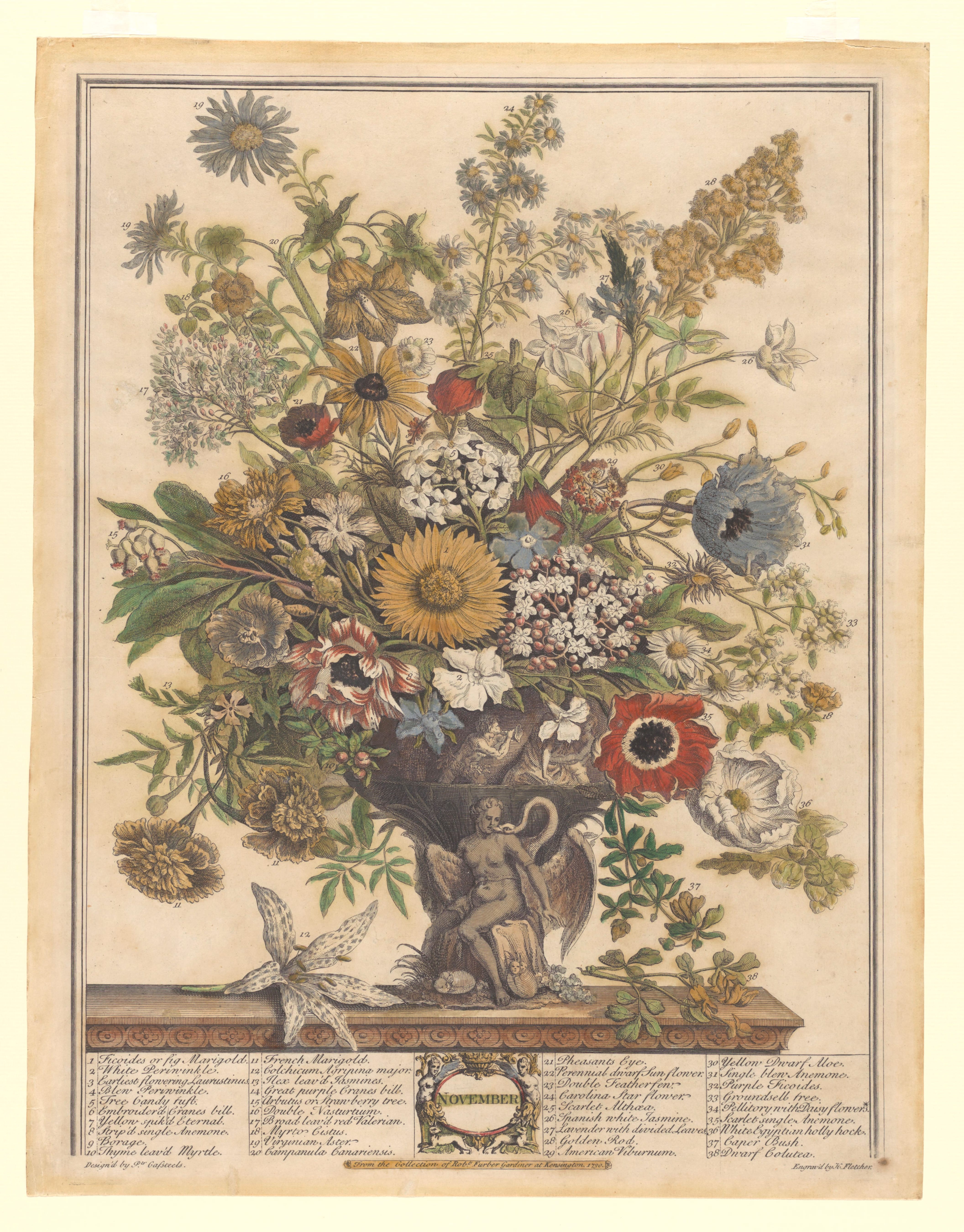
1730
November
The flower of the late garden — November’s chrysanthemum.
Pl. 11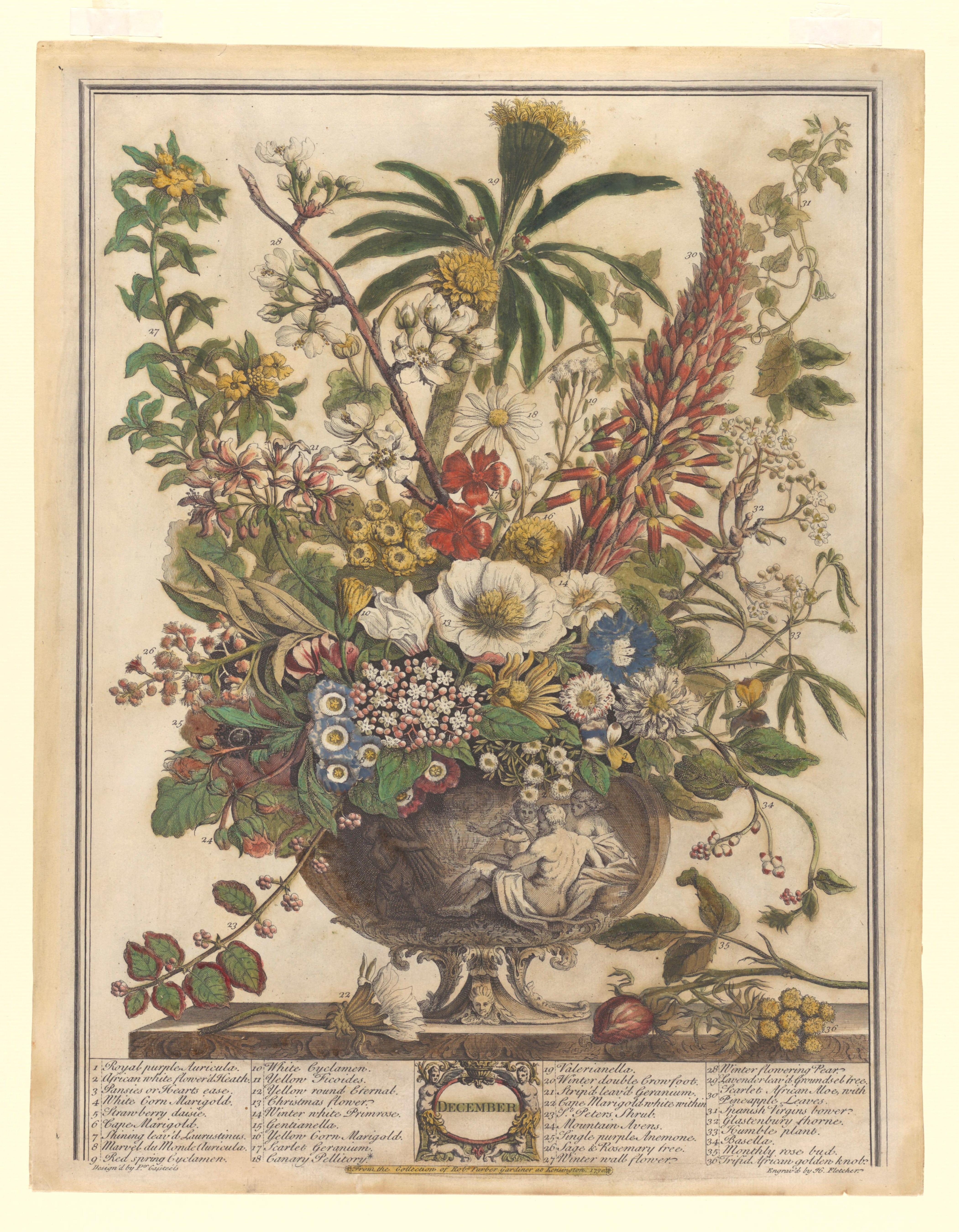
1730
December
Forced indoors while the garden sleeps — December’s narcissus.
Pl. 12