THE HOTHOUSE
The Grand Flower
Lilies, amaryllis, and the tropics at overwhelming scale — the flowers of the hothouse, rendered as architecture.
1802–1816
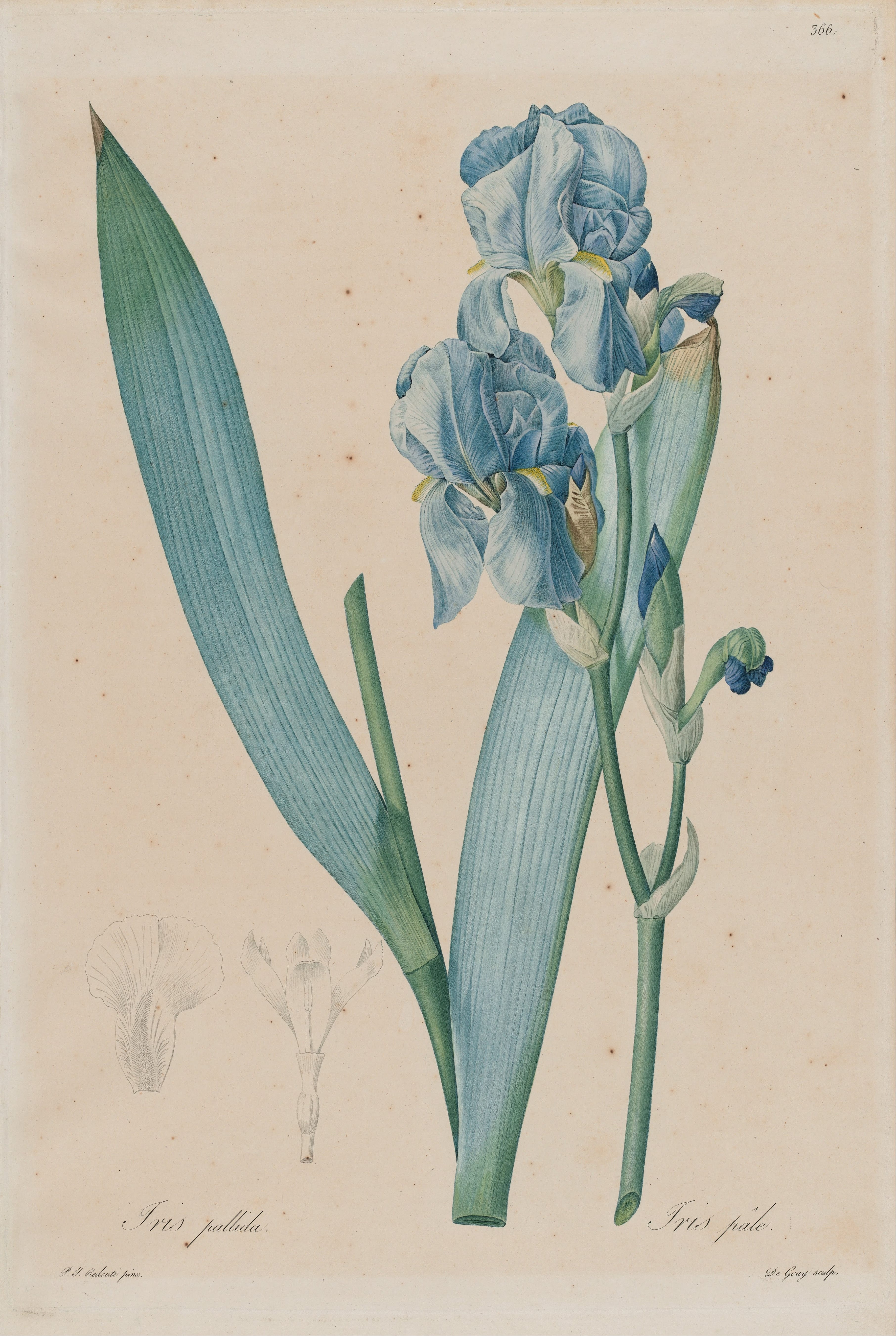
The Dalmatian Iris
The falls and standards of an iris, at the scale of architecture.
Iris pallida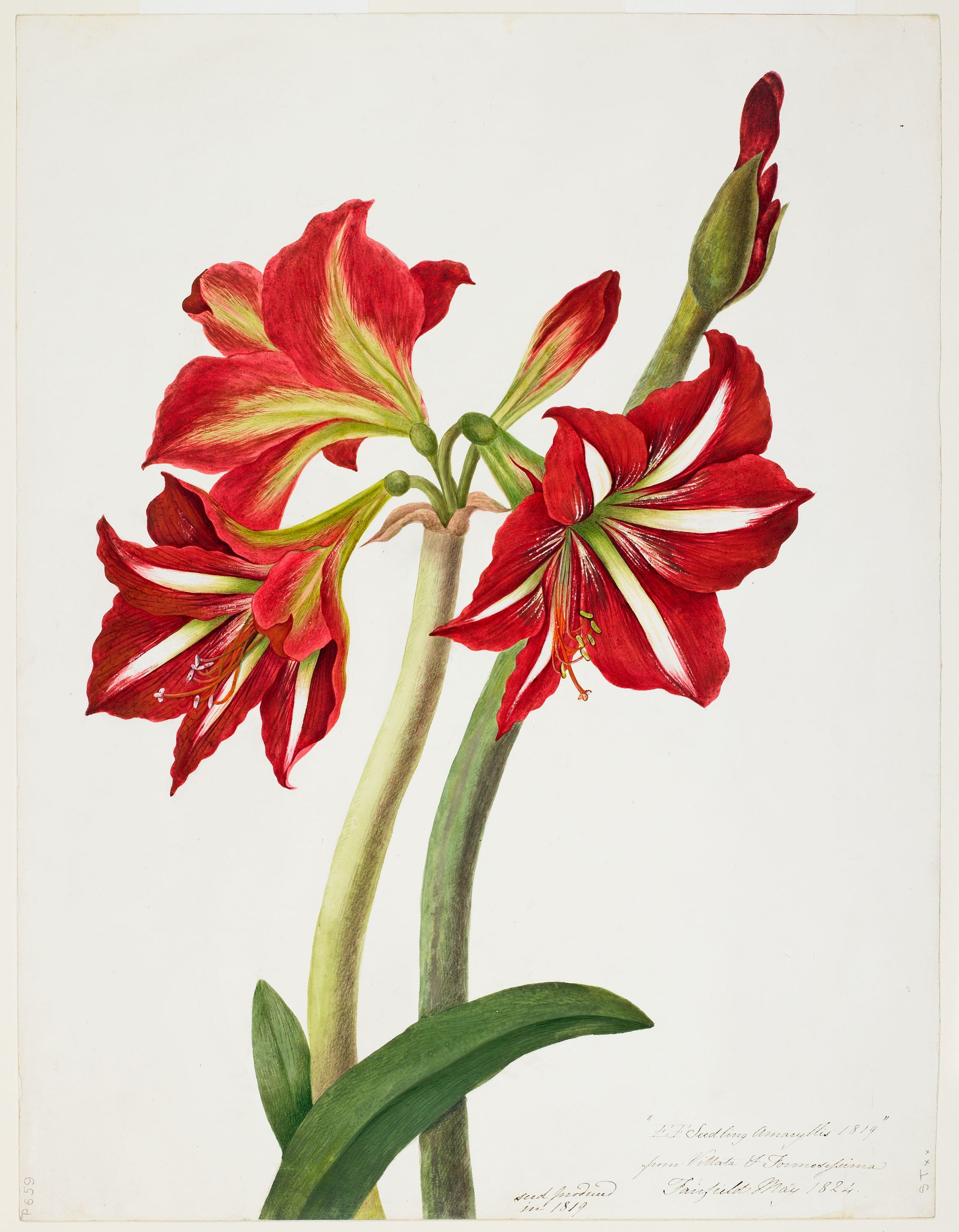
1831–1834
A Hexandrian Lily
A giant lily, at overwhelming scale.
1801–1806
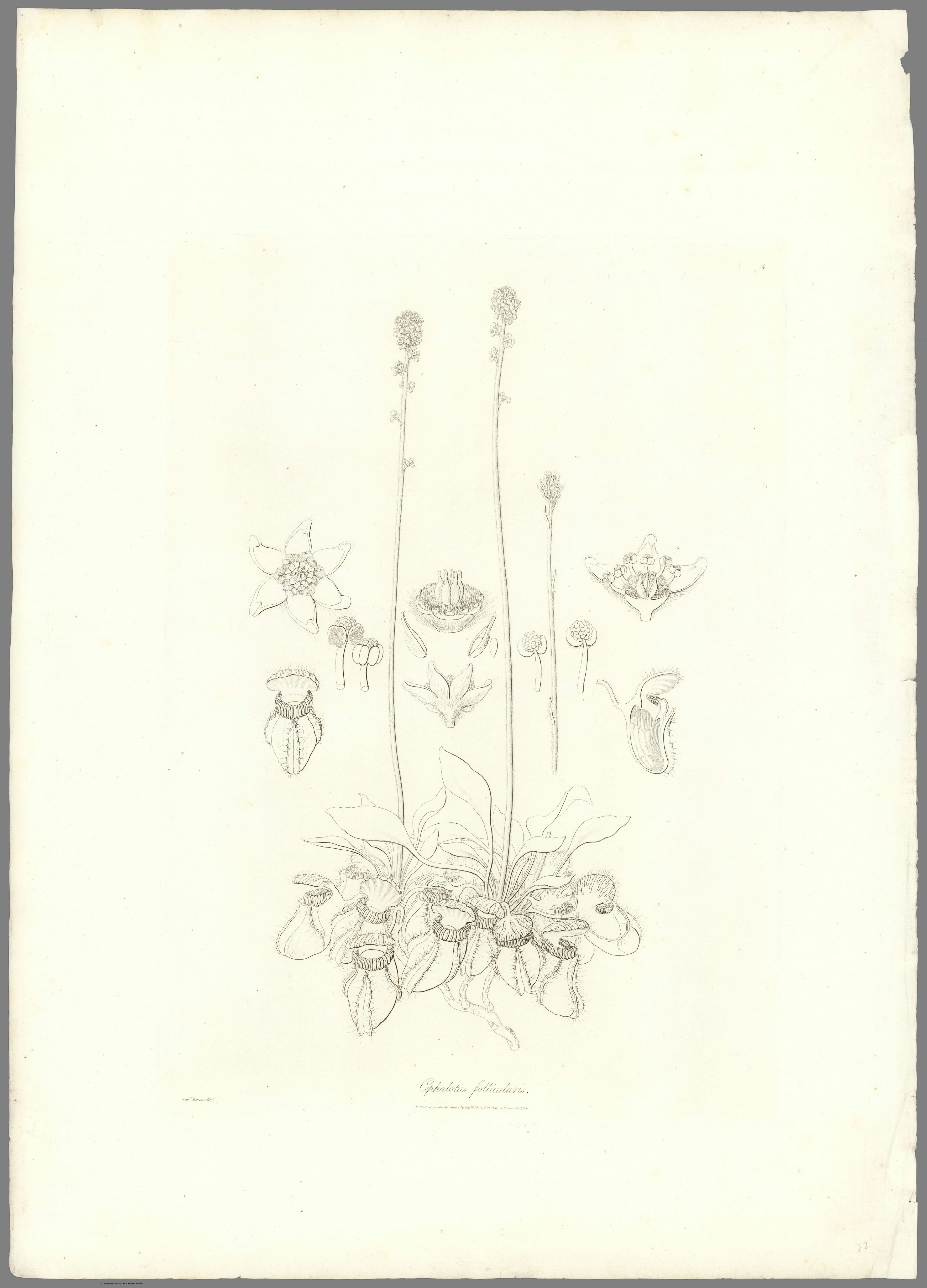
The Albany Pitcher Plant
A carnivorous plant found once, at the bottom of the world, and drawn perfectly the first time.
Cephalotus follicularis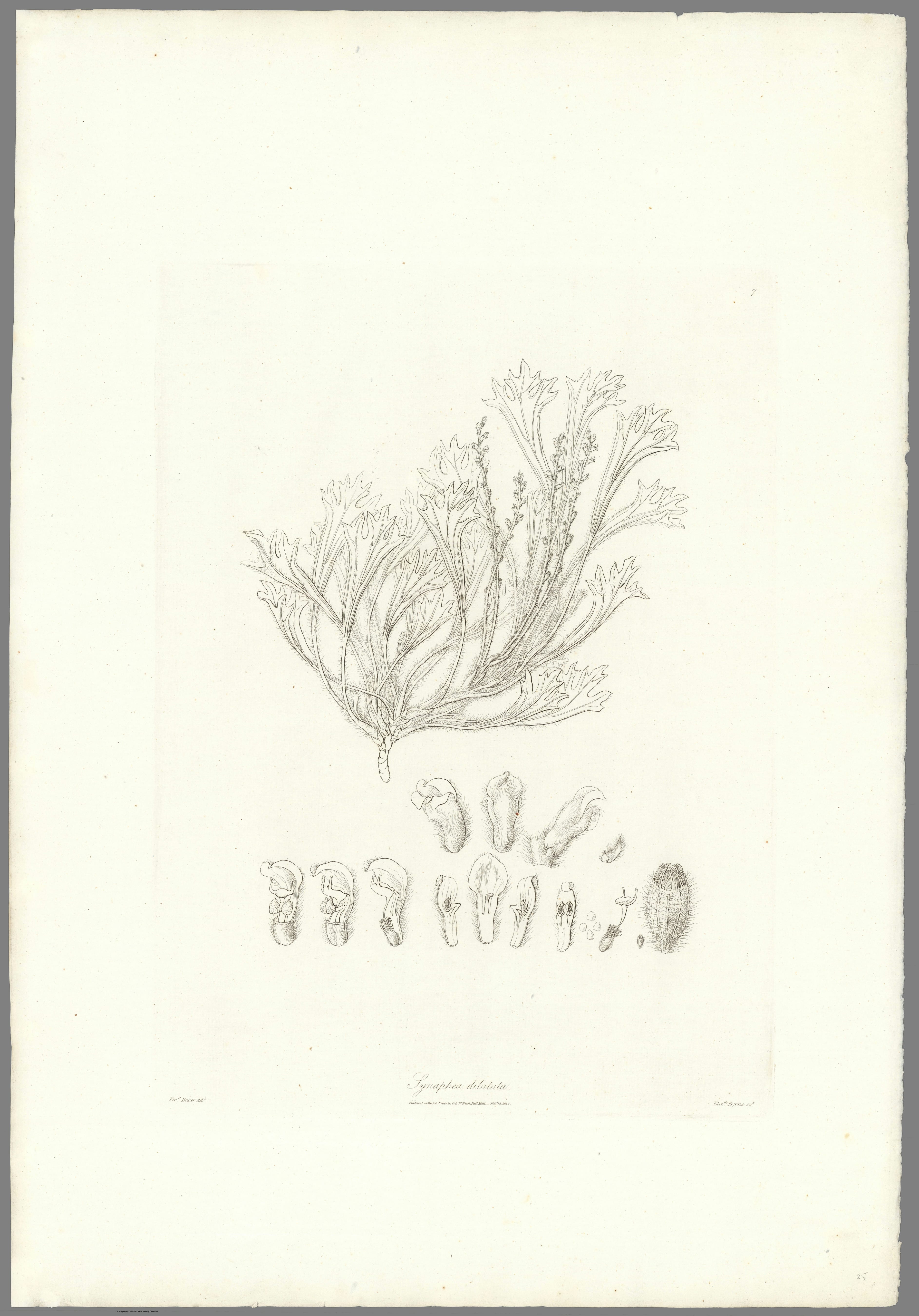
1801–1806
Synaphea
A Western Australian shrub, drawn with the patience of an anatomist.
Synaphea dilatata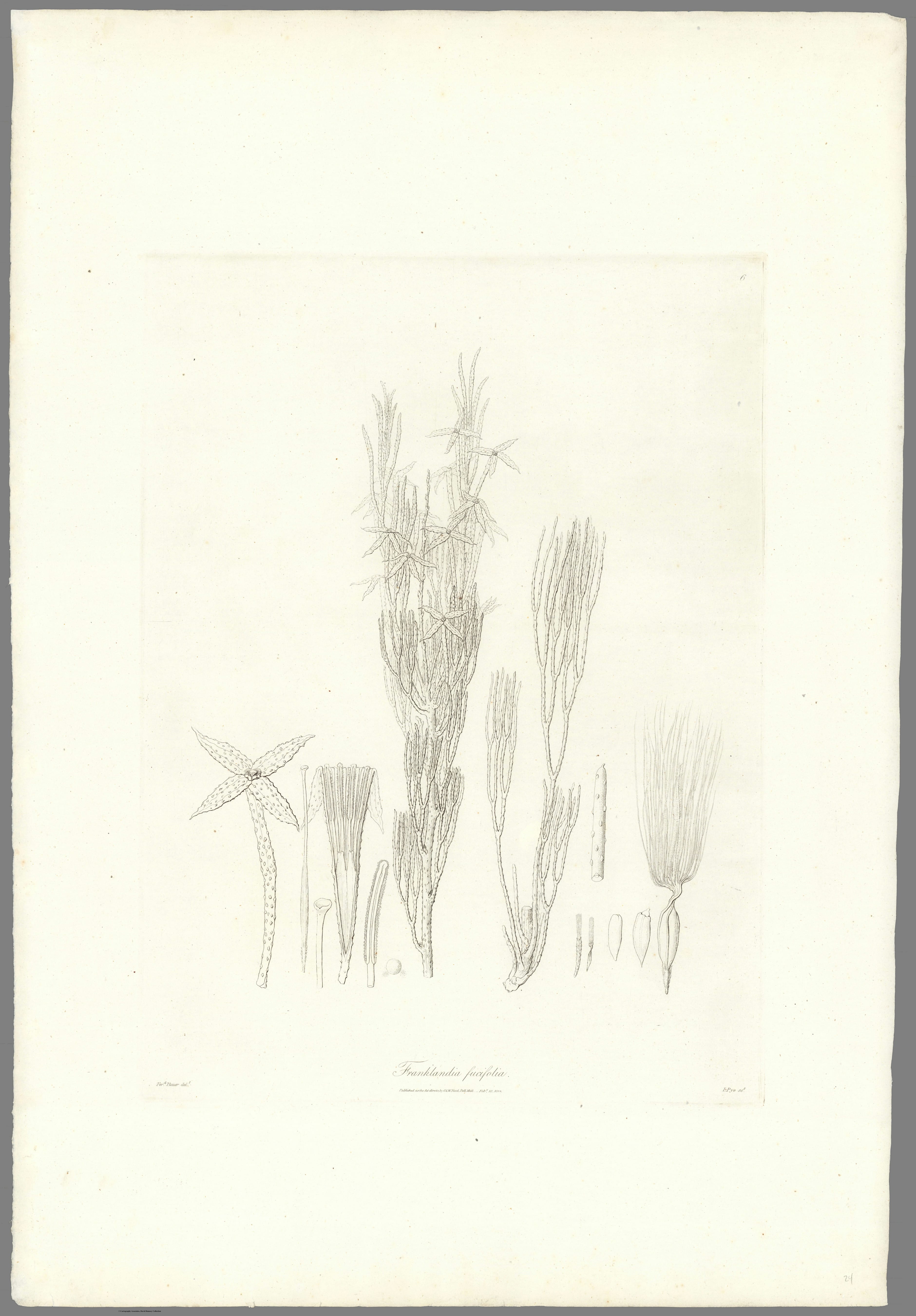
1801–1806
Franklandia
The lantern flower of the south-west, in a hand that never guessed.
Franklandia fucifolia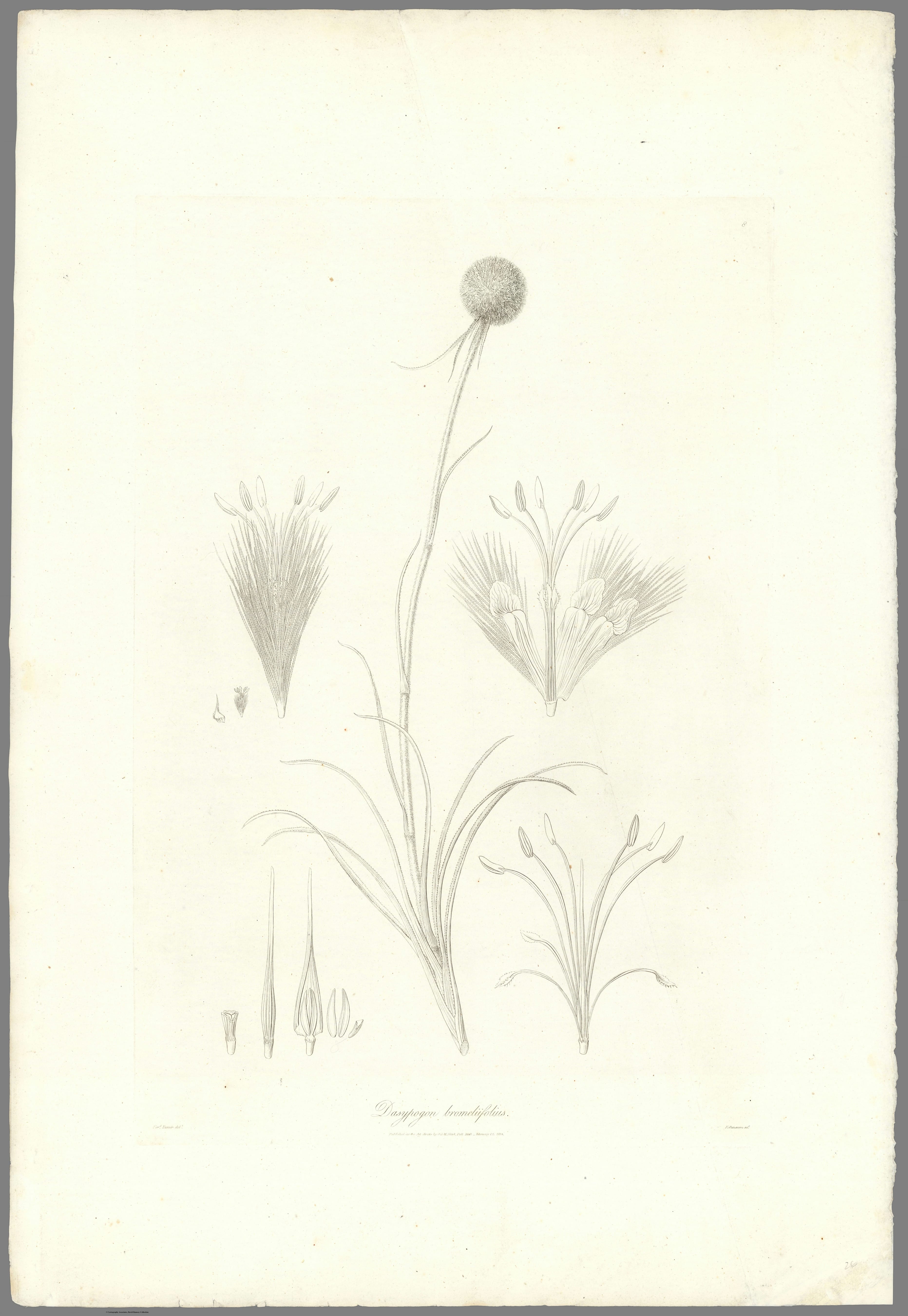
1801–1806
Dasypogon
A pineapple-bush of the sand plains, held to the light.
Dasypogon bromeliifolius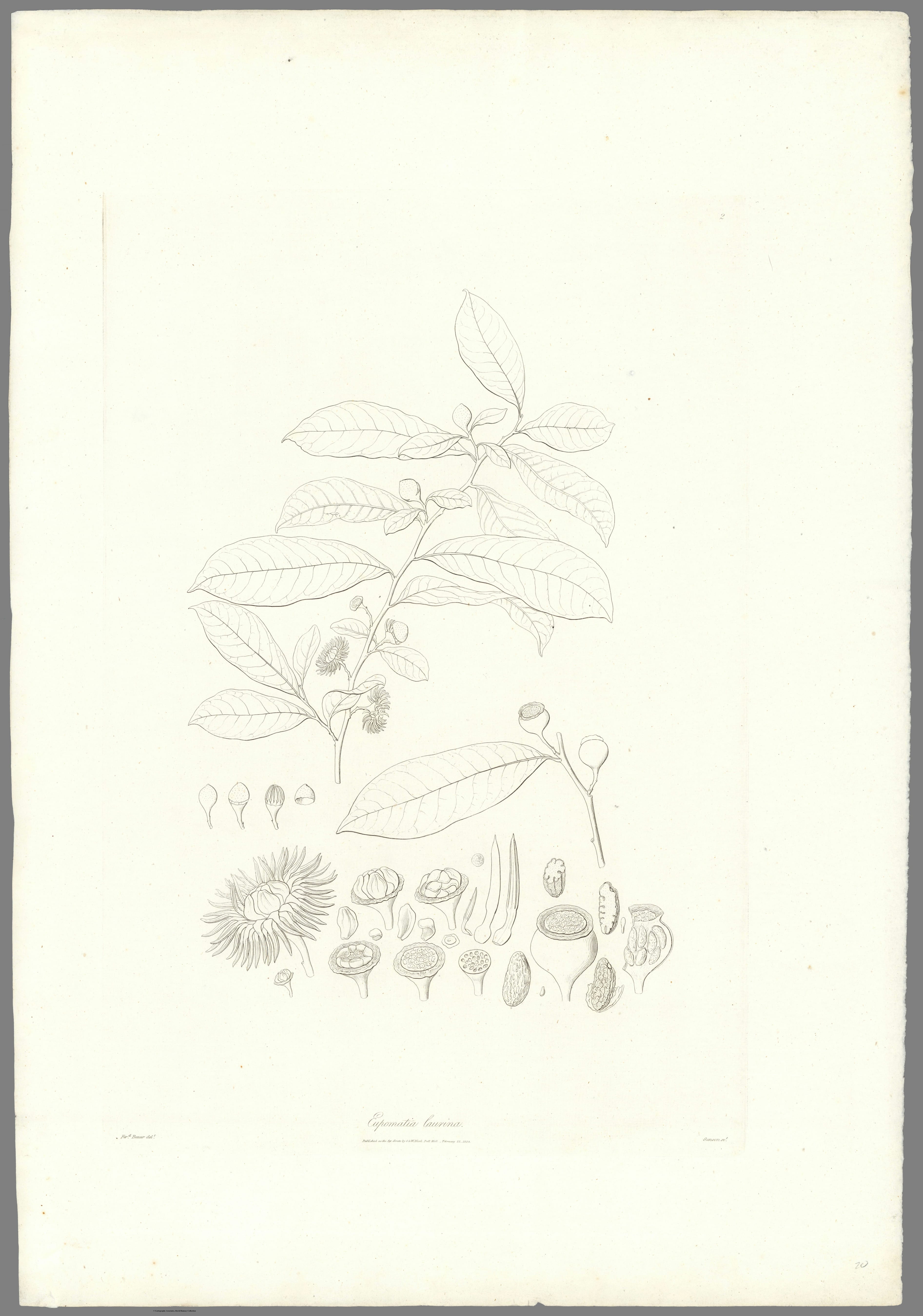
1801–1806
The Bolwarra
An ancient flowering line of eastern Australia, drawn from the living plant.
Eupomatia laurina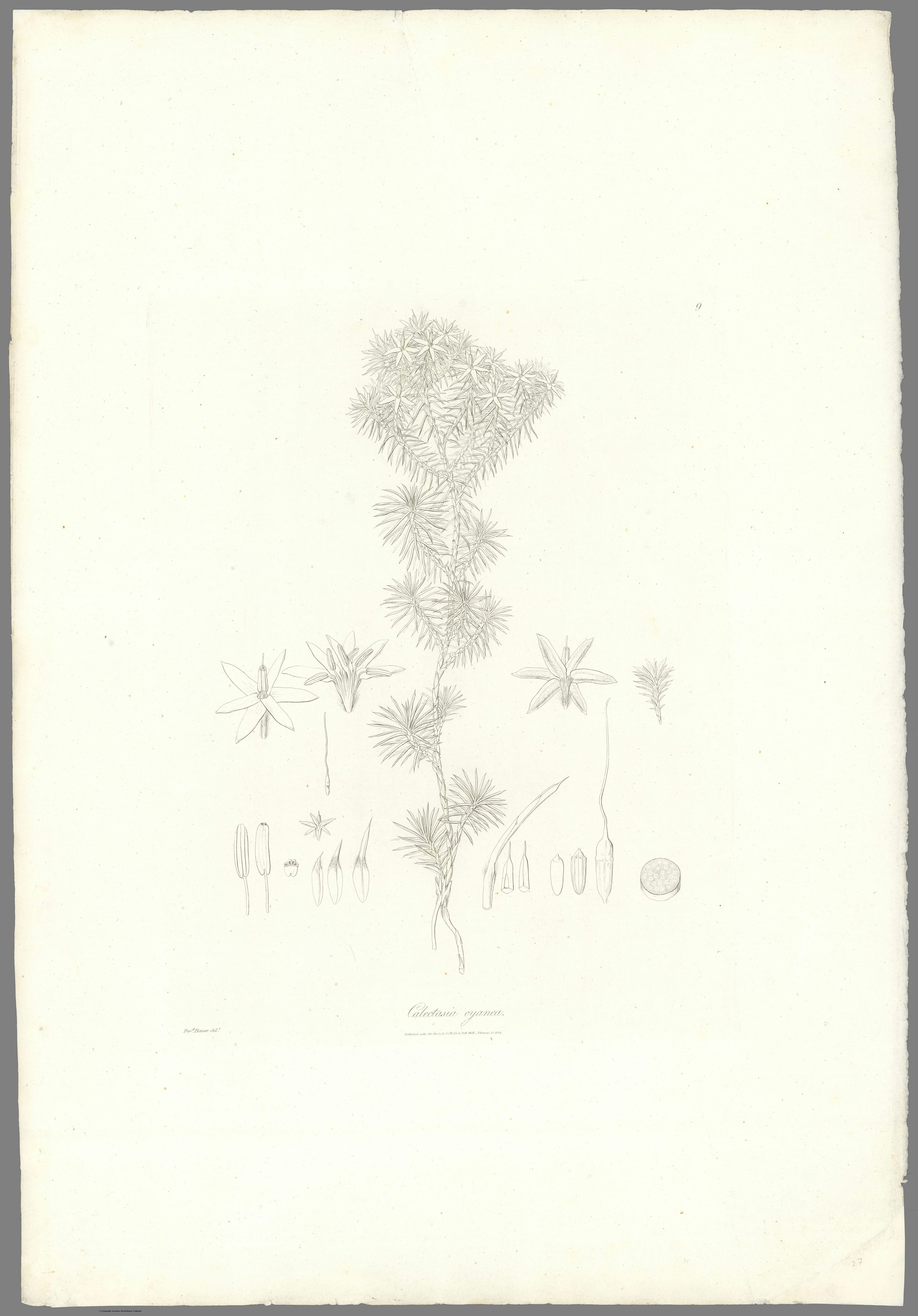
1801–1806
The Blue Tinsel Lily
A flower with a metallic sheen — and the hardest thing in the book to colour.
Calectasia cyanea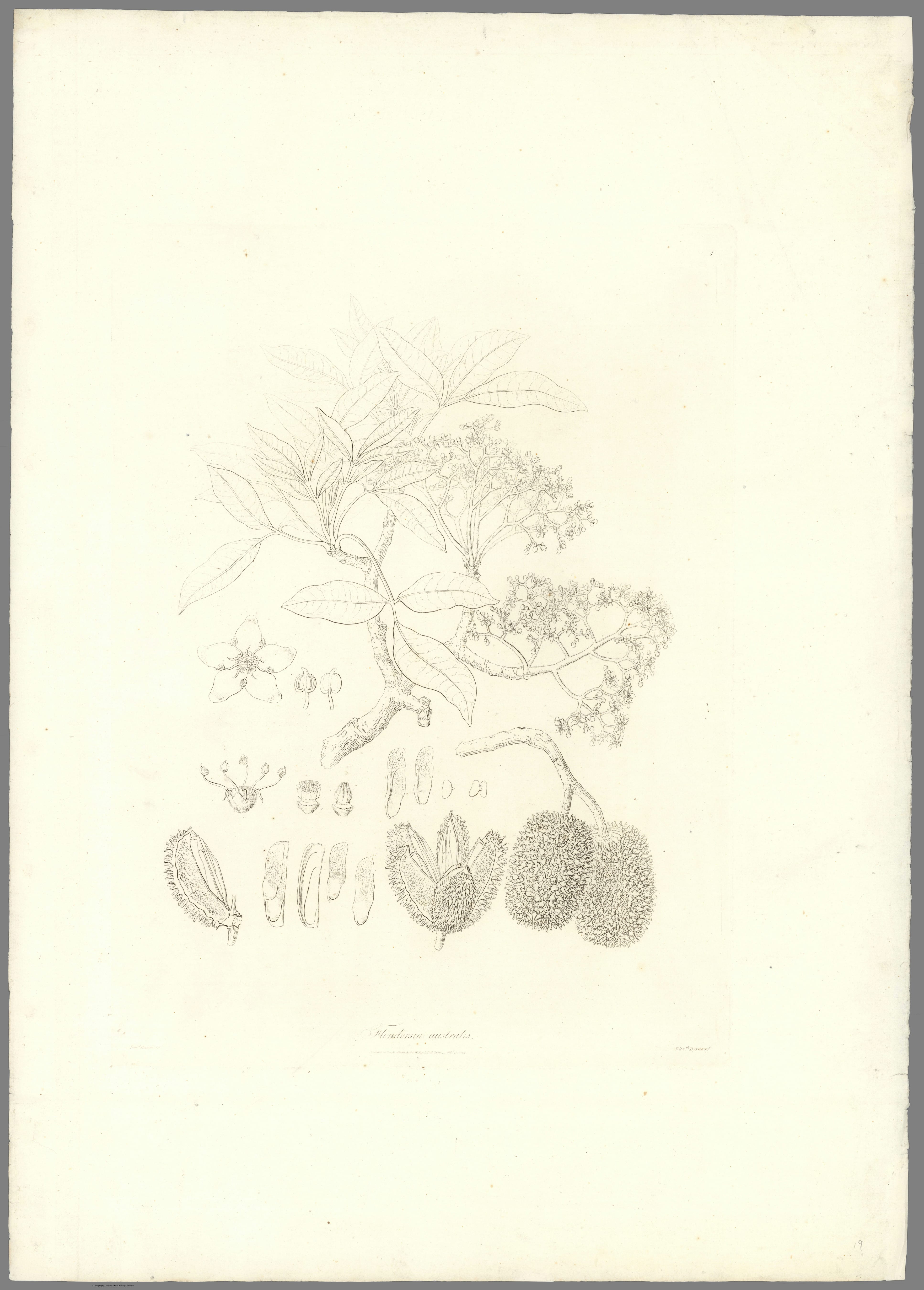
1801–1806
Flindersia
The tree named for the captain, drawn by the man in the next cabin.
Flindersia australis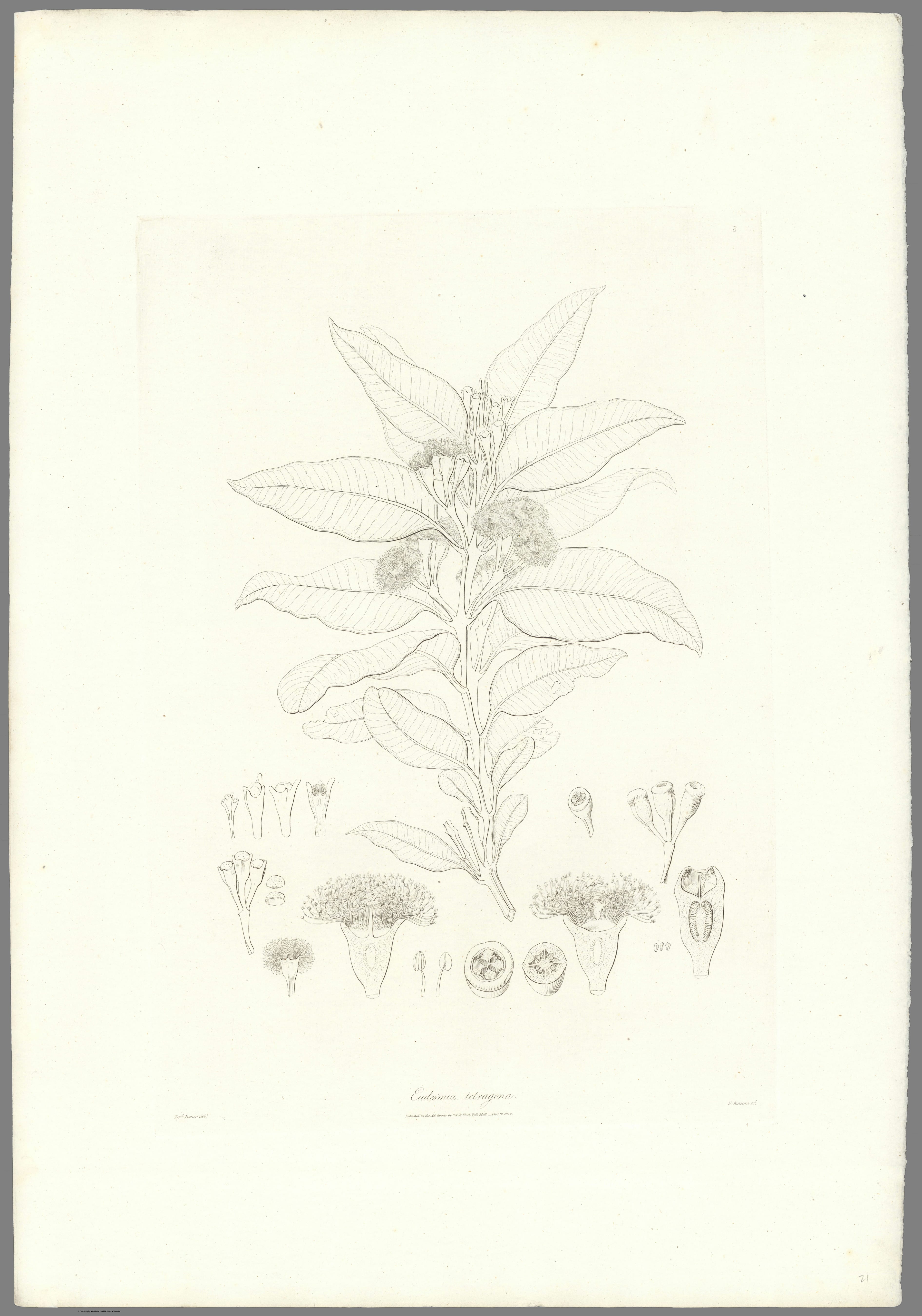
1801–1806
A Eucalypt
The tree that defines a continent, treated as seriously as an orchid.
Eudesmia tetragona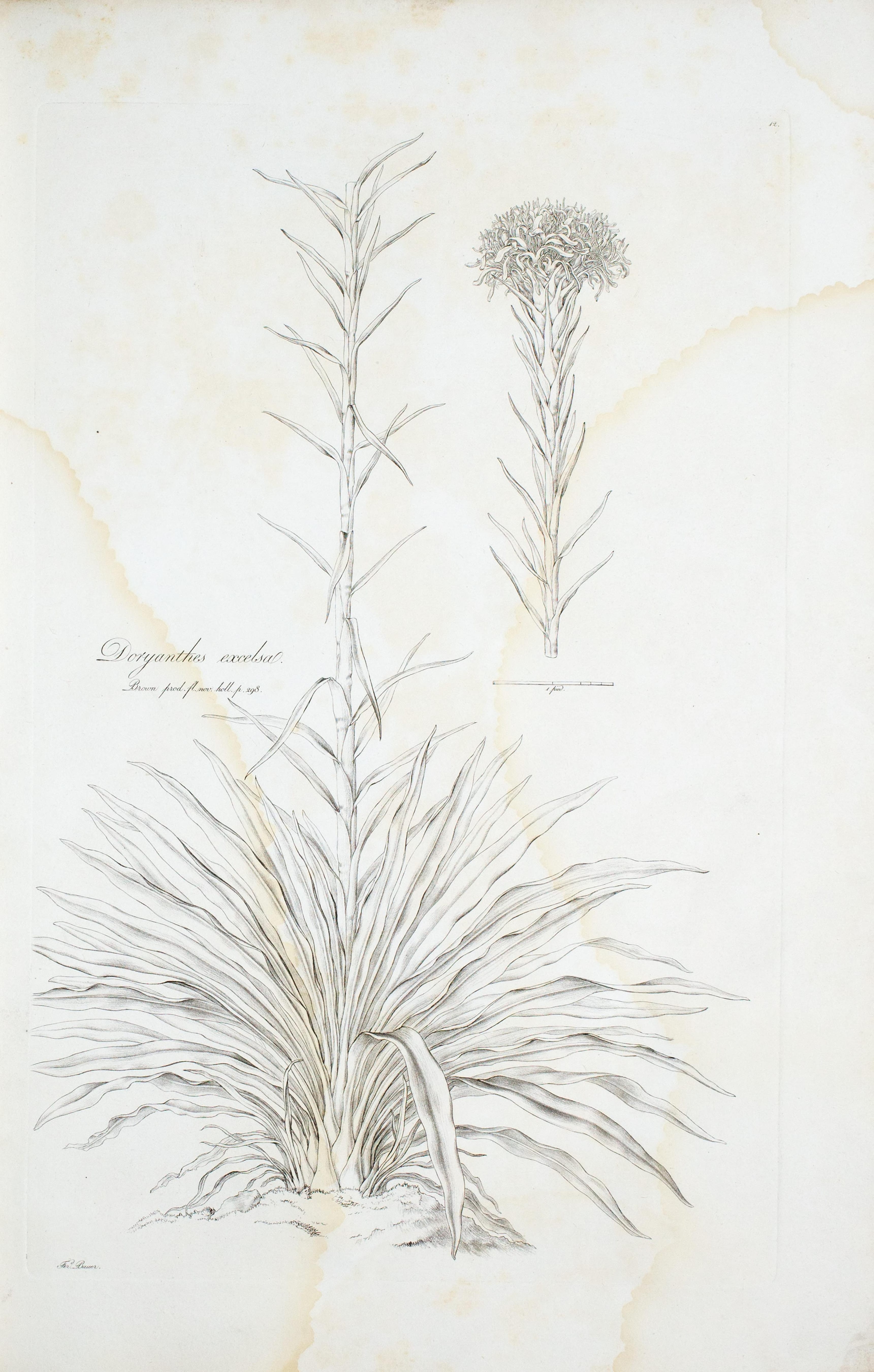
19th century
The Gymea Lily
A flower spike that stands taller than a person.
Doryanthes excelsa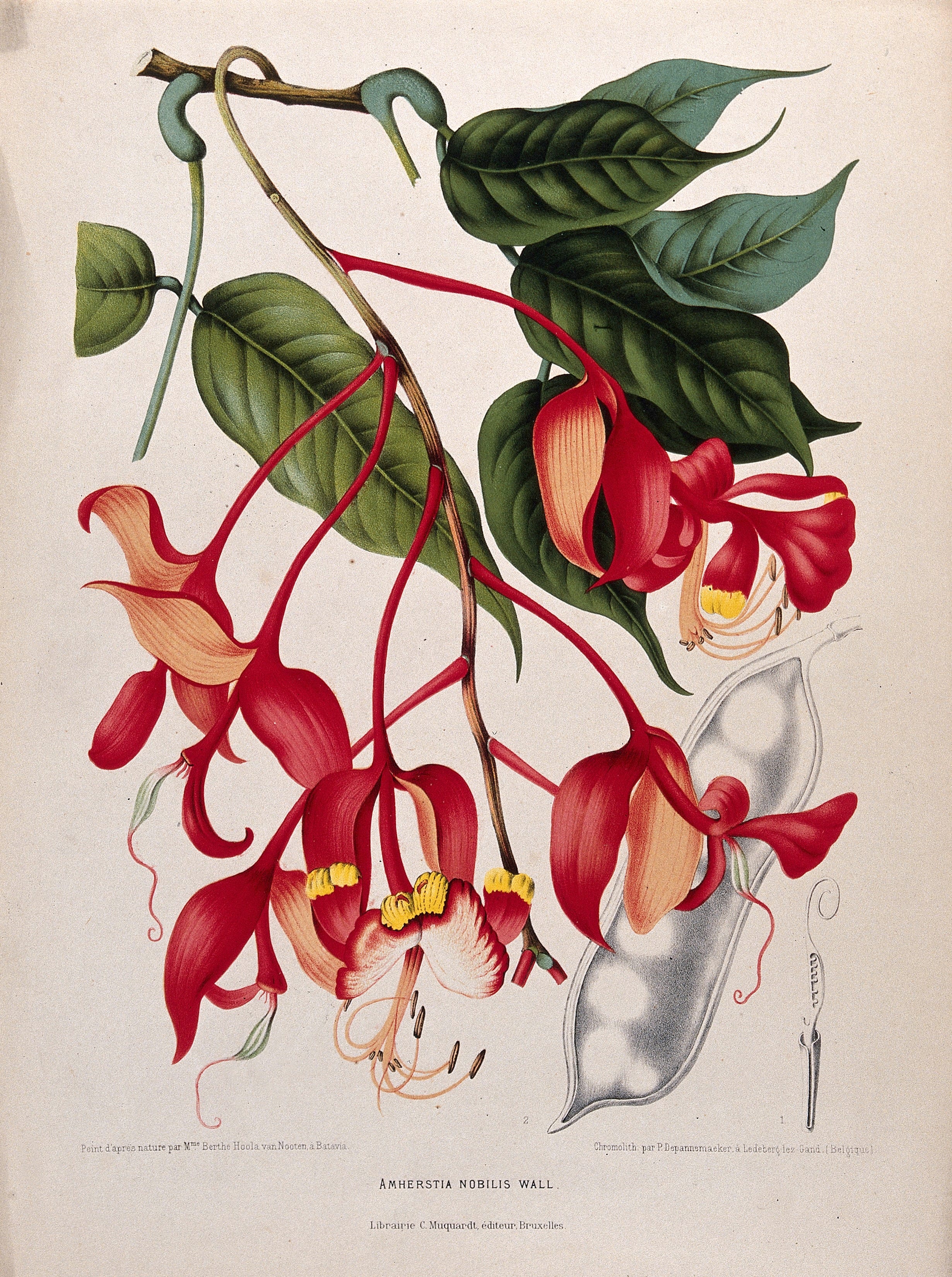
1863–1864
The Pride of Burma
Called the most beautiful flowering tree in the world, and drawn in Java by a widow with four children.
Amherstia nobilis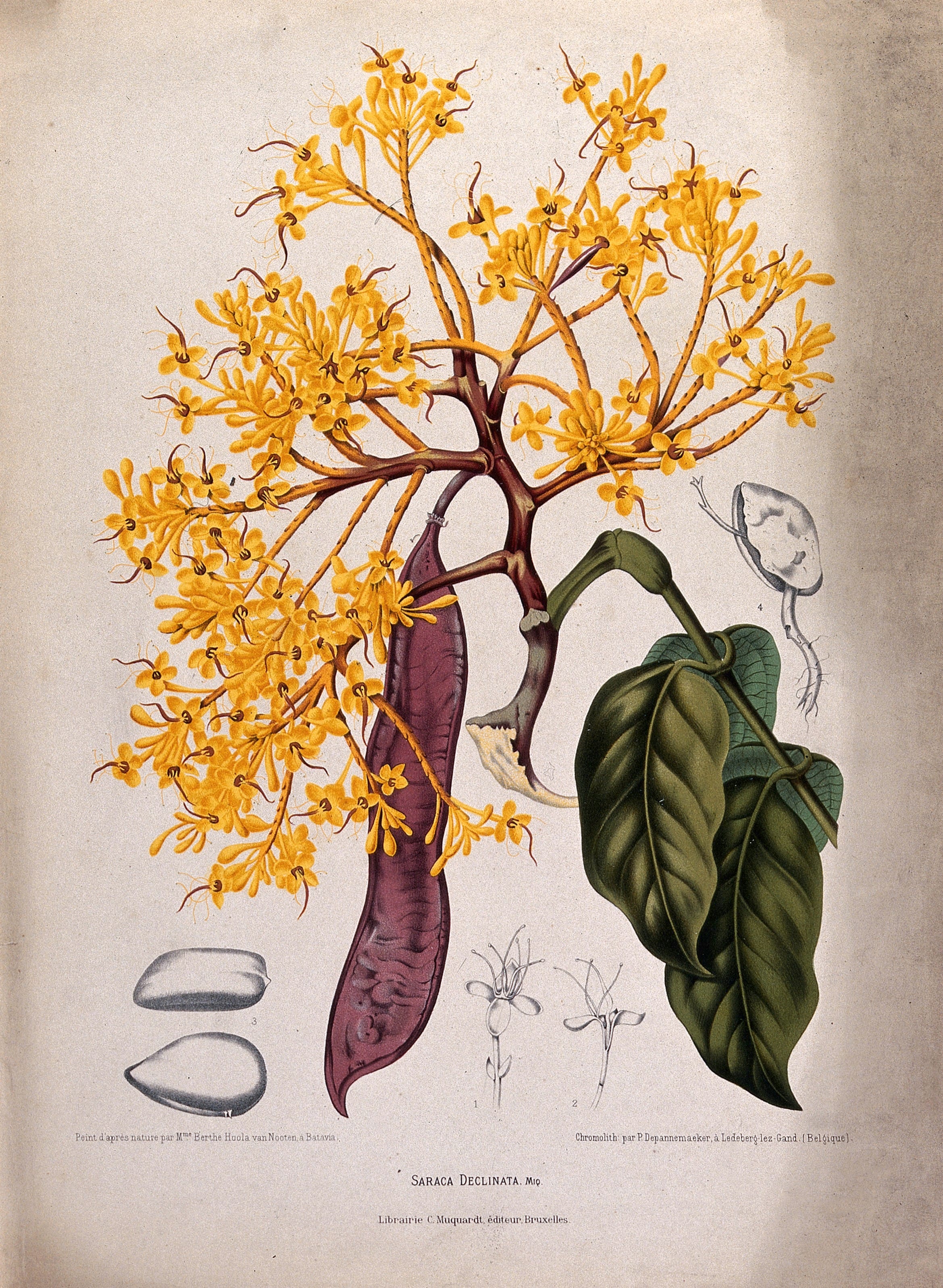
1863–1864
The Asoka Tree
A sacred tree of India and Java, in orange going to red.
Saraca declinata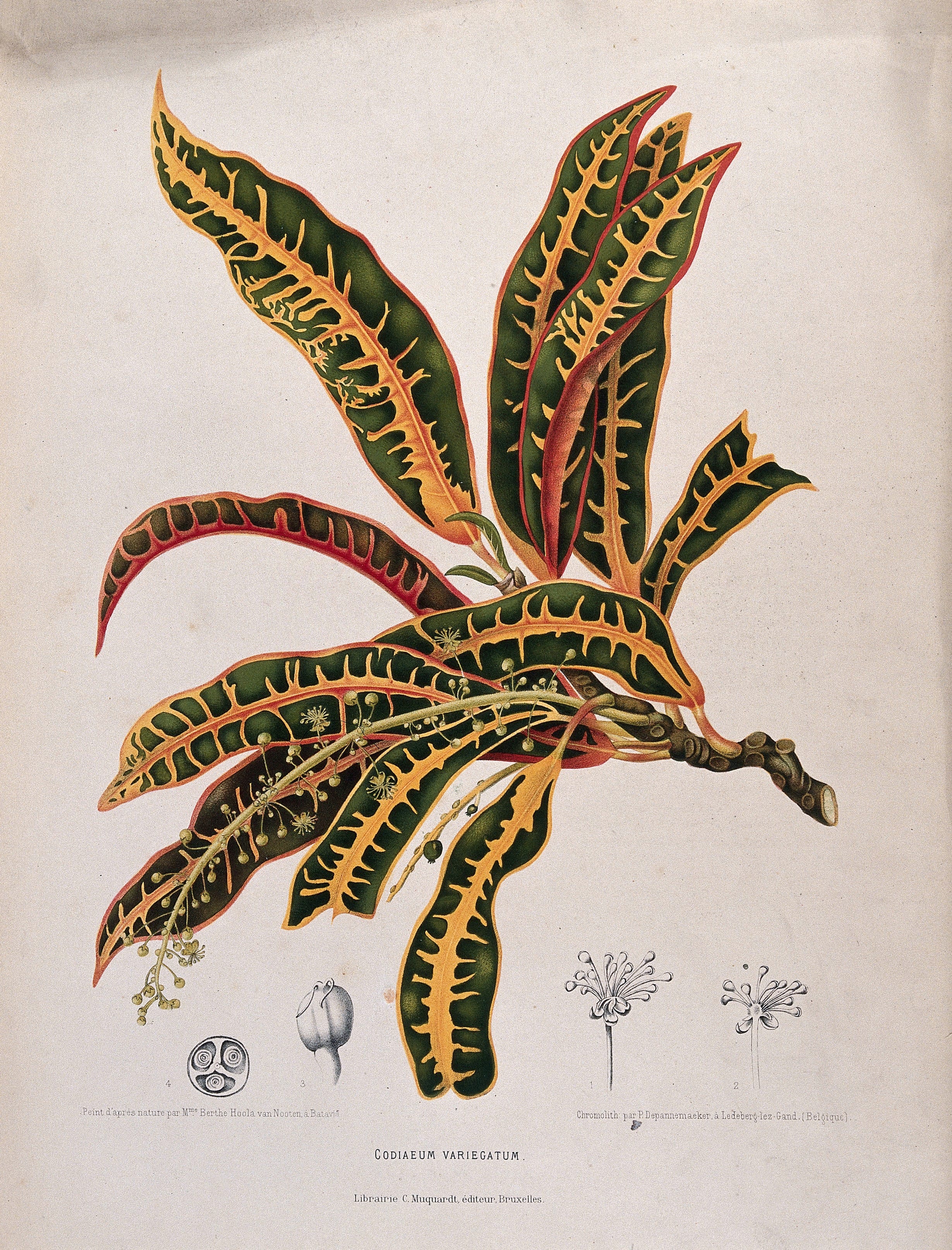
1863–1864
The Croton
A leaf that behaves like a flower — yellow, orange, red and green on one plant.
Codiaeum variegatum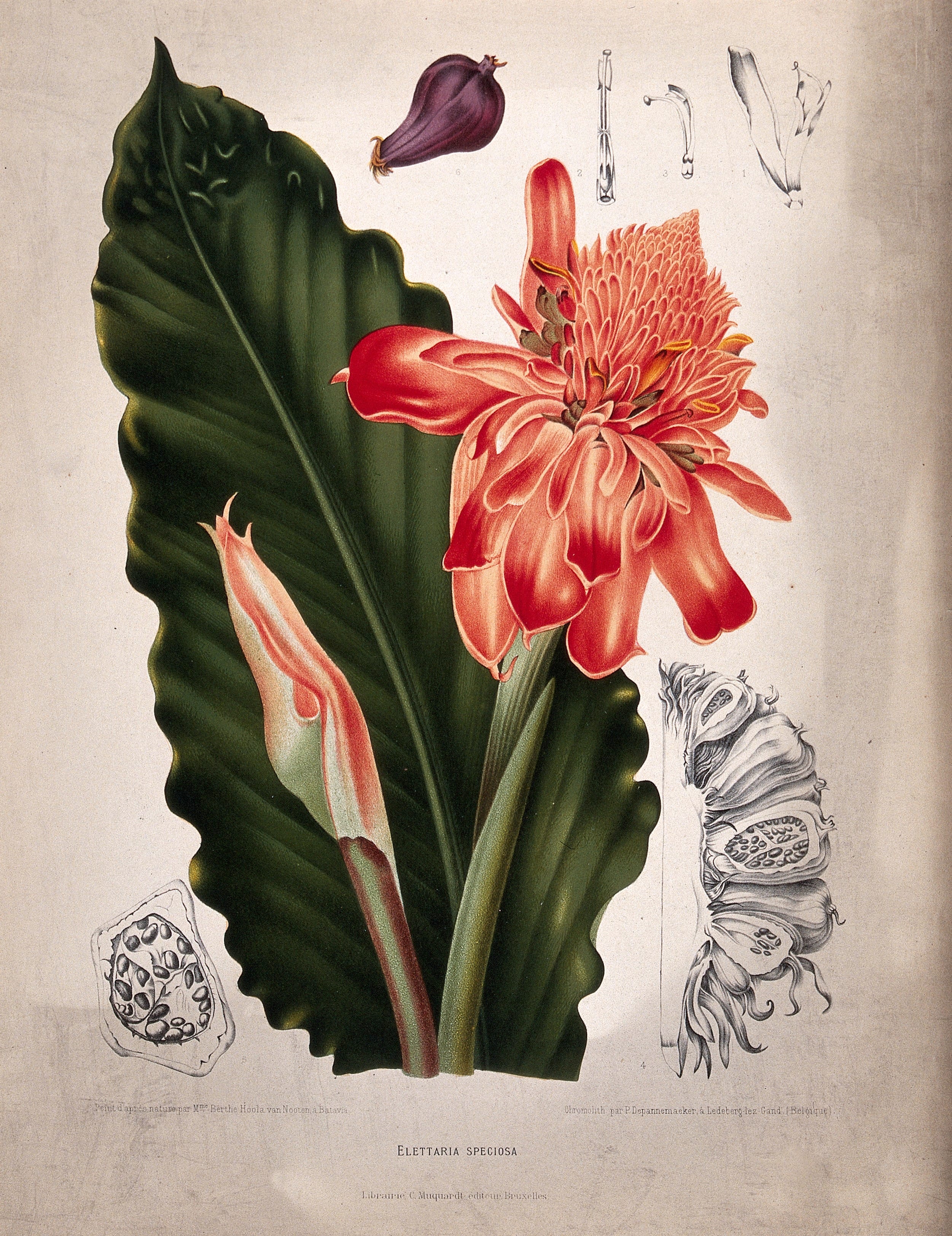
1863–1864
A Wild Cardamom
The spice trade’s own plant, drawn where it grew.
Elettaria speciosa