THE ROMANTIC STAGE
The Temple of Flora
Thornton’s flowers against their Romantic skies — botany staged as theatre, and the most dramatic flower book ever printed.
1799–1807
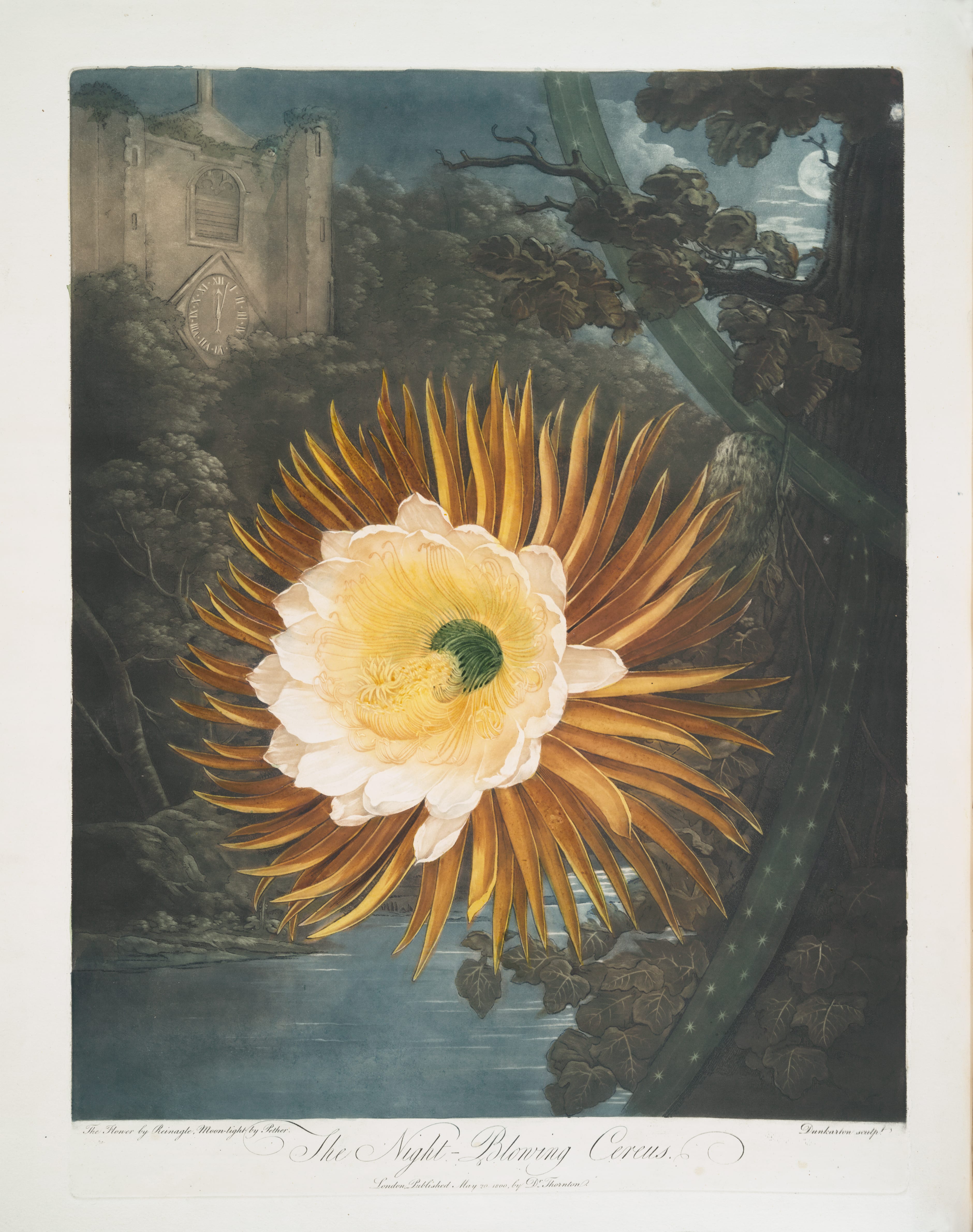
The Night-Blowing Cereus
A flower that blooms once, by moonlight.
Selenicereus grandiflorus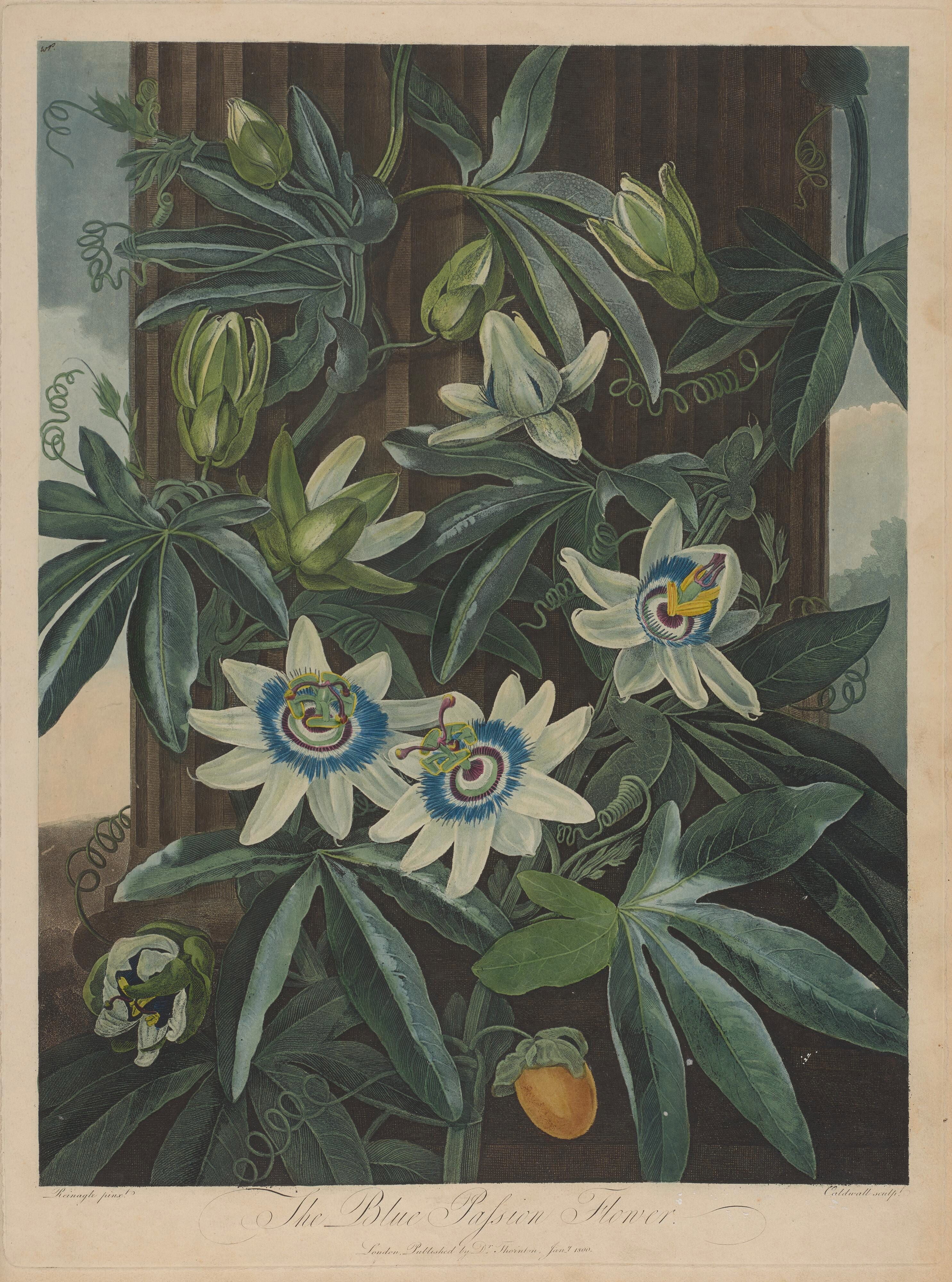
1799–1807
The Blue Passion Flower
An intricate bloom against a brooding sky.
Passiflora caerulea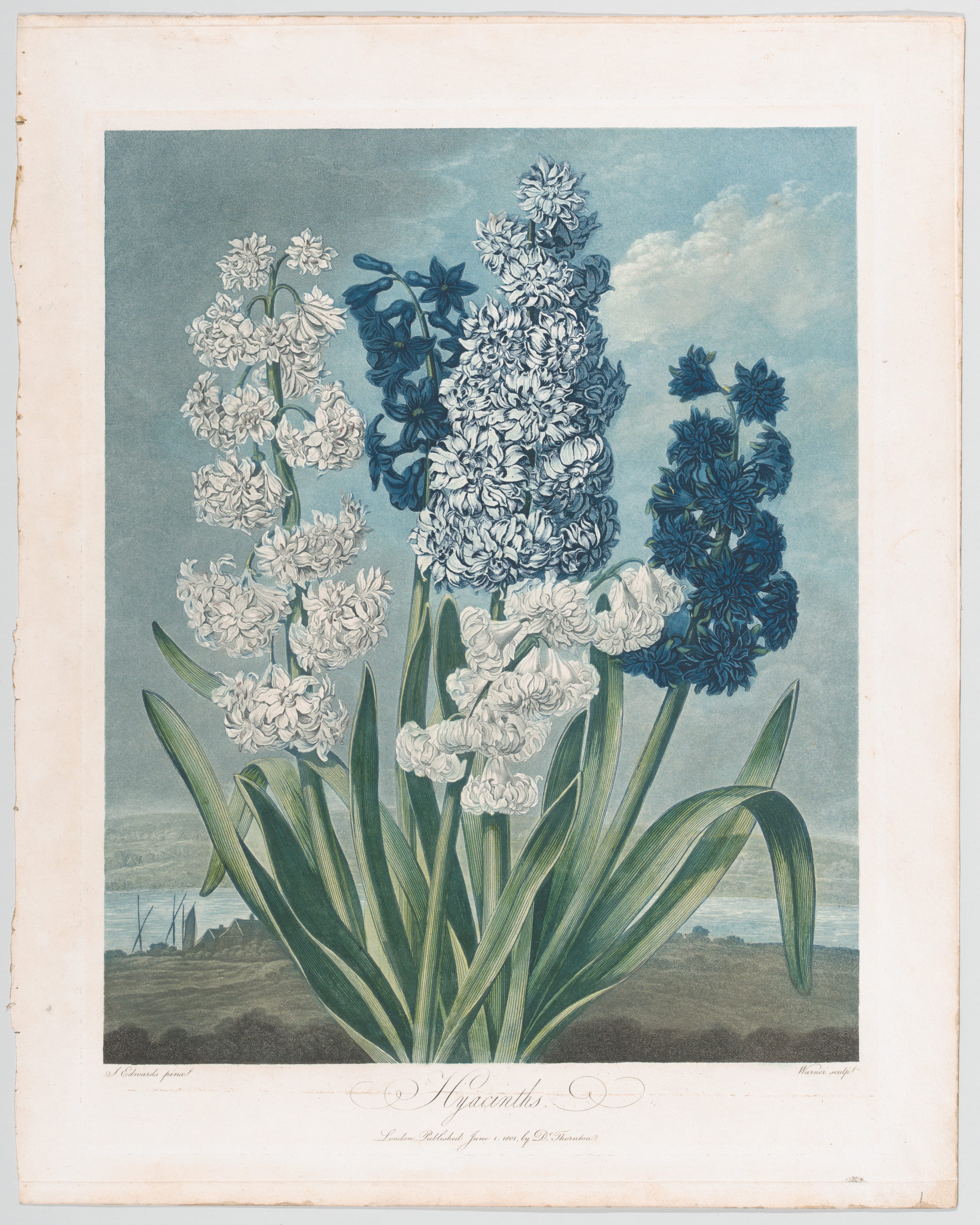
1799–1807
Hyacinths
Hyacinths massed against a stormy sky.
Hyacinthus orientalis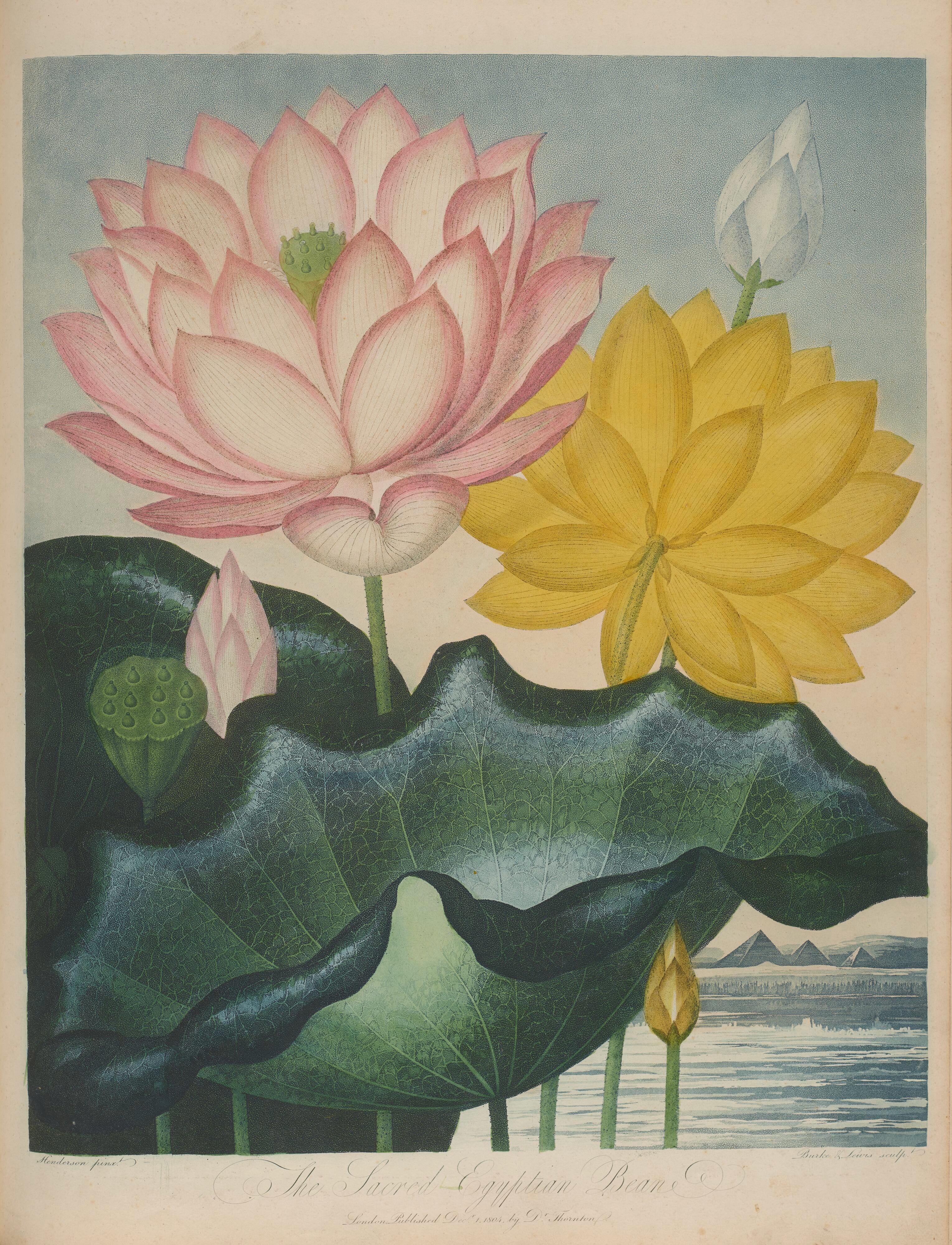
1799–1807
The Sacred Egyptian Bean
The lotus of the Nile, in full Romantic splendour.
Nelumbo nucifera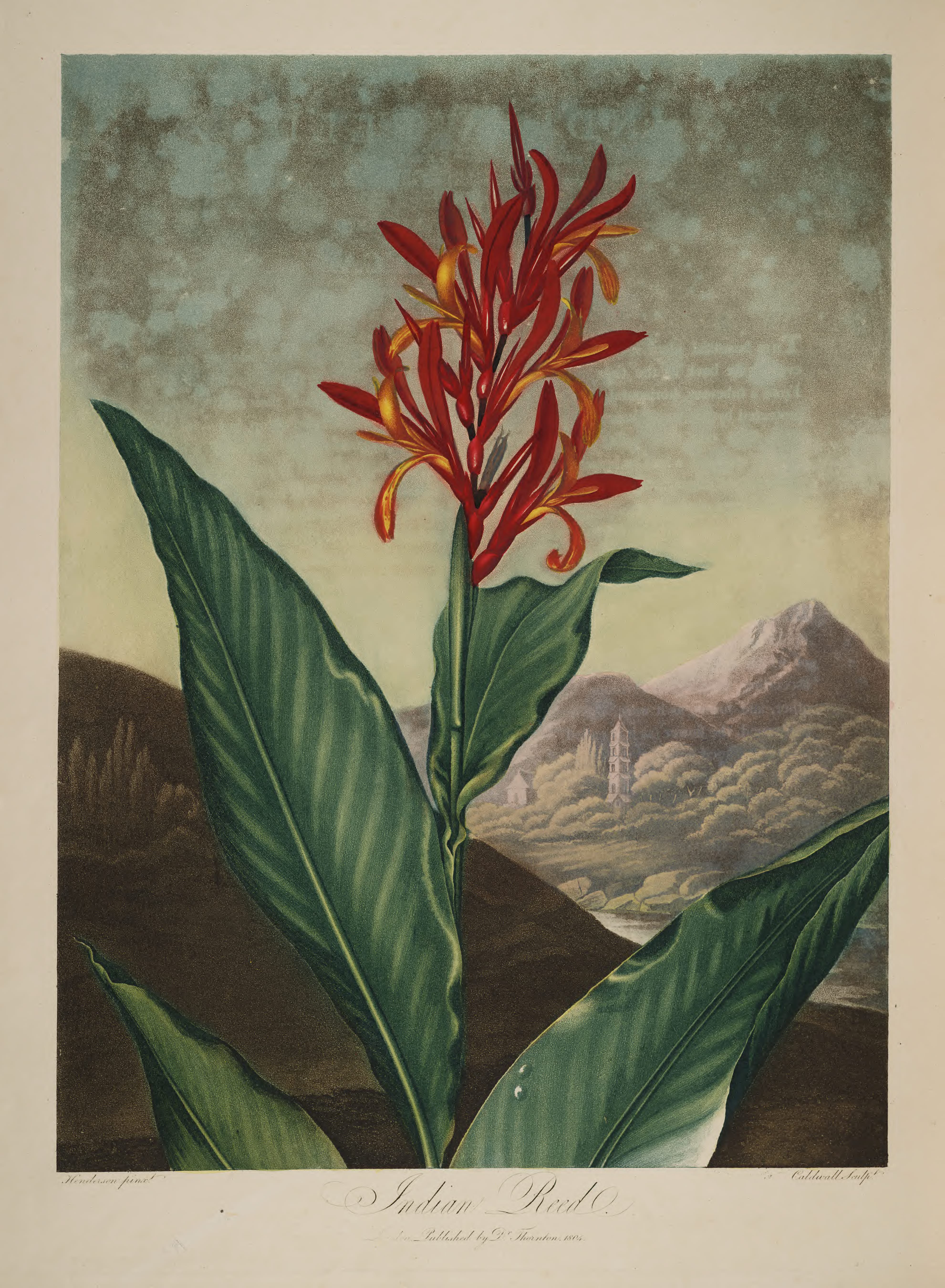
1799–1807
The Indian Reed
A scarlet canna against a Himalayan sky — botany staged as weather.
Canna indica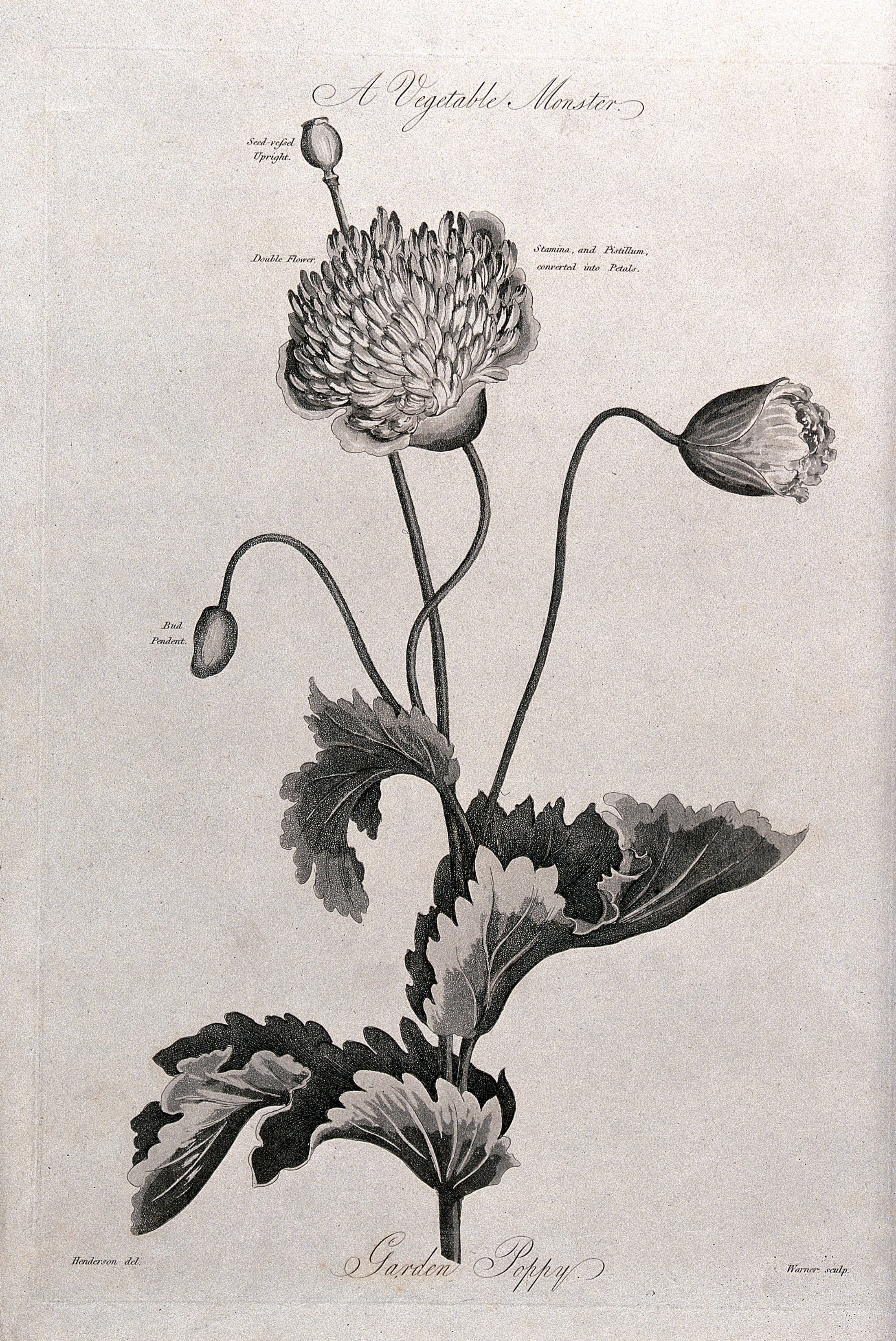
1799–1807
The Garden Poppy
The flowering stem and the seed head together — beauty and its consequence.
Papaver somniferum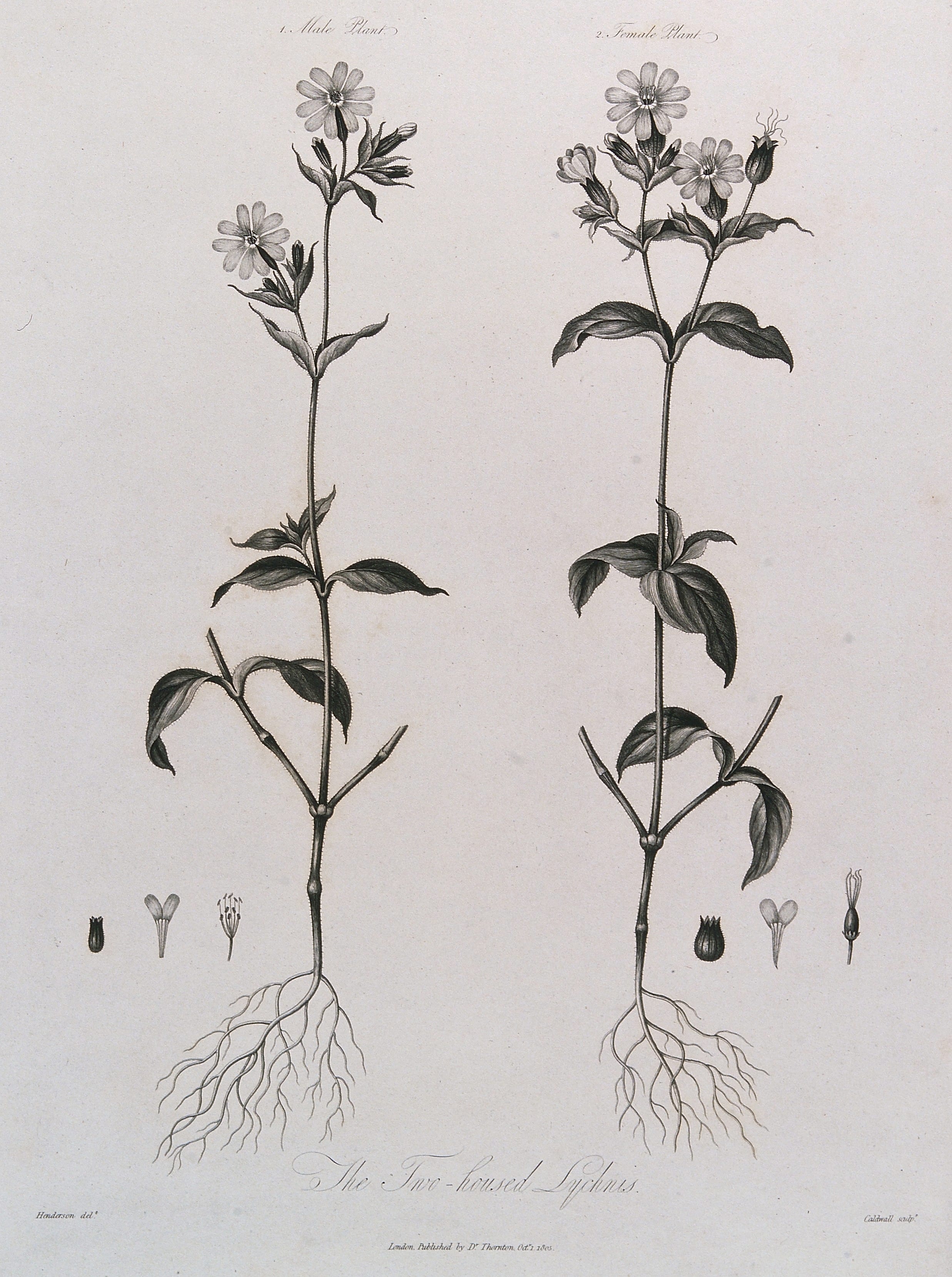
1799–1807
The Campion, Male and Female
Two plants on one plate — because this species keeps its sexes apart.
Lychnis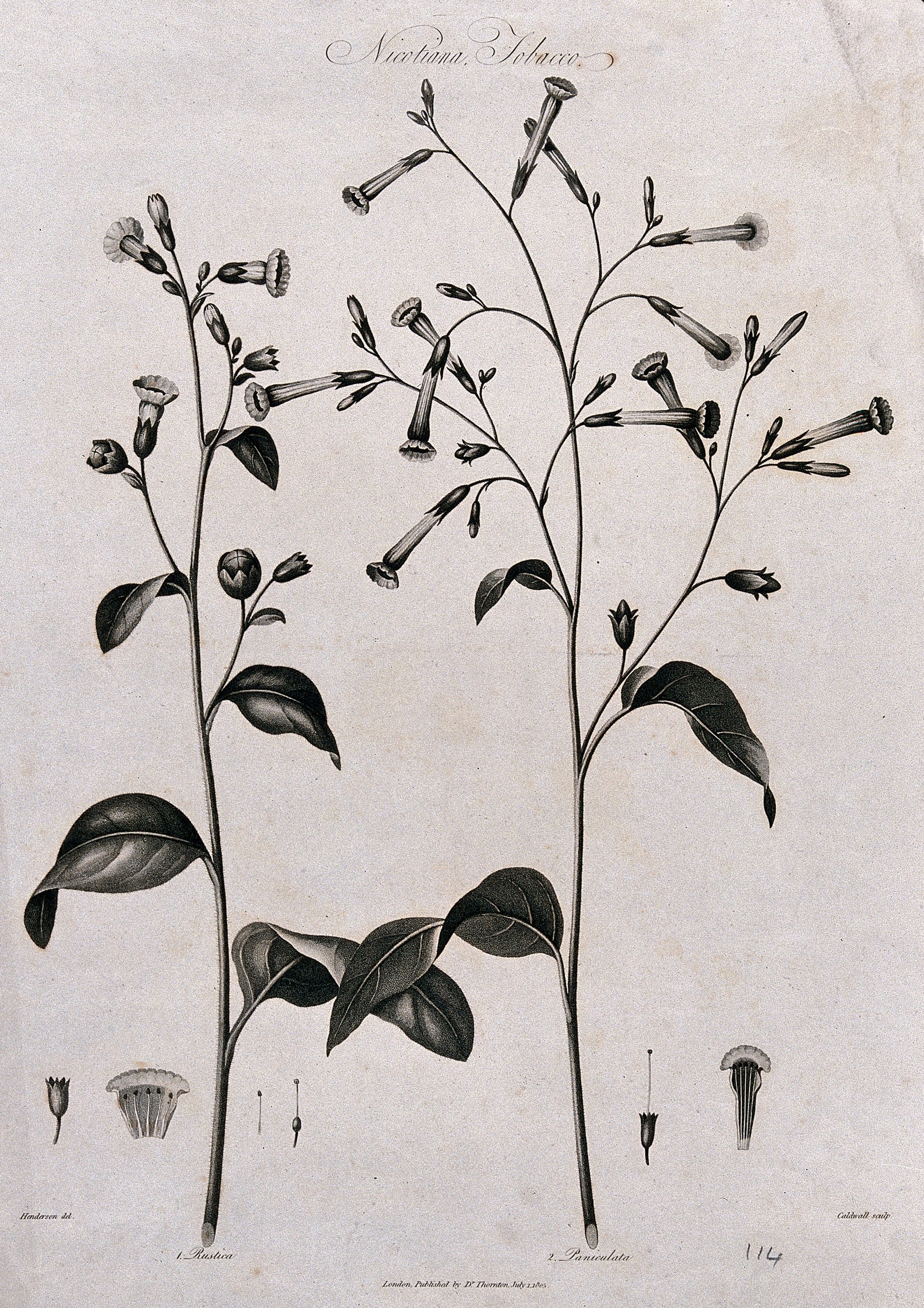
1799–1807
The Tobacco Plant
Two species of the plant that paid for the eighteenth century.
Nicotiana rustica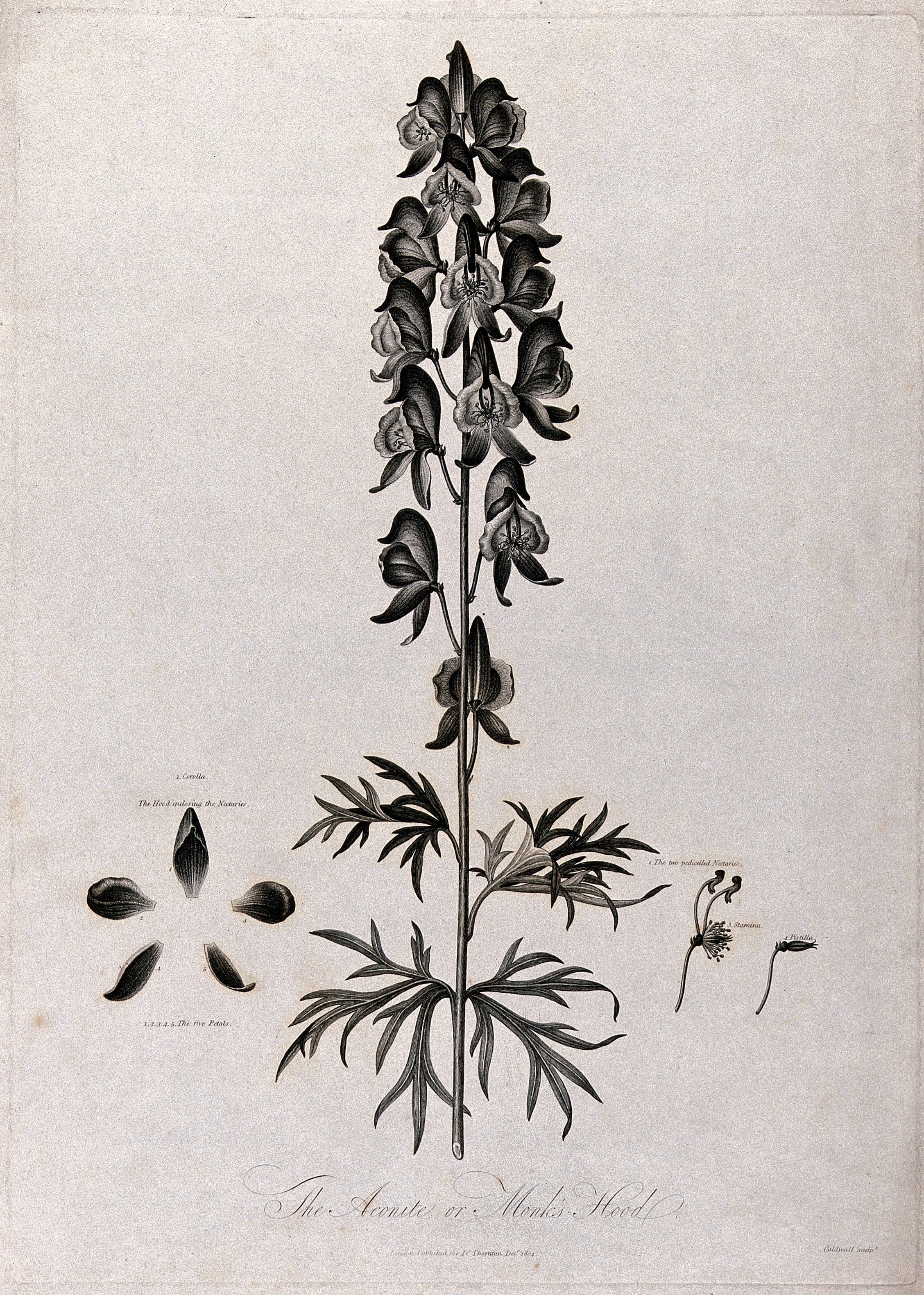
1799–1807
Monkshood
The most poisonous plant in an English garden, drawn as a decoration.
Aconitum napellus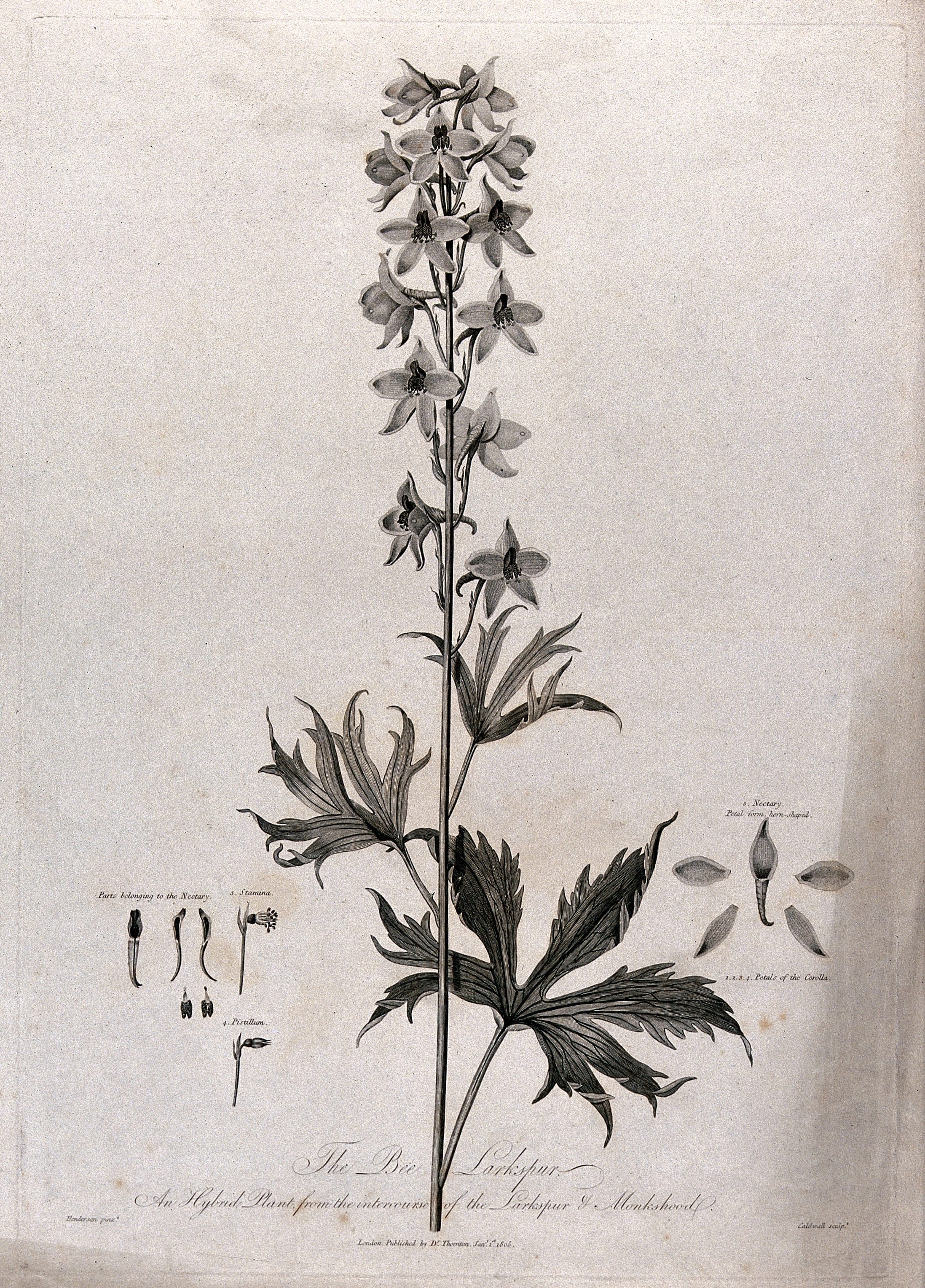
1799–1807
The Bee Larkspur
A flower with a false bee at its centre, to tell real ones where to land.
Delphinium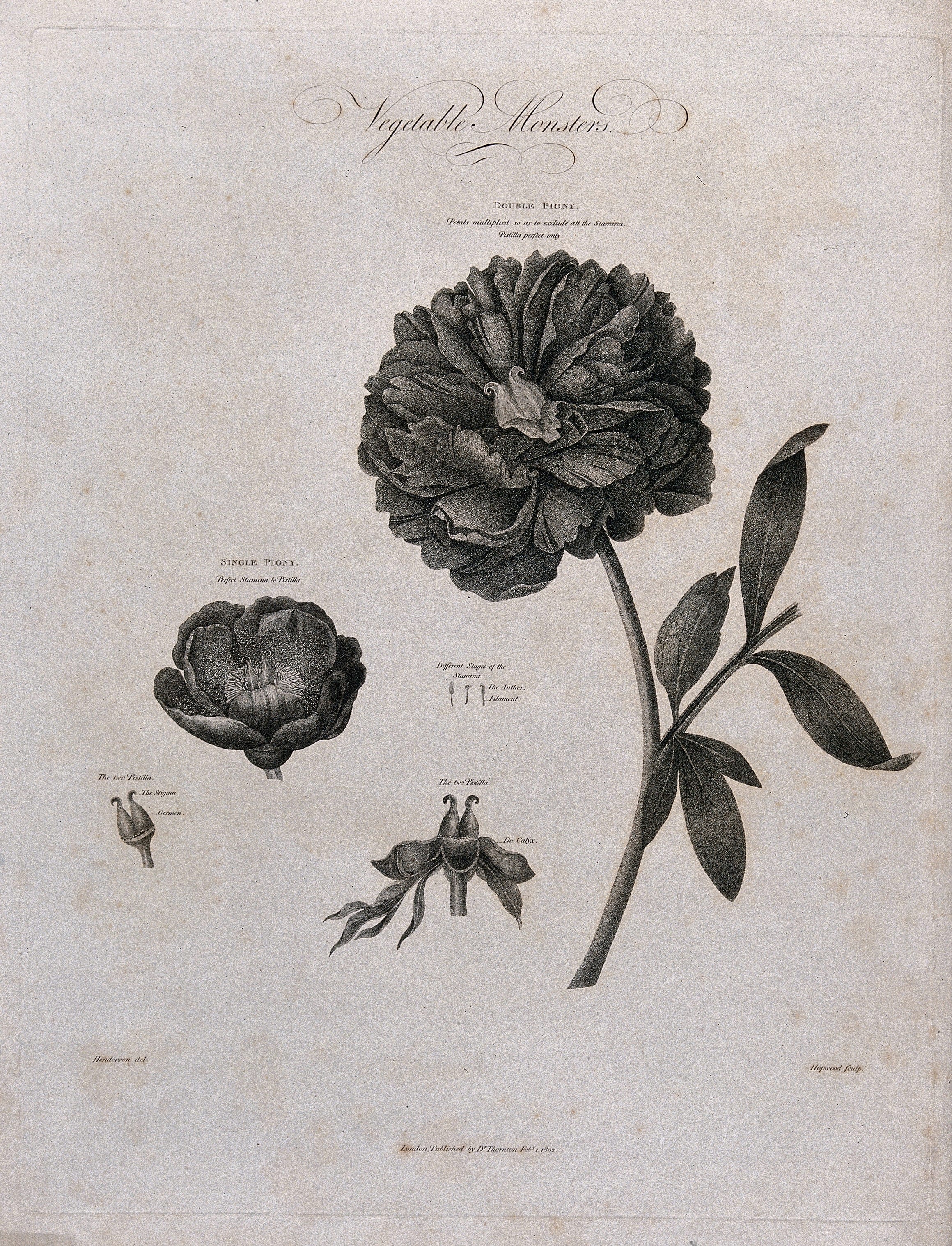
1799–1807
The Paeony, Double and Single
The same flower twice — as nature made it, and as gardeners remade it.
Paeonia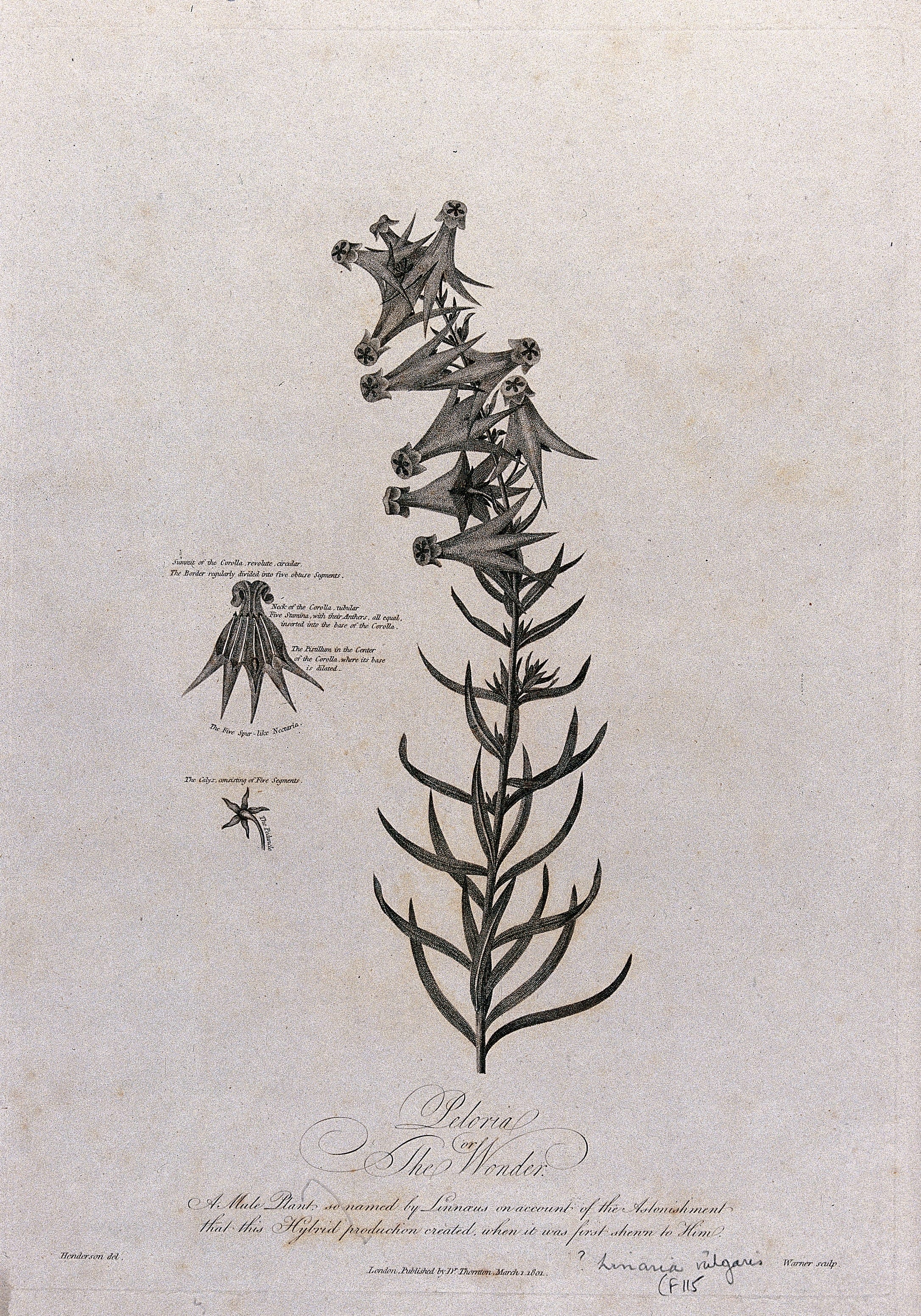
1799–1807
Toadflax
A wild roadside flower given a full plate in a book about empire’s hothouses.
Linaria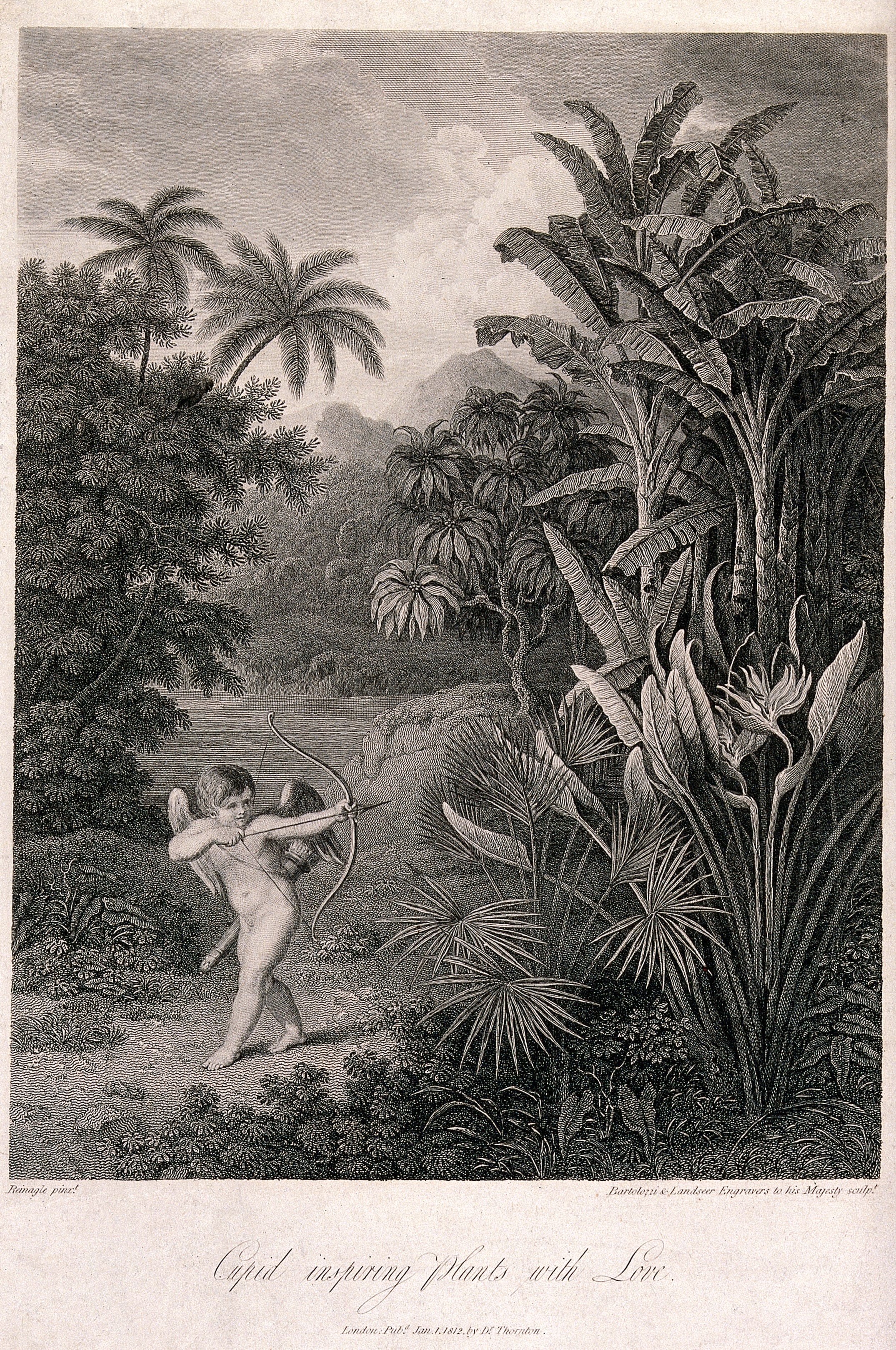
1799–1807
Cupid Inspiring the Plants with Love
The allegory that opens the book — botany announced as a romance.
1805
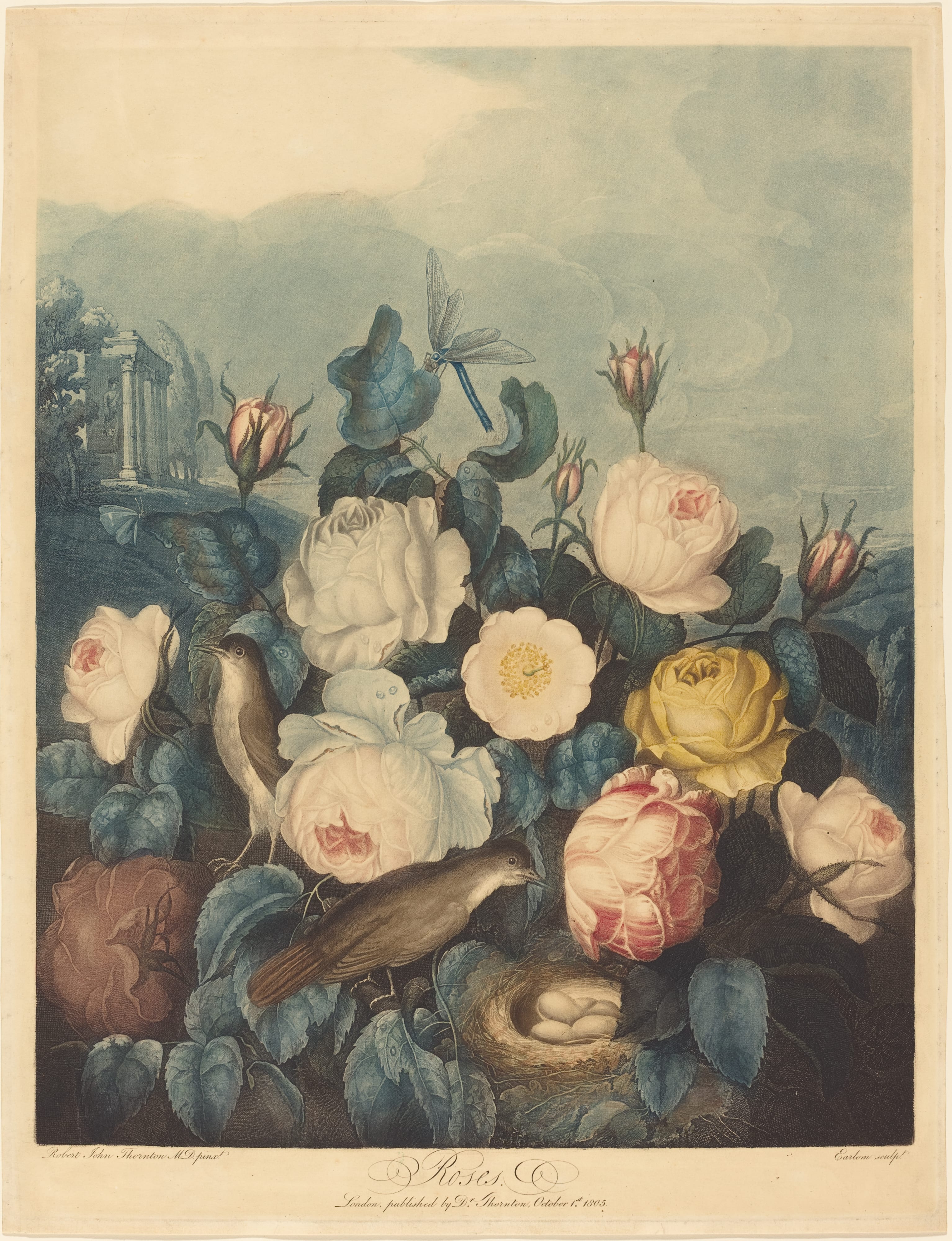
Roses
Earlom’s mezzotint after Thornton — the darkest, richest surface in the book.