The Orchid
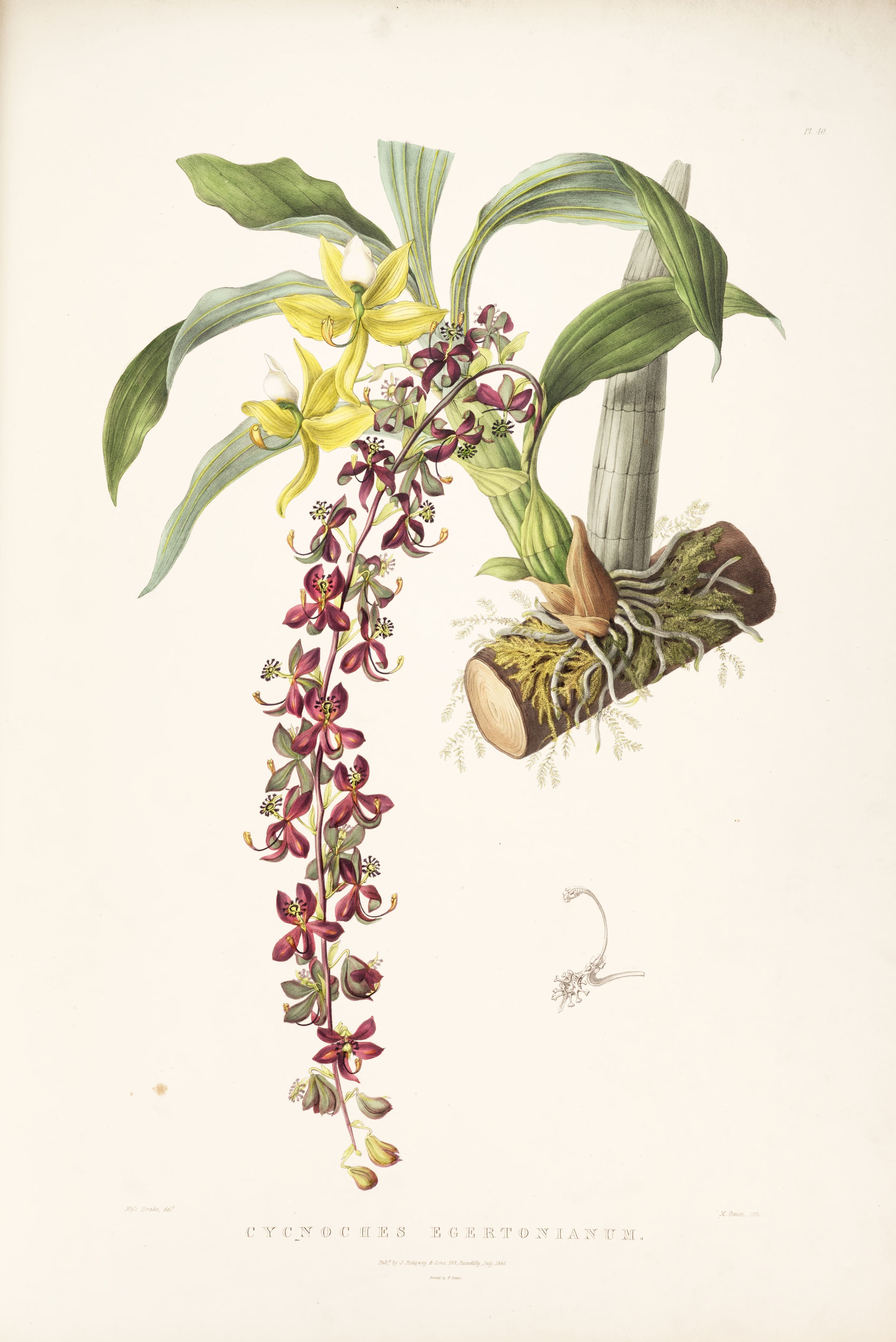
The Swan Orchid
Cycnoches egertonianum
The column arches like a swan’s neck — and the plant changes sex with the light.
- Book
- The Orchidaceae of Mexico and Guatemala
- Artist
- after Augusta Withers and Sarah Drake, for James Bateman
- Date
- 1837–1843
- Held by
- Wikimedia Commons
Format
The full-resolution scan, colour-managed to the source — yours to print, study, and explore, down to the stipple.
Size
$29.00
The story
See it on your wall
The garden, brought indoors
The Swan Orchid printed large and framed, hung in rooms like yours. Every edition ships ready to become the piece the room is built around.



About this reproduction
- A faithful reproduction of a public-domain plate held by Wikimedia Commons — the work is centuries out of copyright (1837–1843).
- Printed to order on archival cotton-rag stock, pigment inks rated 100+ years (inscribed pieces and atelier bouquets are set by hand and printed to order).
- Colour-managed to the source scan: the hand-colour is the colourist’s, not ours. We correct nothing and invent nothing.
- Ships in 5–10 business days, rolled in a heavy-wall tube (framed pieces ship flat-packed).
- If it arrives less than perfect, we reprint or refund — your choice.
Why our plates cost more than a poster: we print from the highest-resolution scans in existence, at sizes where the engraving itself becomes visible — the stipple that makes a petal look soft, the wash of the hand-colourist, the veins of the leaf — on stock made to outlive its owner. A poster reproduces the picture. This reproduces the plate.
From the same hand
1837–1843
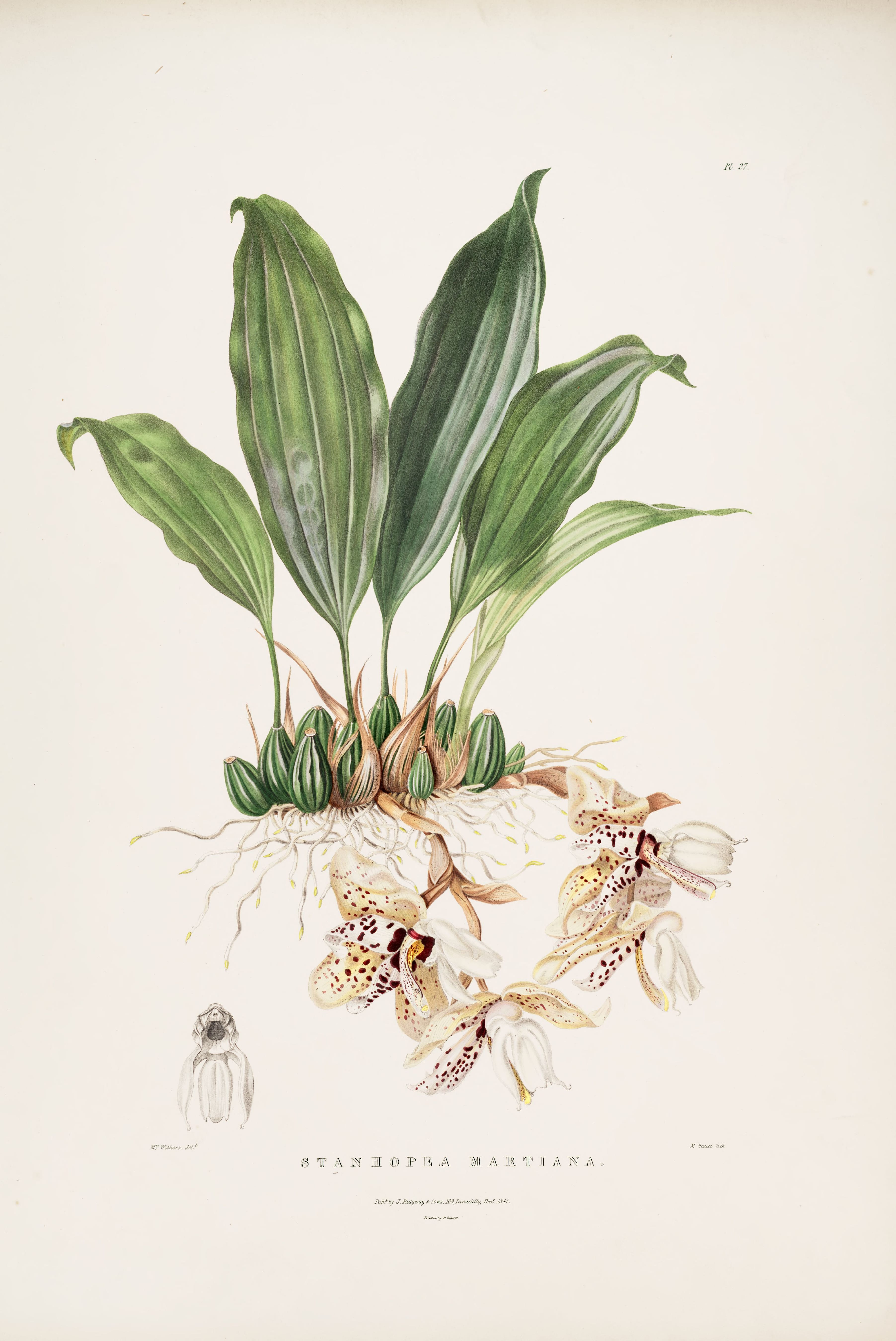
Stanhopea
An orchid that flowers downward, through the bottom of its own basket.
Stanhopea martiana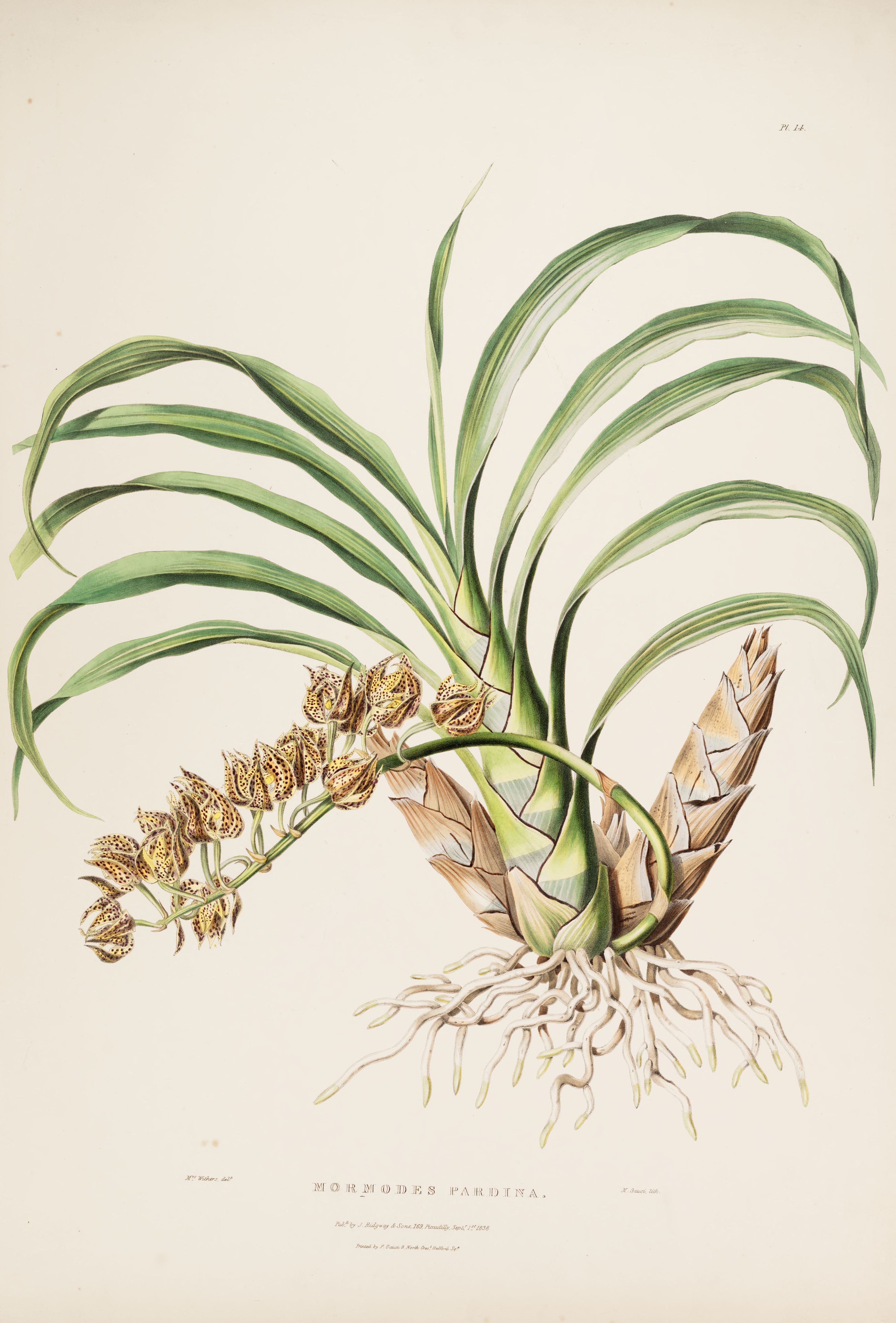
1837–1843
The Goblin Orchid
A flower twisted off its own axis — and it fires pollen at whatever touches it.
Mormodes maculata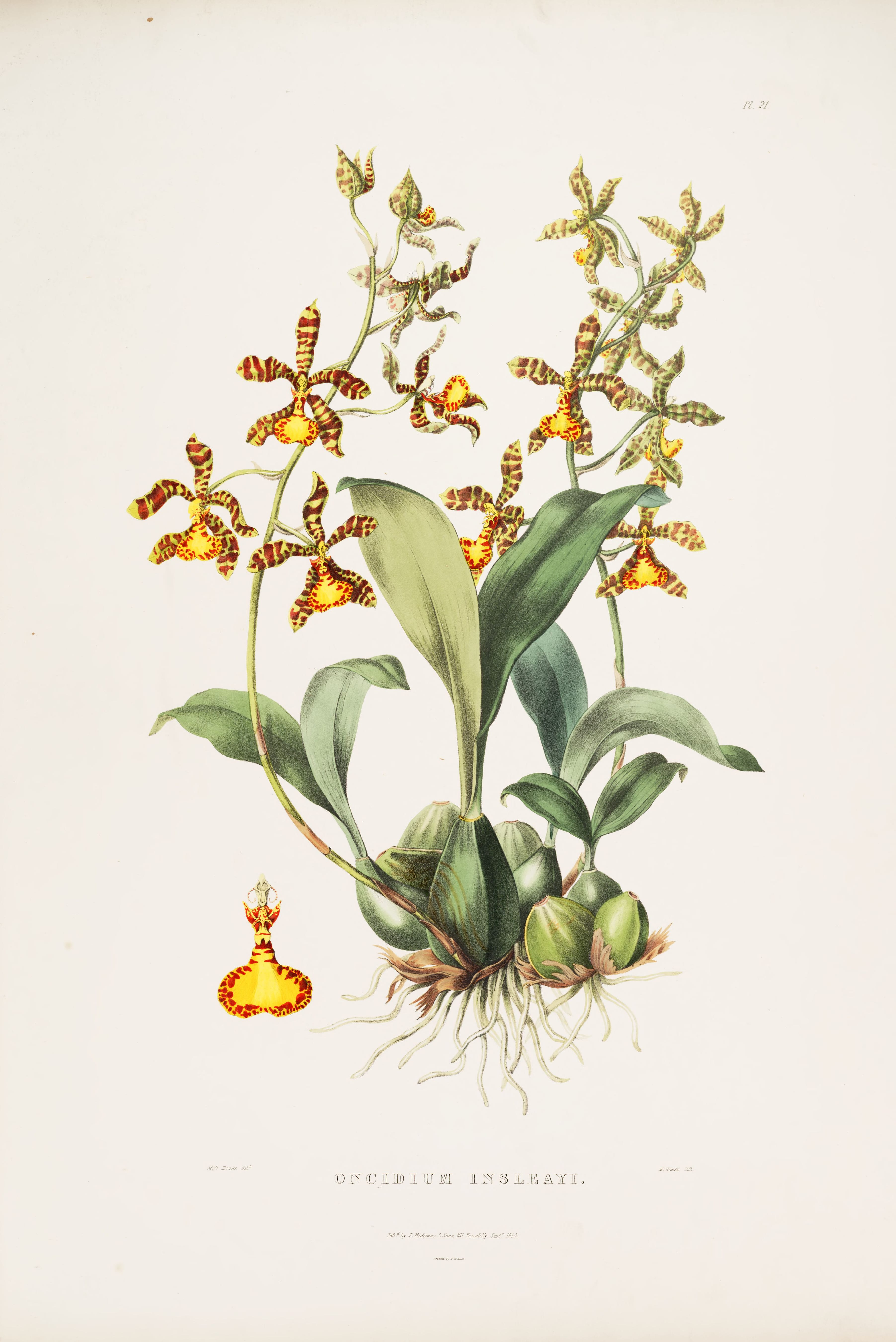
1837–1843
The Clown Orchid
A figure in the middle of the flower with its arms up — everyone sees it.
Rossioglossum insleayi